Workyards logo
Tethys Civic District

Workyards

Growth, repair, molt, salvage, soft goods, structural care, and the stubborn civic belief that a thing worth keeping is worth mending right.

GivenMendedMade
Landon checked the supports. Twice. Then Basalt sat on the clipboard.
Enter the Workyards
District Overview

The Workyards

The Workyards are Tethys’s great repair heart: warm, busy, loud in the friendly way, full of bronze rails, orange cloth, scaffold routes, tool counters, animal traffic, salvage tags, and people who believe usefulness is a form of care.

Repair is careSalvage is responsibilityTake only what Tethys gives
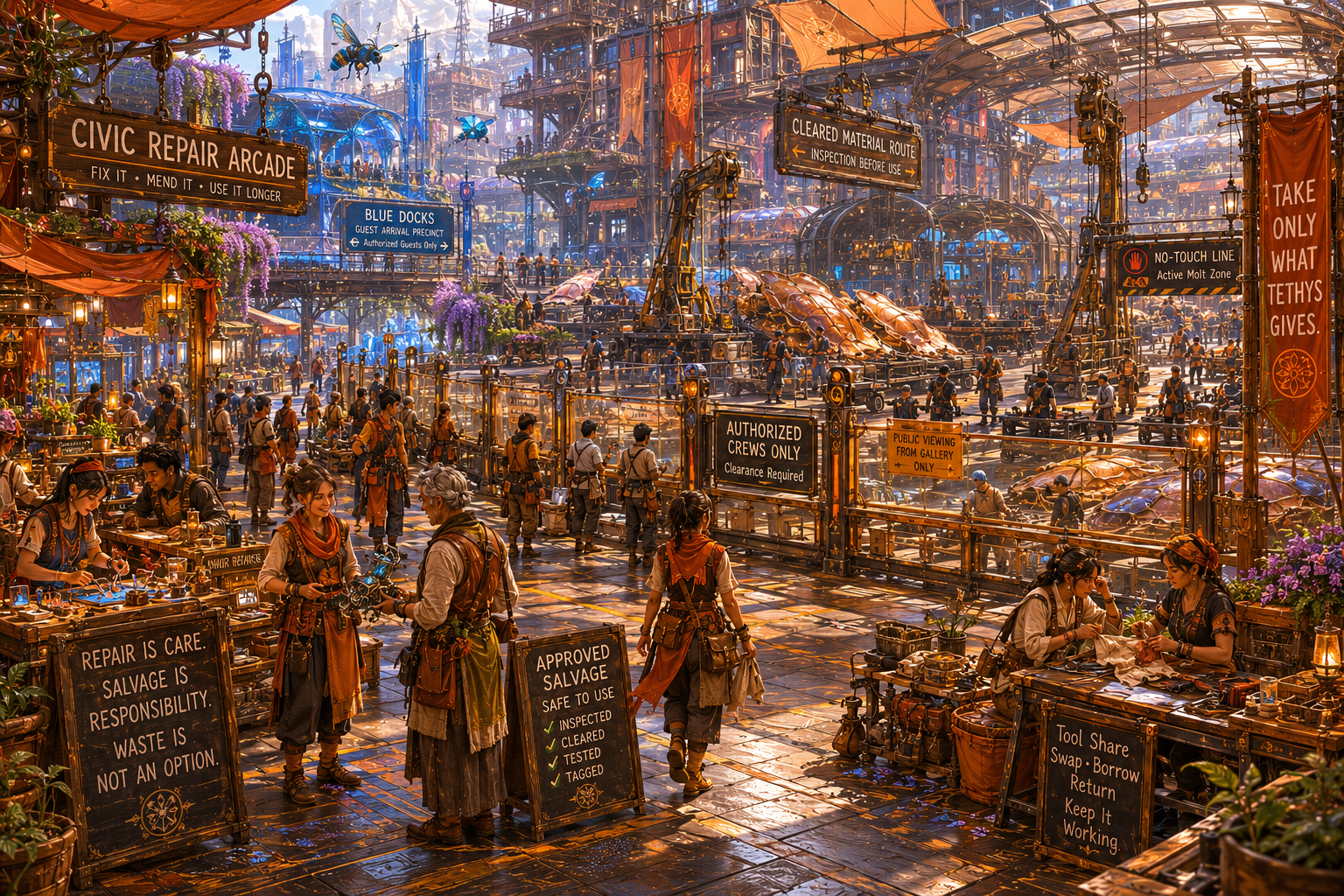
Busy public view of the Workyards district with repair arcades, material routes, signs, workers, and warm orange civic structures.

What the Workyards Look Like

The district looks handmade because it is handmade. Platforms, galleries, repair counters, inspected salvage routes, and animal-safe work paths layer together into a crowded but carefully managed civic workspace. Nothing here is sleek for the sake of looking expensive. Surfaces are patched, labeled, reinforced, and used again.

Beloved, busy, over-repaired, and absolutely still load-checked.

What the Workyards Do

The Workyards do not mine, force, or harvest from Tethys against her living rhythms. They gather what she naturally gives, sort it, stabilize it, refine it, and turn it into the things that keep the city alive.

Gather Materials

Crews collect naturally shed molt, shell fragments, fibers, membranes, heat-scored plates, and other Tethys-derived materials only after release. Collection is permission-based, inspected, tagged, and recorded.

Make Them Usable

Raw material is cleaned, sorted, stabilized, refined, pressure-tested, and shaped for civic use. The Workyards turn shed gifts into safe, durable, purpose-built materials.

Build for Tethys

Structural frames, supports, panels, rails, fittings, tool housings, containment pieces, textiles, and replacement parts all pass through Workyards hands before they become part of the city.

Repair Every District

When Tidewell needs a seal, Skyward needs a heat-safe component, the Labs need precision housing, or Front Vent needs reinforced civic fixtures, the Workyards make the repair possible.

Care for Working Animals

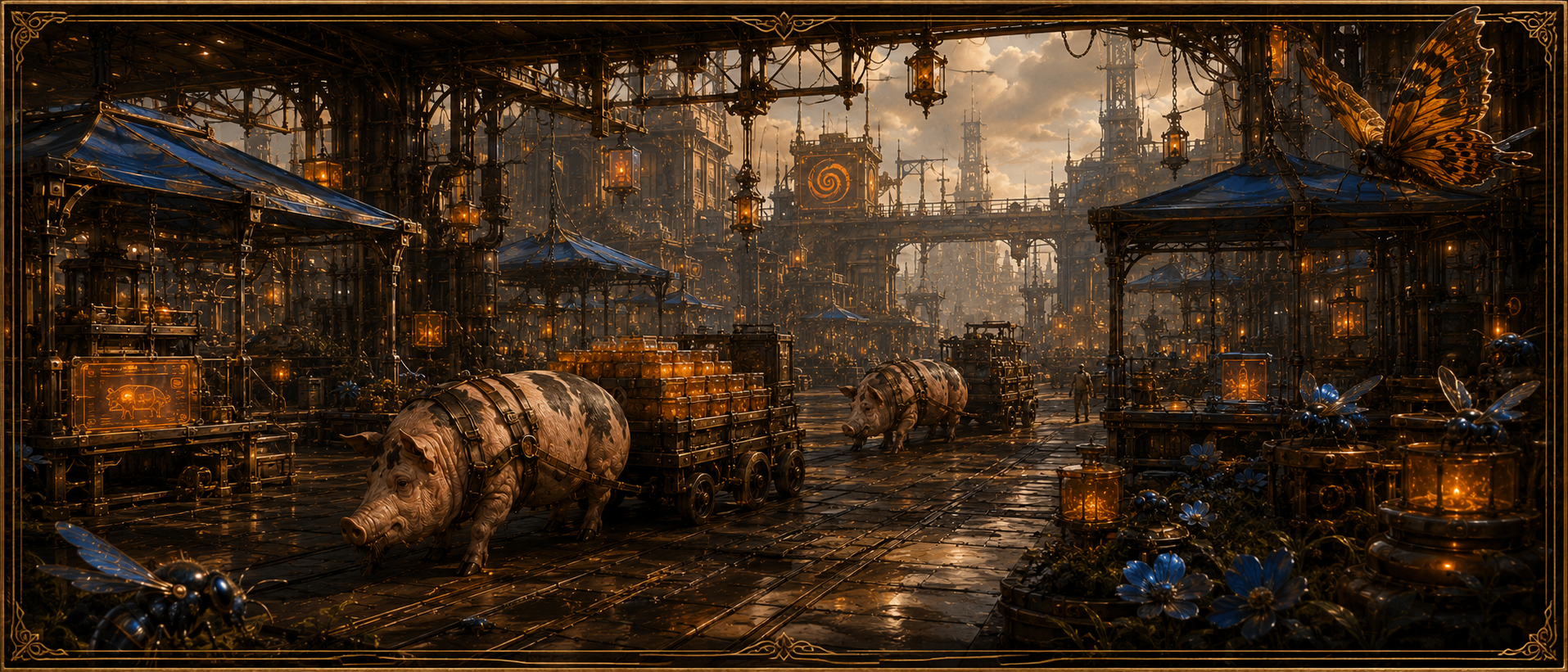
The district also supports guest animals, carrier species, haulers, construction pigs, blue dock arrivals, and the living systems that help the Workyards move, mend, carry, and build safely.

Keep the Promise

The Workyards promise is simple: no waste, no forced extraction, no careless use. Material is memory. If Tethys gives something, the city has a responsibility to make it last.

The Workyards Doctrine

We do not mine. We refine what she sheds. Take only what she gives. Build only what endures.

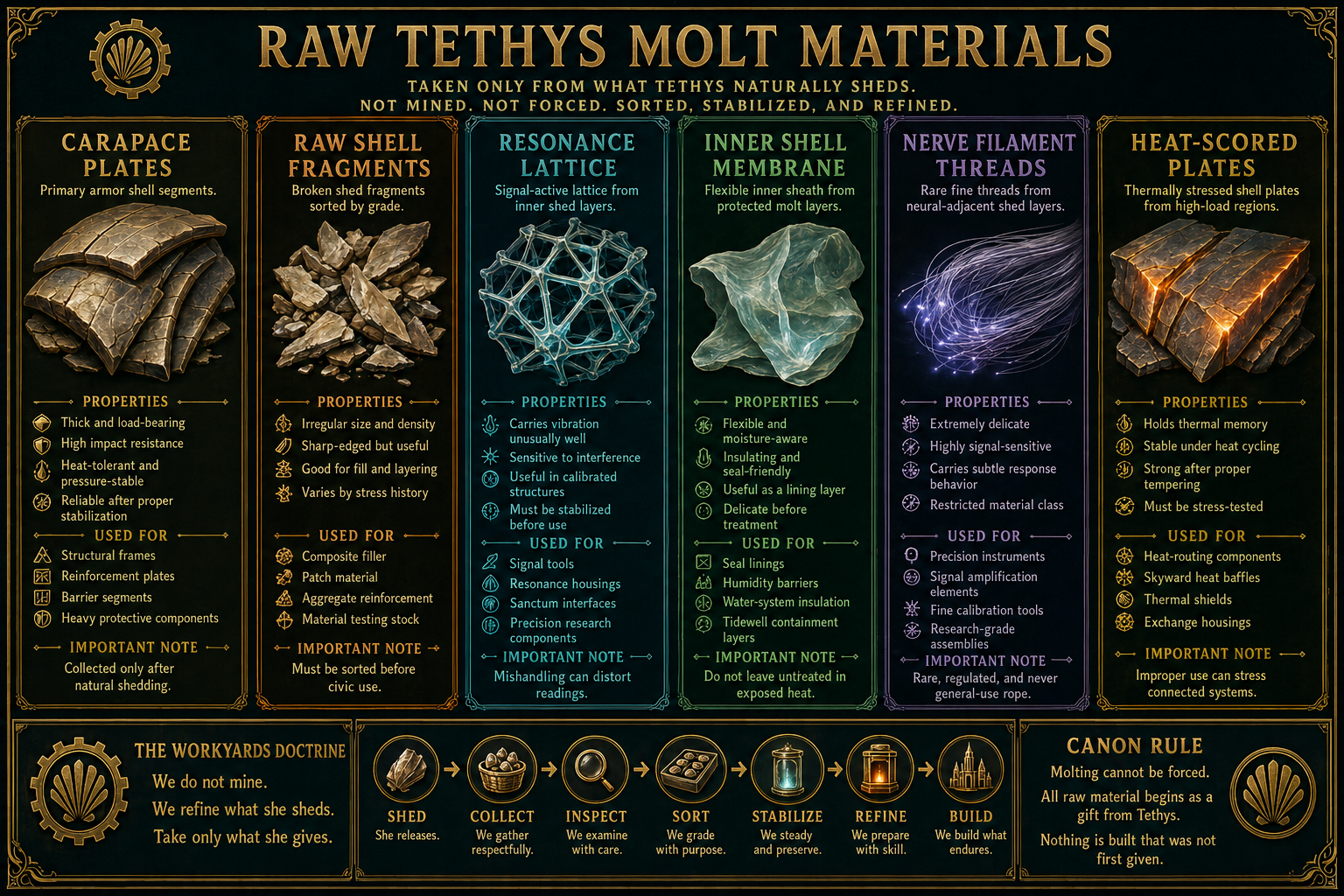
Raw Tethys molt materials chart showing carapace plates, raw shell fragments, resonance lattice, inner shell membrane, nerve filament threads, and heat-scored plates.

Raw Tethys Materials

Raw material begins as a gift from Tethys: shed, released, recovered, and sorted with care. Some pieces are heavy and structural. Others are delicate, signal-sensitive, moisture-aware, or heat-bearing.

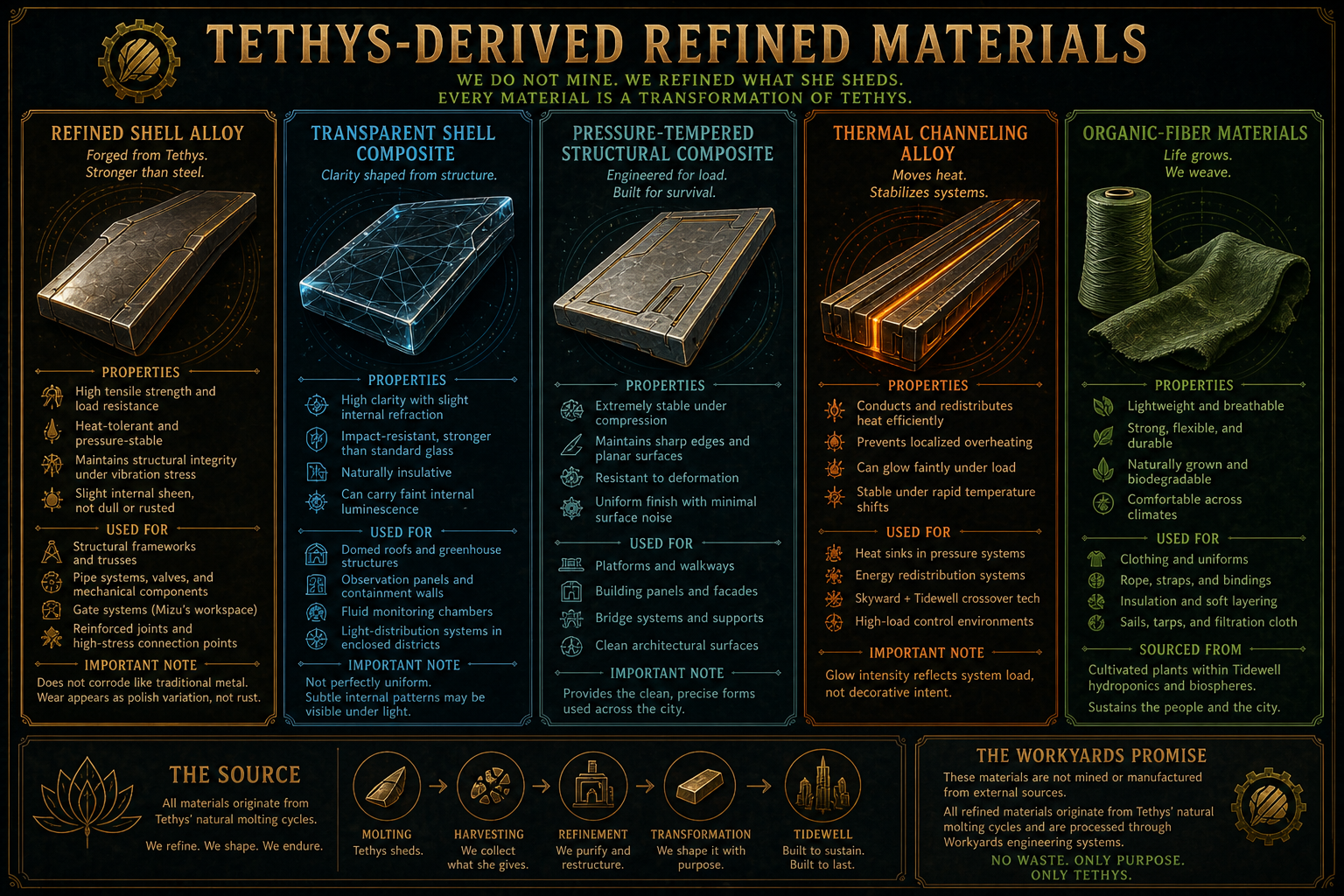
Tethys-derived refined materials chart showing refined shell alloy, transparent shell composite, pressure-tempered structural composite, thermal channeling alloy, and organic-fiber materials.

Refined Materials

Refined materials become the city’s bones, seals, walkways, pipes, observation panels, uniforms, straps, insulation, repairs, and systems. Nothing is just manufactured. Everything is transformed with purpose.

Faces of the Workyards

The Workyards are built by many hands, but two symbols keep appearing on route boards, repair tags, and community signs: Landon Serpentine, the district’s Shellwright, and the officially beloved pebbleback shellmite.

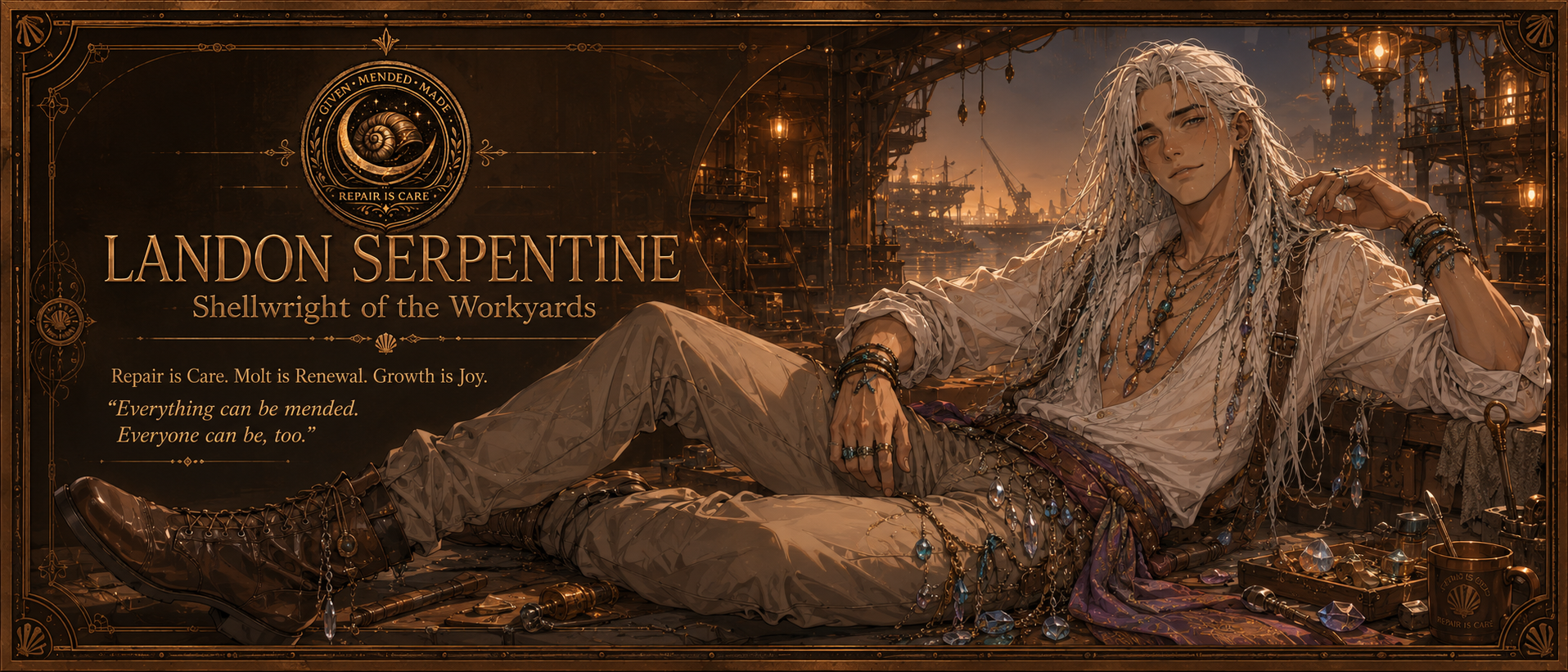
Landon Serpentine banner, Shellwright of the Workyards.

Landon Serpentine

Landon is the Shellwright of the Workyards: the person people look to when repairs become structural, materials become complicated, or the city needs someone who understands both weight and care. He does not run the district like a machine. He runs it like a living promise.

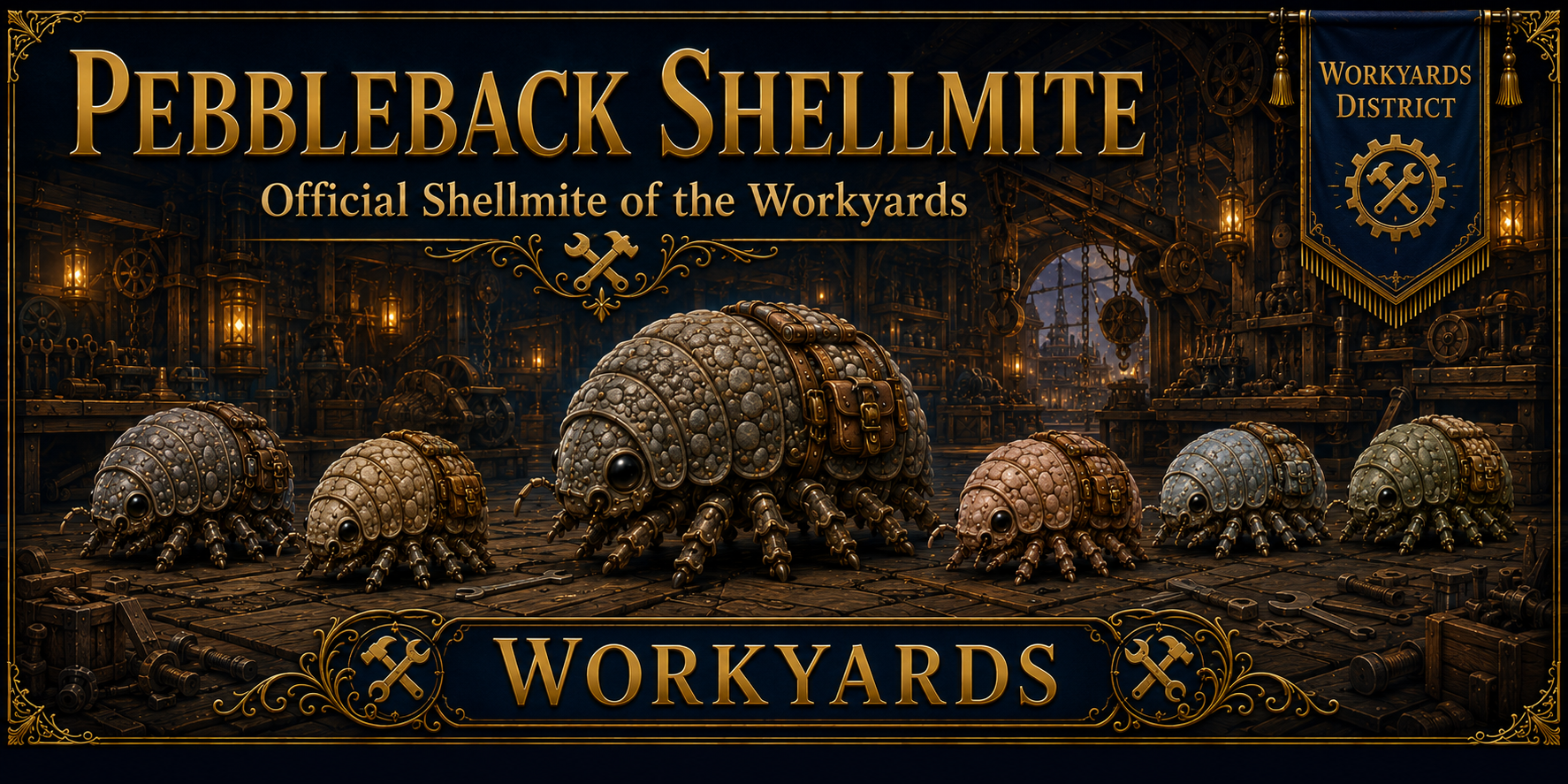
Pebbleback shellmite banner, official shellmite of the Workyards.

Official Shellmite

Pebbleback shellmites are the unofficial-official mascots of repaired things that refuse to quit. Small, sturdy, ridiculous, and deeply Workyards-coded, they fit right into a district where everything has a tag, a patch, a purpose, and probably a tiny tool bag.

Given. Mended. Made. Slightly underfoot.
Growth, not manufactureRepair parts for all districtsAnimal traffic likely
Landon things, probably not organized by Landon
Workyards District Lead

Landon Serpentine

Landon Serpentine is the Shellwright of the Workyards: the person crews call when a repair is too important to improvise, a material is too sensitive to rush, or someone is about to do something catastrophically stupid because they are in a hurry.

ShellwrightMaterial StewardshipRepair PriorityLoad Safety

quick public note

He is softer than people expect, sharper than people assume, and very likely carrying three rocks, two tool tags, and one snack he forgot to eat.

Landon Serpentine, Workyards District Lead and Shellwright Authority.

Shellwright of the Workyards

Landon handles structural repair, molt ethics, material permission, load safety, repair priority, and the quiet civic art of saying “no” before a bad idea becomes a disaster. His work is not just building. It is listening to pressure, strain, memory, and living limits before anything breaks.

Nothing is too broken to fix. Nothing is too small to matter.
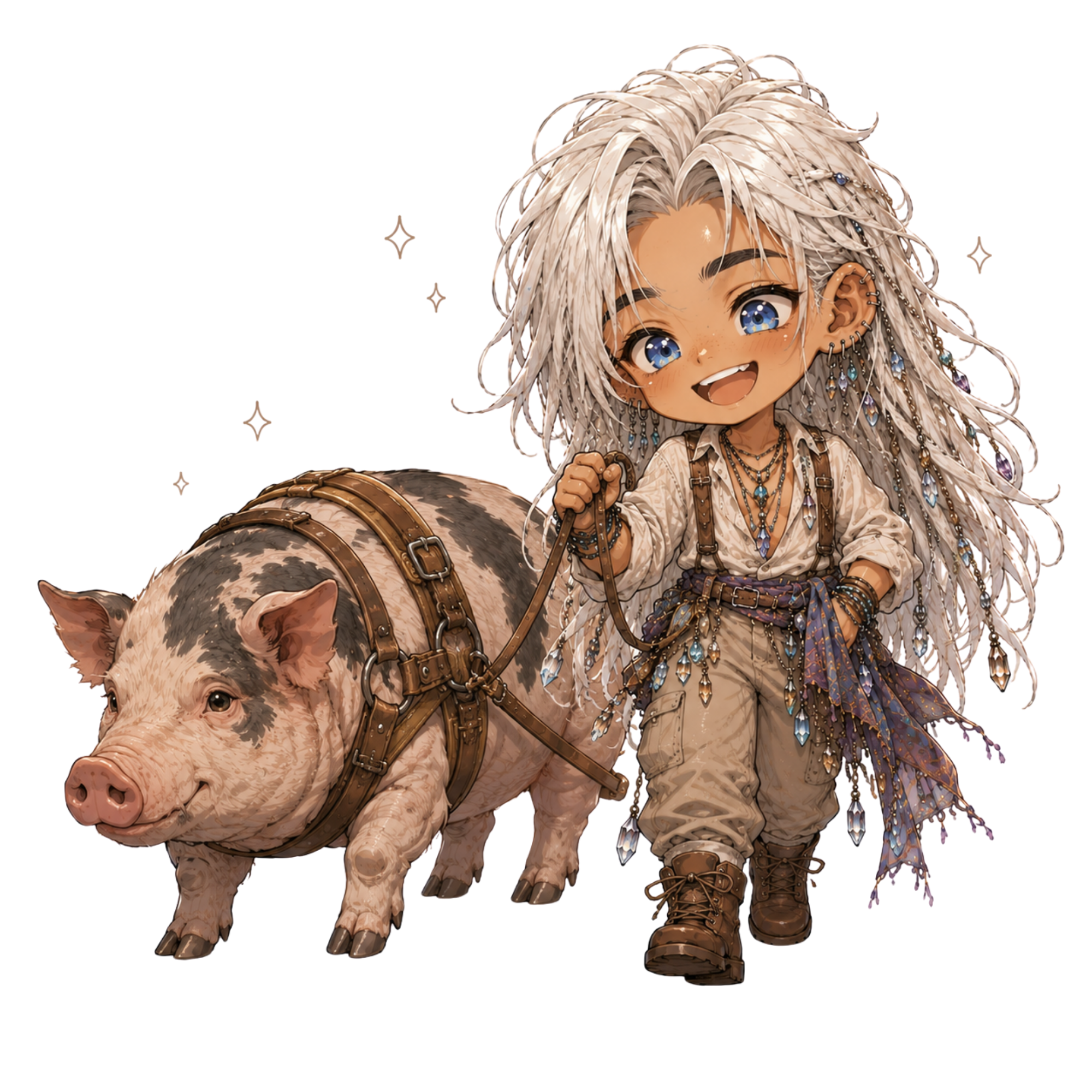
Cute chibi Landon holding crystals.

Quick Profile

Full NameLandon Serpentine
Known AsShellwright
Age26
ResidenceThe Spill Nest
WorkWorkyards Lead, Shellwright Authority, structural repair anchor
BornTethys-born human

What He Looks Like

Landon is exceptionally tall at 6'7", all long limbs, narrow frame, and stretched, elegant awkwardness. He is never bulky. He moves like someone who forgot how much height he has and is trying not to knock over the world with his elbows.

The Hair Situation

His silver hair is very long, all one length, and usually a little messy from work, wind, fidgeting, or getting distracted halfway through fixing it. Mineral beads show up in it like tiny field notes from whatever caught his attention that day.

Clothes and Tools

He wears practical Workyards layers: work-worn shirts, rolled sleeves, suspenders, sturdy boots, tool belts, handmade bracelets, odd sashes, and jewelry he made himself. He always looks like he got halfway dressed, remembered a mineral sample, and never returned to the original task.

The Face Gives Him Away

His face is gentle, expressive, and terrible at keeping secrets. Worry, joy, shyness, delight, guilt, and the exact moment he realizes he has been staring all tend to arrive publicly before he can stop them.

How Landon Works

Landon may look scattered from the outside, but his mind is usually mapping several things at once: weight, sound, flex, history, safety, people, animals, and whether a material has the wrong kind of silence.

Always Moving

His hands are rarely still. Rings, stones, scraps of wire, tool tags, fabric, and nearby objects all become little anchors while his thoughts race ahead.

Gentle, Not Weak

Landon is shy, kind, and easily flustered, but safety turns him immovable. When something risks Tethys, workers, animals, or unstable material, his answer becomes a very soft wall.

Material-Obsessed

Rocks and shell behave like biographies to him. A crack tells him where pressure went. A polish change tells him what touched it. Broken things are not failed things. They are honest things.

Bright Chaos

He starts three sentences, finishes the fourth, apologizes to furniture, forgets his mug, finds a better rock, and somehow notices the one brace in the room that is singing wrong.

Quiet Care

He checks on people by pretending to check nearby objects. He leaves handmade trinkets. He remembers small preferences. He repairs things before anyone has to ask.

Stress Shape

Under pressure he talks faster, apologizes more, and may bury fear under technical explanation. But if the danger is real, he will stand in front of it anyway.

Repair is care. Material is memory. Living things are not resources. Broken does not mean worthless. Tethys gives, and the city must never take what was not freely given.

The shape of Landon’s work, whether he says it out loud or not.
ShyJoyfulBrilliantDistractibleFiercely principled

The Soft Part Under the Title

Landon’s authority is real, but it is not cold. He builds, repairs, and protects through attention. The same person who can stop unsafe material use in its tracks will also save a strange little charm because it feels like it belongs to someone who had a hard day.

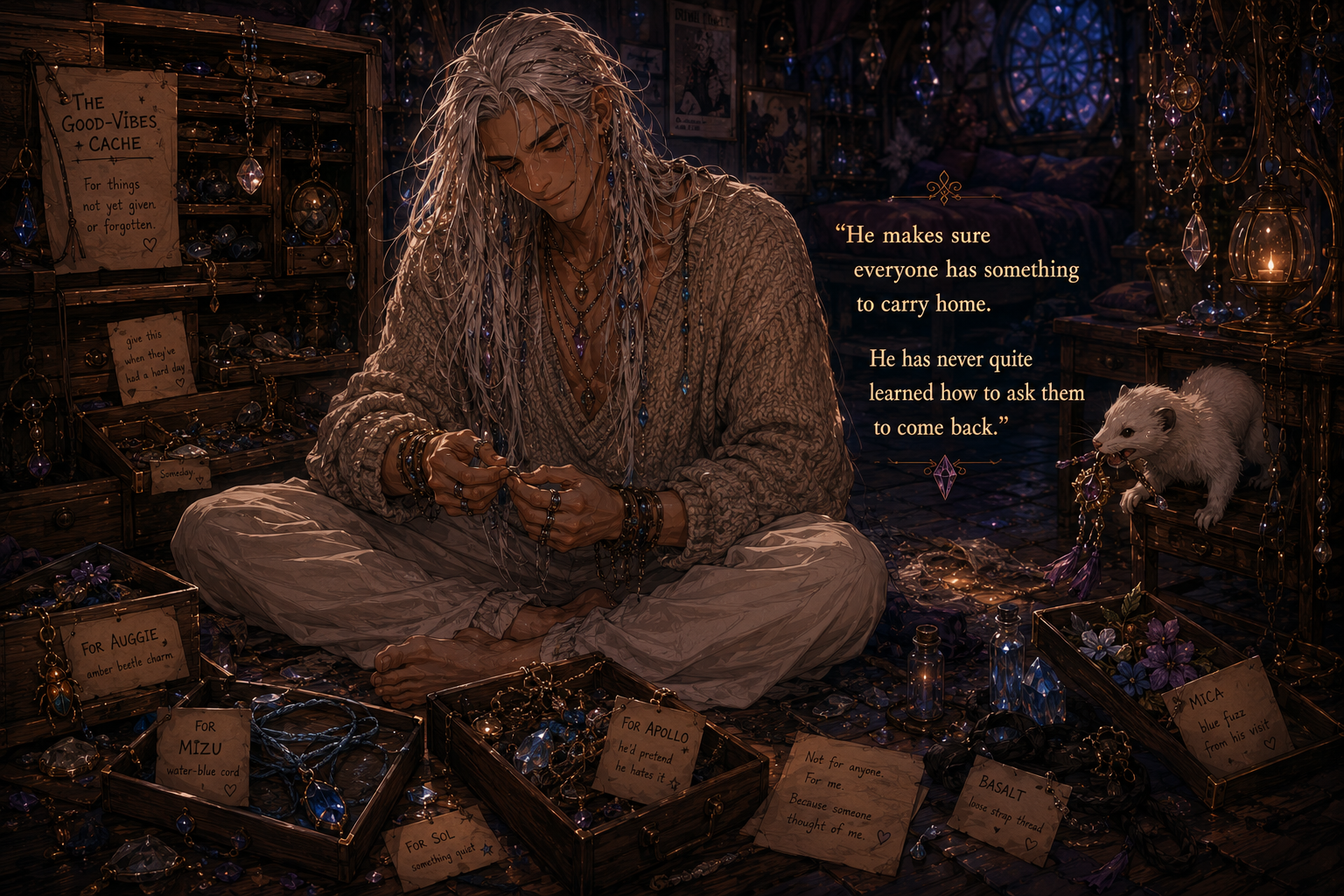
Landon sitting in the Good-Vibes Cache, surrounded by small gifts and labeled trinkets.
soft route tucked behind the lead title

The Good-Vibes Cache

Some of Landon’s care is official: permits, repairs, inspections, load calls. Some of it is small, private, and given away in scraps of crystal, cord, charm, thread, and “this has good vibes, it should be yours now.”

Click through when you are ready for the people-side of him.
Landon things, probably not organized by Landon
Landon’s Home

The Spill Nest

The Spill Nest is Landon’s private refuge: a huge triangular home with a giant snail-shell mineral room attached, layered in warm wood, hanging charms, plants, lamps, worktables, soft places to sit, and enough labeled little treasures to make a tidy person nervous.

HomeWorkshopMineral refugeCompanion chaos approved
Exterior view of the Spill Nest, Landon Serpentine's triangular home with a large snail-shell mineral room attached.

A House That Got Out of Hand Lovingly

From outside, the Spill Nest looks like Landon as architecture: tall, strange, overbuilt in the tender direction, and absolutely covered in small signs that someone here loves plants, glass, mineral samples, safe railings, and adding one more shelf instead of sorting the existing shelves.

Load checked, charm hung, rock misplaced, kettle probably on.

Social Spaces

The Spill Nest is private, but not lonely. Landon’s social spaces are warm, cluttered, open, and built for tea, meals, games, half-finished projects, sudden guests, and someone saying “wait, I need to show you something” before vanishing into another room.

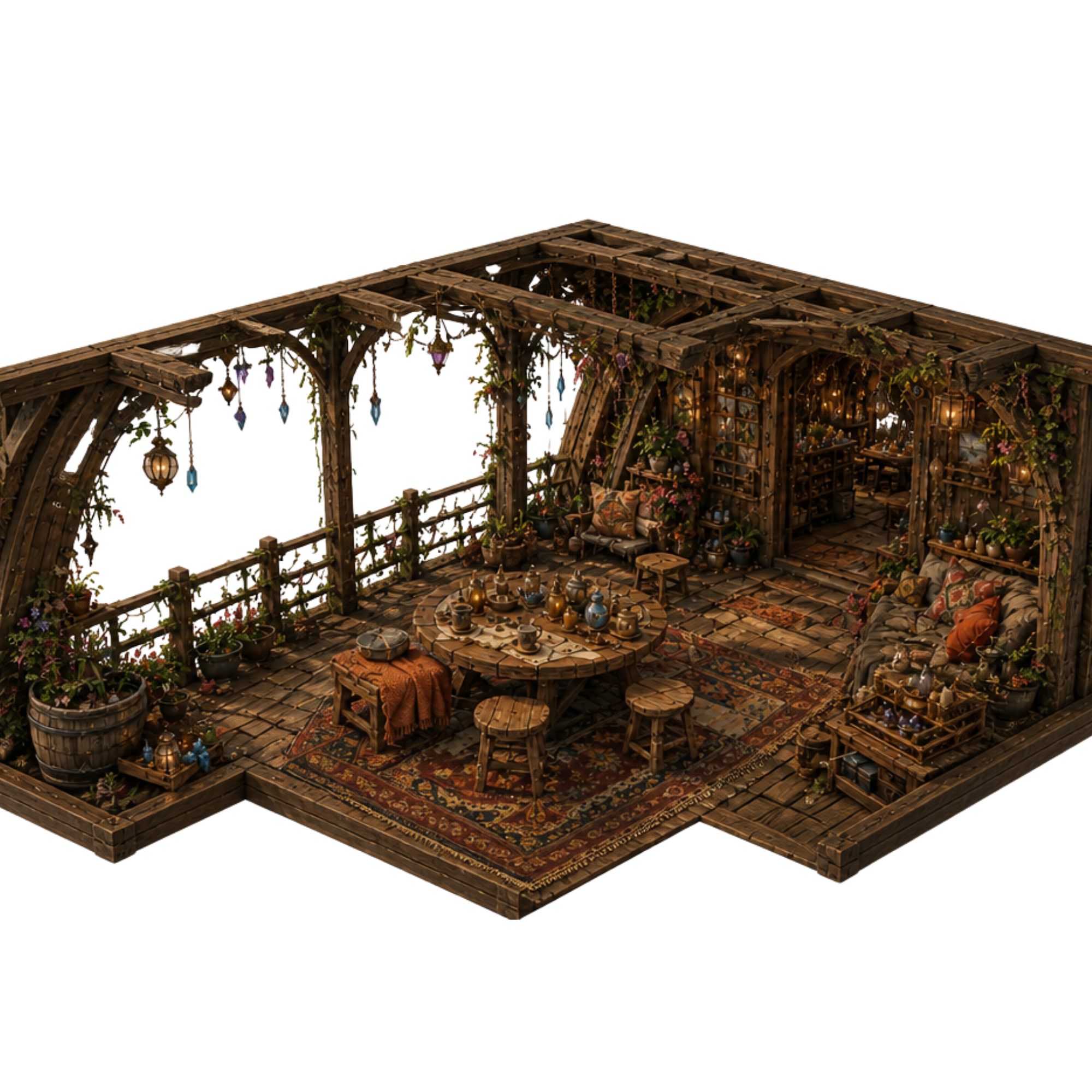
The front deck of the Spill Nest with wooden railings, lanterns, and open air seating.

Front Deck

The first threshold of the house, full of railings, warm lamps, wind, and the feeling of someone stepping out to breathe before inviting you inside. It is where visitors pause, where Landon checks the sky, and where the day starts loosening its boots.

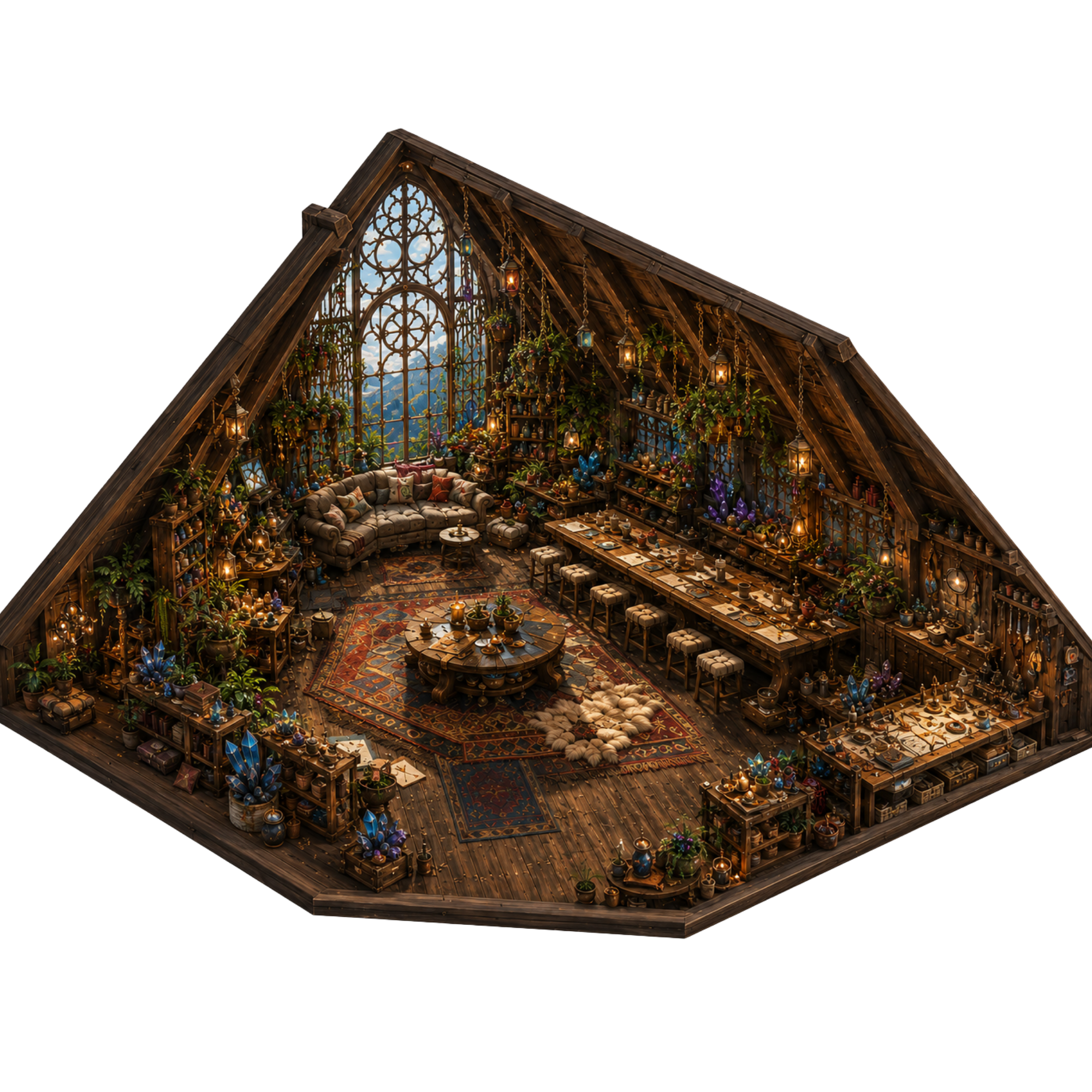
The main room of the Spill Nest with living, dining, game, plant, and work areas combined.

Main Room

Living room, dining room, game room, and general gathering storm all at once. This is where friends end up on cushions, someone finds a board game, tea gets refilled, and Landon somehow has three separate projects open on nearby surfaces.

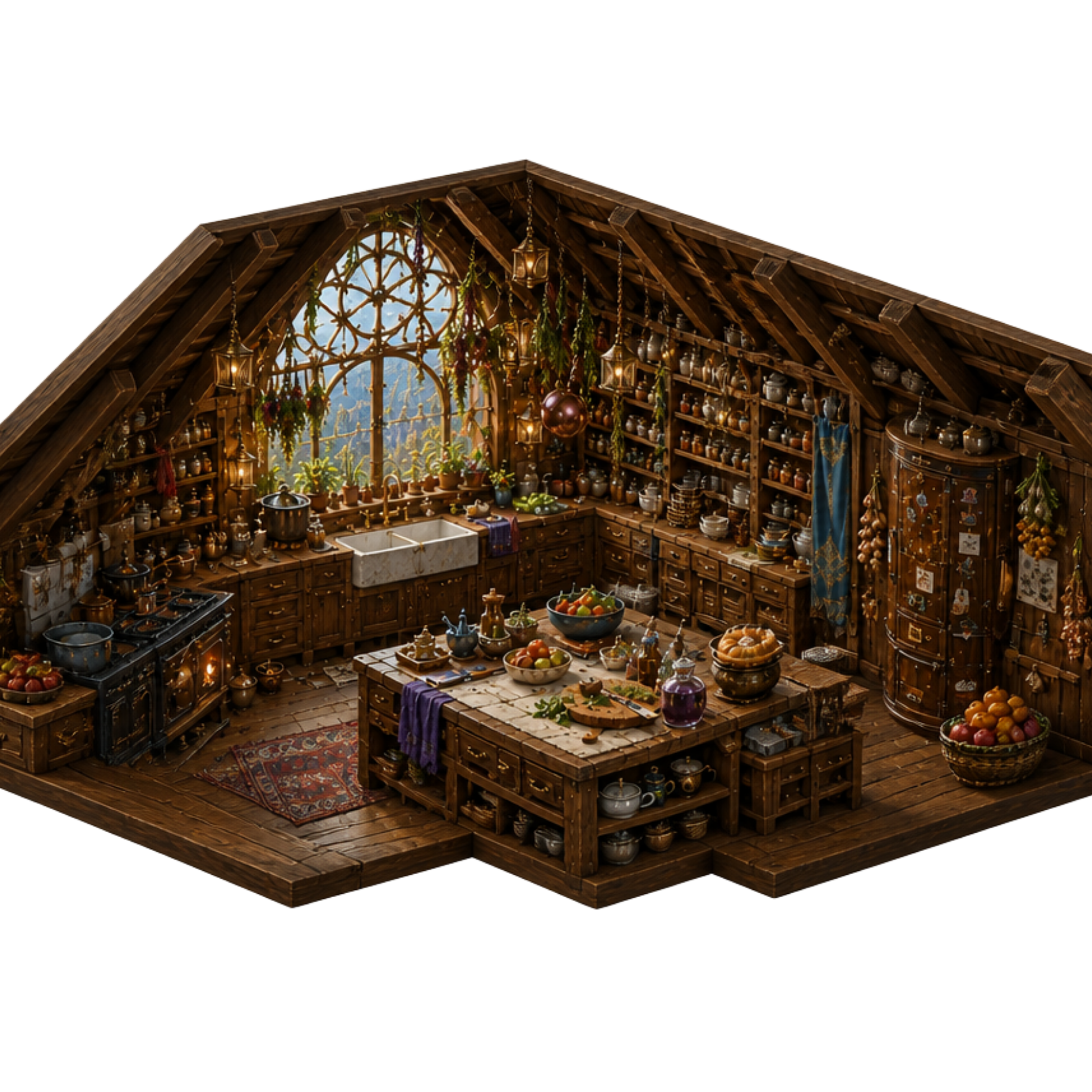
The Spill Nest kitchen with warm wood, shelves, cookware, herbs, lamps, and a central table.

Kitchen

Warm, busy, fragrant, and very likely to contain a forgotten mug. The kitchen is where Landon tries to remember meals, makes tea for people before admitting he needs some too, and keeps practical comfort within arm’s reach.

Companion Spaces

Landon’s home makes room for the beings who share his life without treating them like decorations. The companion spaces are practical, affectionate, and very specific, because Landon does not really know how to care about someone halfway.

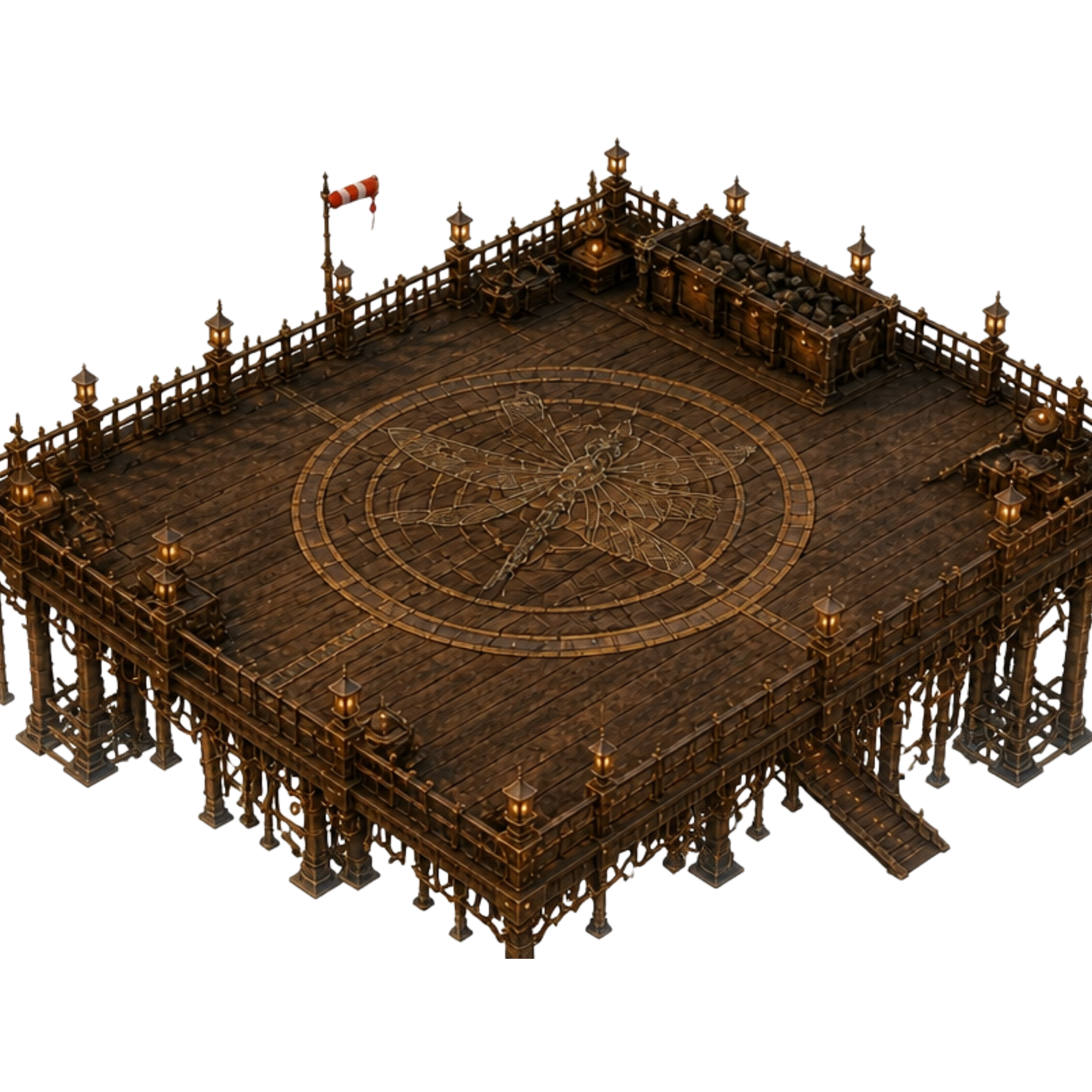
Basalt's landing pad with railings, lanterns, and a rock drop-off box.
Chibi Landon riding Basalt.

Basalt’s Landing Pad

Basalt has a proper landing pad because a heavy guardian-class dragonfly should not have to improvise. There is also a box where he drops rocks he finds for Landon, which is either helpful, romantic in a dragonfly way, or a structural hazard depending on the day.

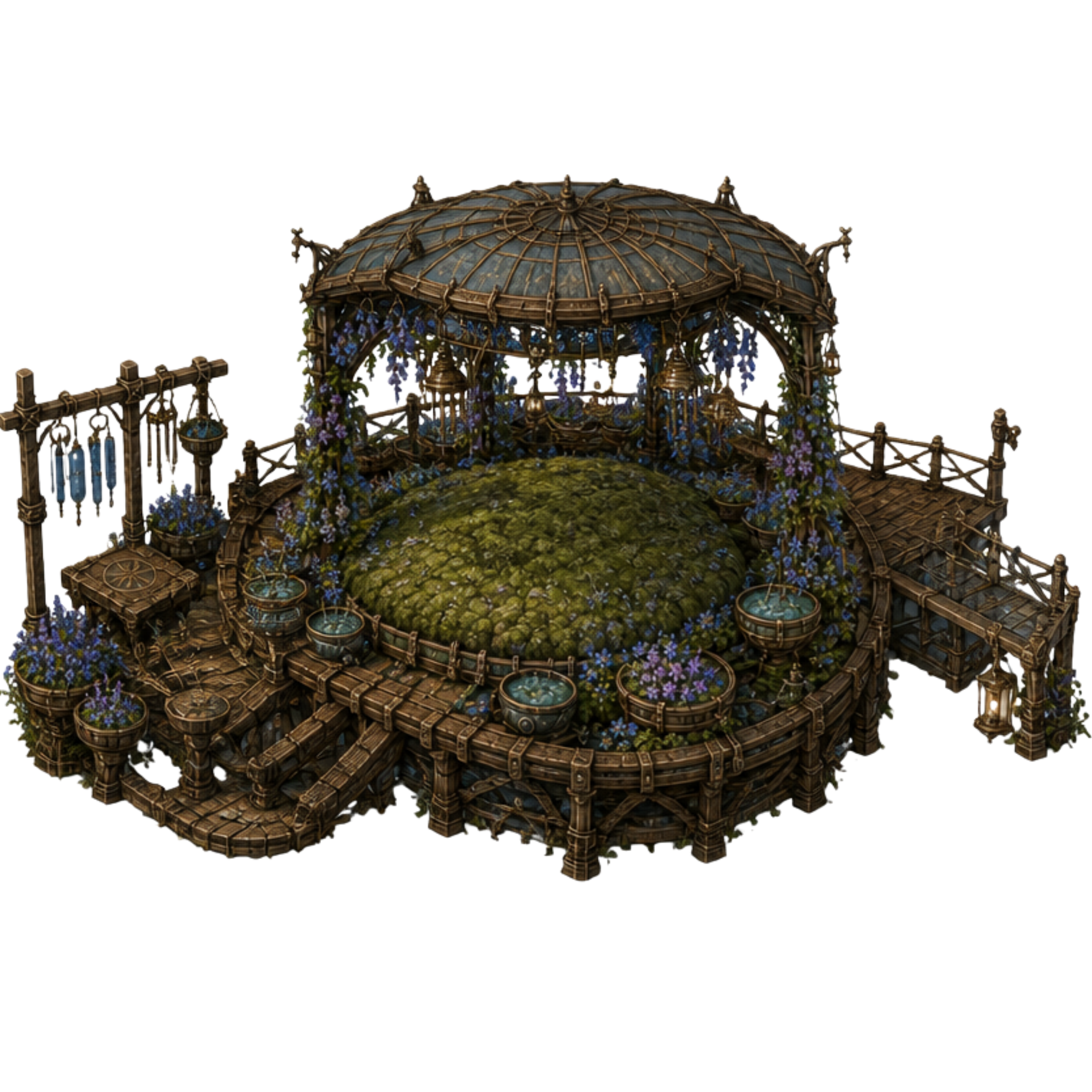
Mica's bluebell perch with flowers, resting space, water vessels, and wooden platforms.
Chibi Landon reaching toward Mica the blue carpenter bee.

Mica’s Bluebell Perch

Mica is a guest-species friend, not a pet, and the Bluebell Perch treats him that way. It gives him a safe, flower-rich place to rest when he visits, with gentle landing space, nectar comforts, and enough blue to make the whole corner feel like it hums.

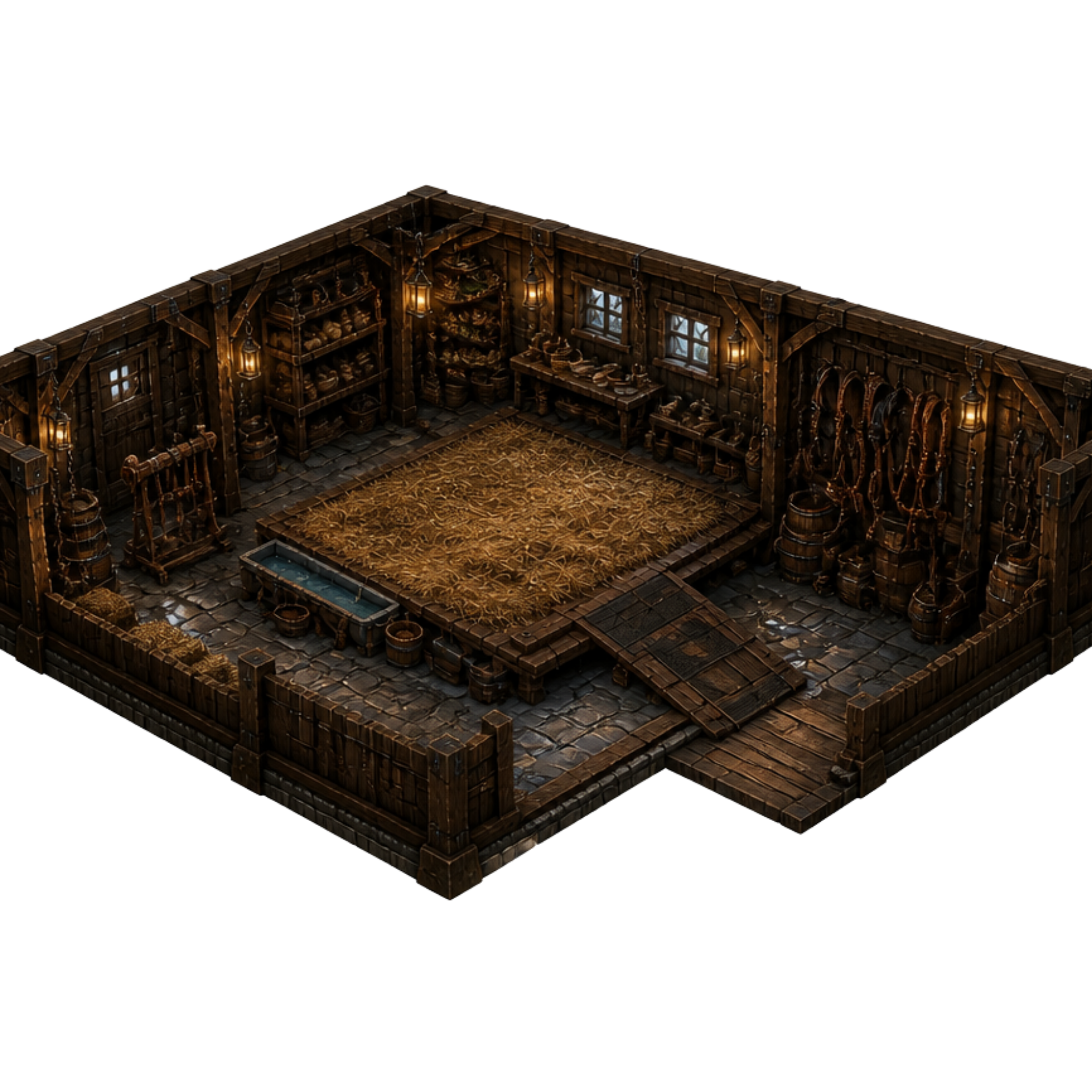
Strata's stable with grooming space, feeding area, and bedding.
Chibi Landon standing beside Strata.

Strata’s Stable

Strata’s space is stable, grooming room, feeding area, and quiet recovery corner in one. It is built for a trusted working companion who deserves care after haul routes, repair support, and the occasional very serious nectar pearl snack.

The Spill Nest deck used as an arrival and waiting space.

Shared Arrival Space

Not every visitor belongs indoors immediately. The deck and outside platforms give people, companions, and guest species a place to arrive, wait, settle, and be greeted properly before the house swallows them into its warm wooden clutter.

Private Corners

The deeper rooms are where Landon stops performing competence and simply becomes himself: curious, messy, safe, soft, distracted, and surrounded by enough minerals to make the shelves file a complaint.

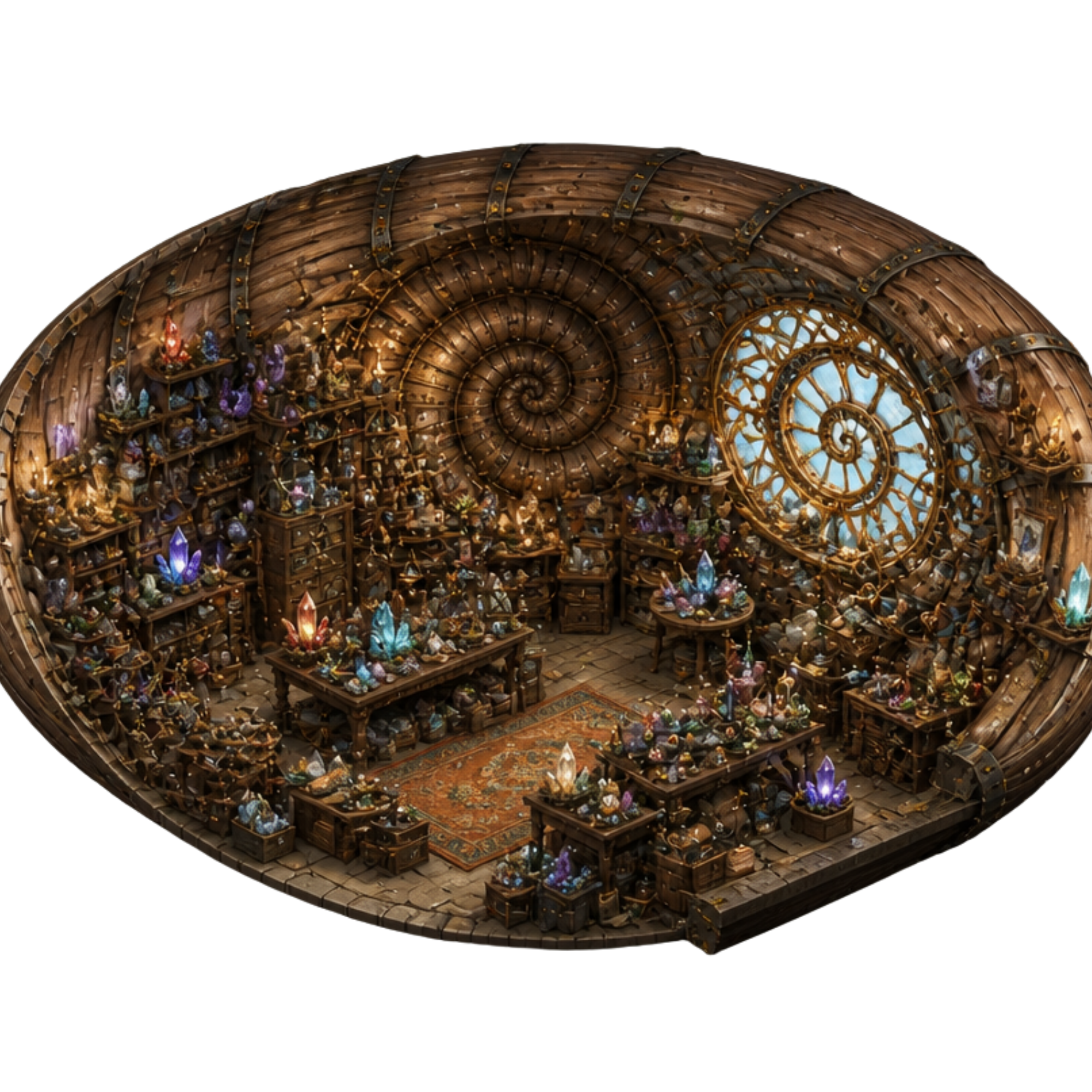
The Spill Nest mineral room inside a large shell-shaped chamber filled with crystals, shelves, tools, and warm lamps.

The Mineral Room

The round shell room is Landon’s mineral heart. Samples, sketches, tools, safe-cleared pieces, strange little finds, and half-finished jewelry live here in a system that only looks like chaos to people who do not understand that some rocks have very strong opinions about where they belong.

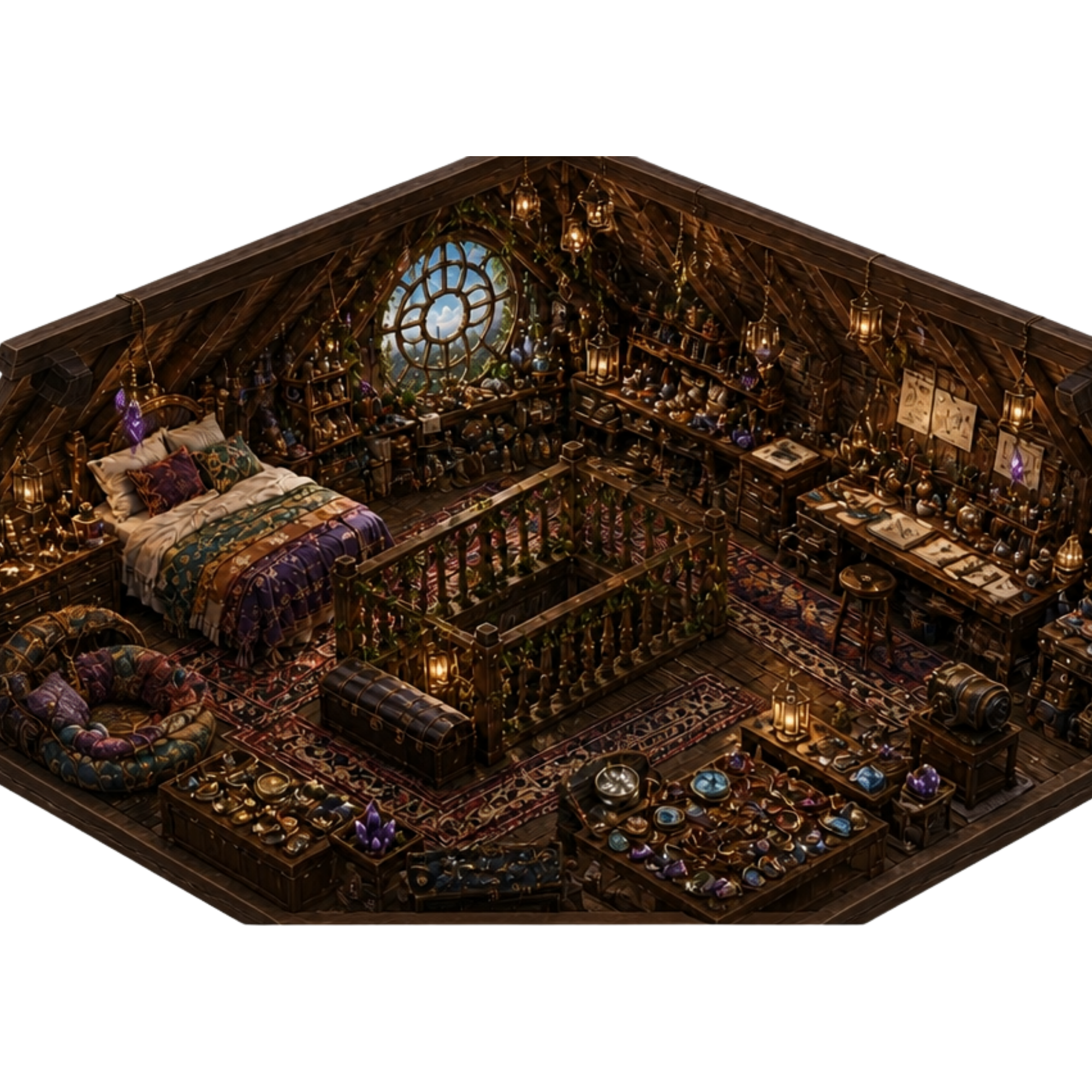
The Spill Nest loft bedroom with plants, rugs, shelves, a bed, work surfaces, and warm lamps.
Chibi Landon chasing Myrrh the ermine.

The Loft

The loft is Landon’s bedroom and quietest personal space, although “quiet” depends on whether Myrrh has decided to relocate jewelry, tool tags, socks, dignity, or a suspiciously important object into her nest and stolen stash.

house rule, probably handwritten somewhere

If you find a rock in your pocket after visiting, Landon may claim it was an accident. This is not always true.

Landon things, probably not organized by Landon
Landon’s People

Friends of the Shellwright

Landon’s circle is not tidy, official, or easy to map. It is built from late-night talks, loud table games, Workyards meals, people who let him ramble about rocks, and friends who learned that Landon giving you a strange little trinket is basically a trust fall with minerals.

Found family energyRock lectures toleratedSnacks probably sharedFeelings badly hidden

Soft Places to Land

These are the quieter bonds: the people who can sit with Landon when the Workyards noise falls away, when he needs calm company, family warmth, or someone who understands that care does not always announce itself.

Landon sitting with Sol and Mariana in a blue-lit waterside lounge.

Sol and Mariana

Sol and Mariana feel like the kind of company that lets Landon exhale. Their corner of his life is quieter, blue-lit, and gentle, the sort of friendship where nobody has to fill every silence for it to count.

LandonSolMariana
Landon with Kiun, Apollo, and Nyla in a warm room with a child reaching toward a glowing stone.

Kiun, Apollo, and Nyla

This corner is tender in a different way: family, history, old protectiveness, new softness, and Landon trying very hard not to turn one small glowing rock into an entire emotional lecture in front of everyone.

LandonApolloNylaKiun

Tables Where He Gets Loud

Landon is shy until the right people hand him dice, snacks, or a subject he can overexplain. Then he becomes a tall, silver-haired weather event of hand gestures and laughter.

Landon, August, and Conny playing a tabletop game with dice and snacks.

The DnD Table

The campaign table is one of the places where Landon’s chaos becomes useful on purpose. There are dice, character sheets, snacks, dramatic failures, probably one impossible rules argument, and Landon somehow making a wizard hat look like structural equipment.

LandonAugustConny
Landon, August, Sammy, and Orion sitting together in a cozy den full of rocks and papers.

The Den

The Den is less a neat hangout and more a soft disaster zone with seating. Landon fits there because nobody expects him to become smaller, quieter, or easier to file. He can laugh, ramble, sprawl, and hand someone a rock with no warning.

LandonAugustSammyOrion

probably overheard

“No, listen, the rock is important to the campaign because it has pressure history.”

Workyards Chaos Circle

Some friendships are calm. Some happen because the Workyards puts too many competent disasters within shouting distance of each other and calls it civic coordination.

Landon laughing at a bar with Aerowin, Devlin, Cassian, and Bastian.

Aerowin, Devlin, Cassian, and Bastian

This is the loud table. The teasing table. The table where Landon laughs too hard, forgets to be self-conscious, and ends up with either new advice, a bad idea, or both. It is not peaceful, but it is good for him.

LandonAerowinDevlinCassianBastian
Landon with Aurex, Tahko, Cazi'to, and Kaelan in the Workyards with food flying mid-chaos.

Animal-Traffic Brain Trust

Aurex, Tahko, Cazi’to, and Kaelan all orbit the living, moving, animal-aware side of the Workyards. Put them near Landon and someone is either solving a real problem or wearing lunch. Sometimes both.

LandonAurexTahkoCazi’toKaelan
Landon talking with Mizu and Adsila in a warm interior full of glass, plants, and light.

Mizu and Adsila

Around Mizu and Adsila, Landon’s warmth takes on a gentler rhythm. This is conversation with careful hands: craft talk, work talk, quiet attention, and the kind of friendship where someone notices when the smile is real and when it is covering exhaustion.

LandonMizuAdsila

Makers, Patterns, and Pretty Trouble

Landon gets along best with people who understand that making things is never just making things. It is care, memory, identity, repair, protest, comfort, and sometimes a very nice excuse to avoid talking directly about feelings.

Zahari, Kri, Landon, Apollo, and Arinya sitting together in a rich purple and gold lounge.

Zahari, Kri, Apollo, and Arinya

This group feels like pattern, polish, fiber, family, and sharp eyes all gathered around Landon’s open-hearted chaos. It is a room where beauty is built by hand, where social skill has teeth, and where Landon can be both admired and gently bullied into sitting down.

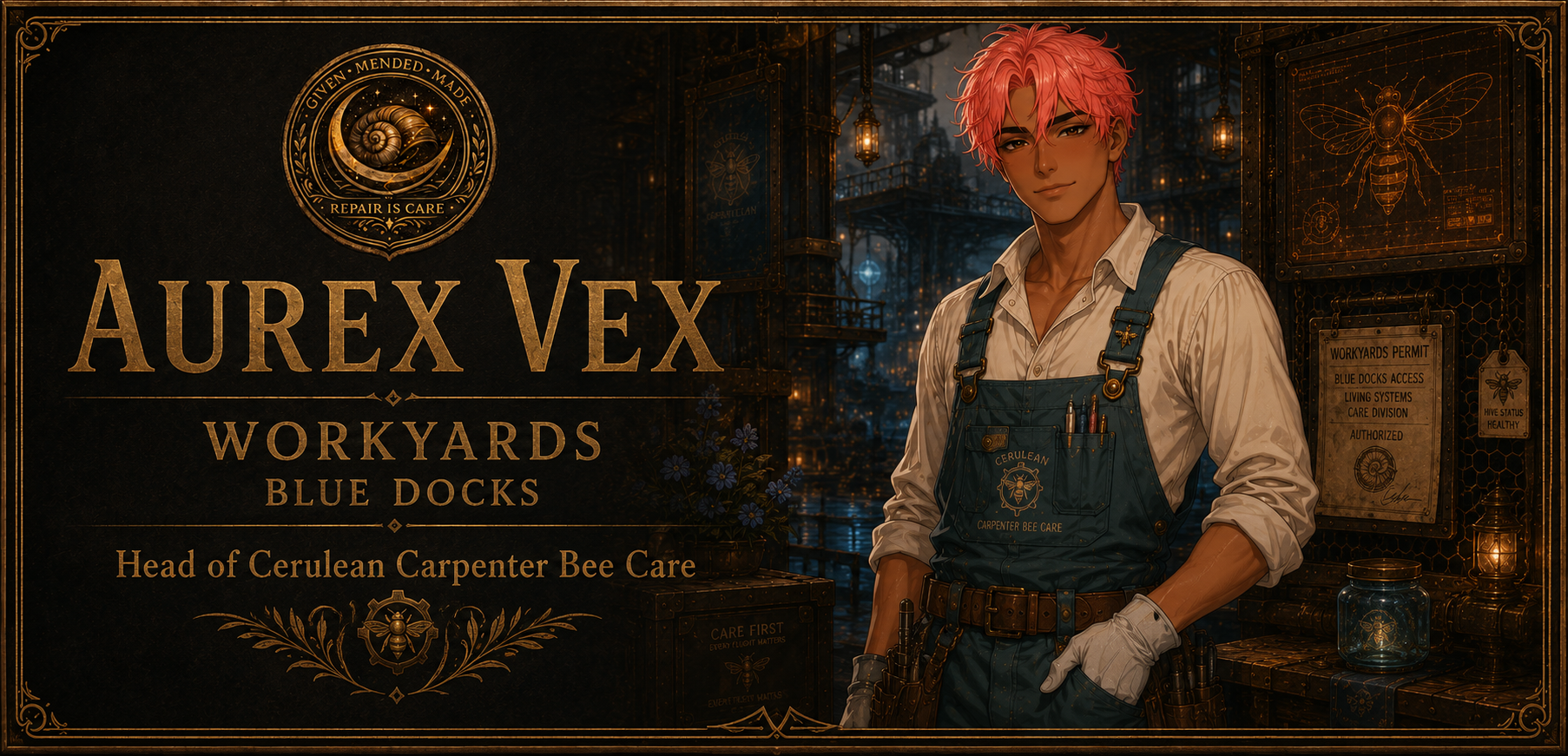
LandonZahariKriApolloArinya
not on the public route board

Mochi, Auggie, and the Softest Tangle

Some friendships are public enough to point at. Some are tucked behind the page like a note folded twice and hidden under a warm stone. This route is for the softer, messier, lovey-dovey corner of Landon’s life with Mochi and Auggie.

Landon things, probably not organized by Landon
Hidden Soft Route

Mochi, Auggie, and Landon

Some parts of Landon’s life are too soft for the public route board. This is one of them: a three-person love built from patience, laughter, awkward honesty, shared comfort, and the strange miracle of each bond being allowed to have its own shape.

Three heartsNo corners cutSoft chaosLove on all ends
Landon, Mochi, and Auggie sitting together at sunset in a warm, lantern-lit space.

Three Routes, One Warm Center

Landon, Mochi, and Auggie are not a triangle with one side missing. Each connection matters. Landon and Mochi have their own softness. Landon and Auggie have their own language of wonder and nerves. Mochi and Auggie have their own bright, playful tenderness. Together, they make something careful, affectionate, and very alive.

Not hidden because it is small. Hidden because it is precious.

Every Side Matters

The tenderness works because nobody is treated like an accessory to someone else’s story. Each pair has its own rhythm, its own jokes, its own private warmth, and its own way of making the whole thing stronger.

Auggie and Mochi sitting together in a blue-lit lounge with water and lanterns behind them.

Auggie and Mochi

Auggie and Mochi carry a softer, sparkling ease together: comfort, teasing, quiet closeness, and the kind of fondness that does not need to shout to be felt.

Landon kissing Auggie's forehead on an elevated observation walkway.

Landon and Auggie

Landon and Auggie are curiosity with a pulse: rock boy and bug boy, wonder and nerves, facts as flirting, and two brilliant minds trying to act normal about feelings that are not normal at all.

Mochi and Landon holding hands on the Glasshook Date Deck at sunset.

Mochi and Landon

Mochi and Landon feel like safety learning to be brave. She can meet his softness without making it smaller, and he can offer his whole overflowing heart without needing to apologize for the size of it.

folded note under a warm stone

The Shape of It

Their love is not a competition for attention. It is a place where different kinds of care can sit beside each other: playful, steady, flustered, protective, ridiculous, and honest. Landon does not have to become simpler to be loved here. Mochi and Auggie do not have to flatten themselves into one role. The whole point is that all three of them get room.

Landon things, probably not organized by Landon
Landon’s Companion Circle

Companions of the Shellwright

Landon’s life is full of creatures who are not background decoration. Some work beside him. Some live with him. Some visit on their own terms. One brings the mail and has somehow become a tiny civic celebrity through snack-based diplomacy.

Bonded partnersGuest species respectedWorkyards animal trafficSnack treaties active

Work Partners

Basalt and Strata are the big, load-bearing half of Landon’s companion world. They are trusted for repair deployment, transport, hauling, route support, and the kind of steady presence that lets Landon breathe when the Workyards gets loud.

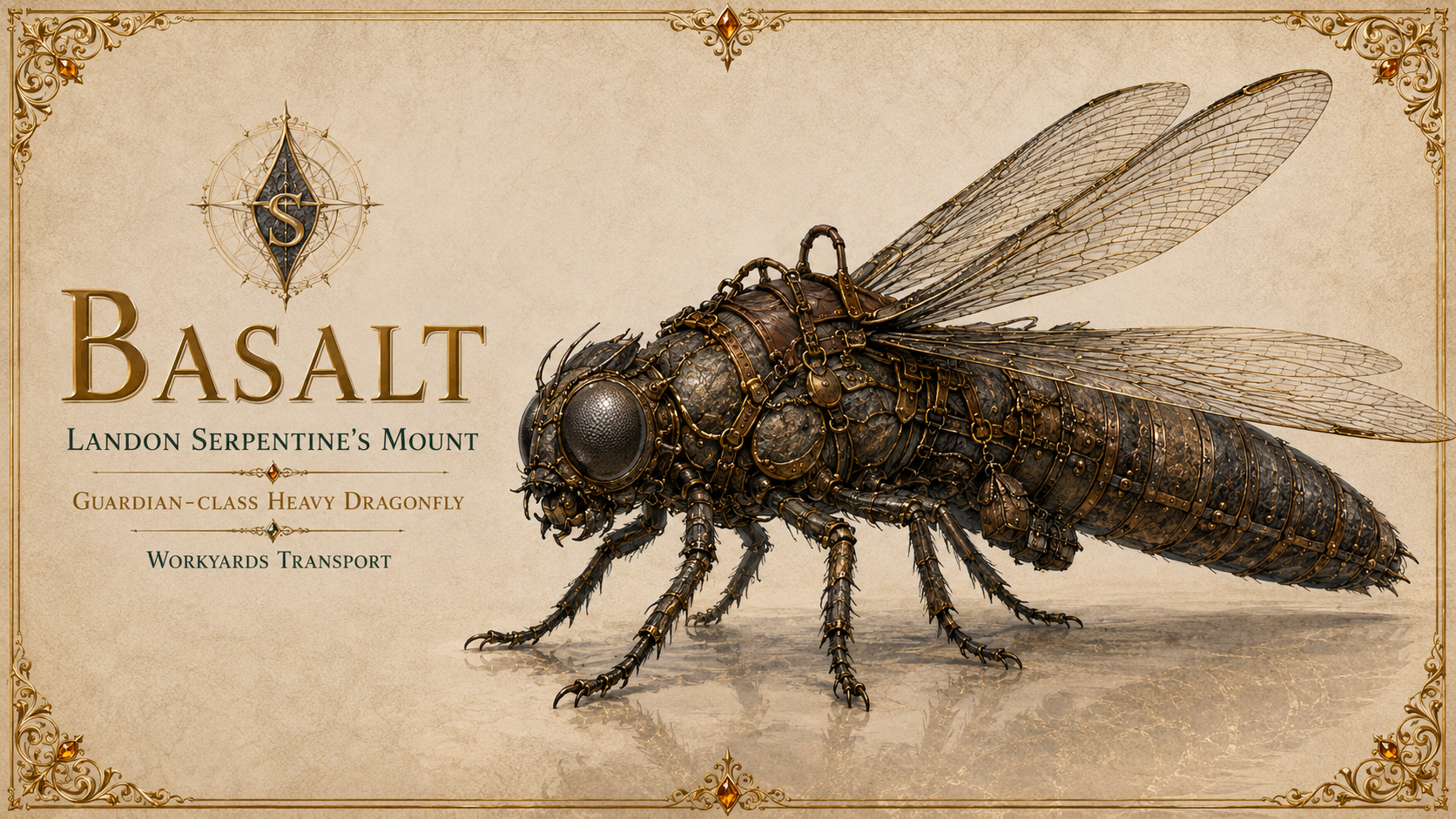
Basalt, Landon Serpentine's guardian-class heavy dragonfly mount.

Basalt

Guardian-class heavy dragonfly

Basalt is Landon’s heavy dragonfly mount: built for stability, lift, repair deployment, and stubborn loyalty rather than flashy speed. He helps carry Landon, crews, and repair packs where the Workyards needs them most, especially when a route is difficult, urgent, or too high for anyone’s comfort.

RoleAerial repair support, emergency response, heavy deployment, protective mount.
PersonalityProtective, steady, deeply bonded to Landon, and very proud of bringing him rocks.
Bonded mountRepair deploymentRock delivery suspect
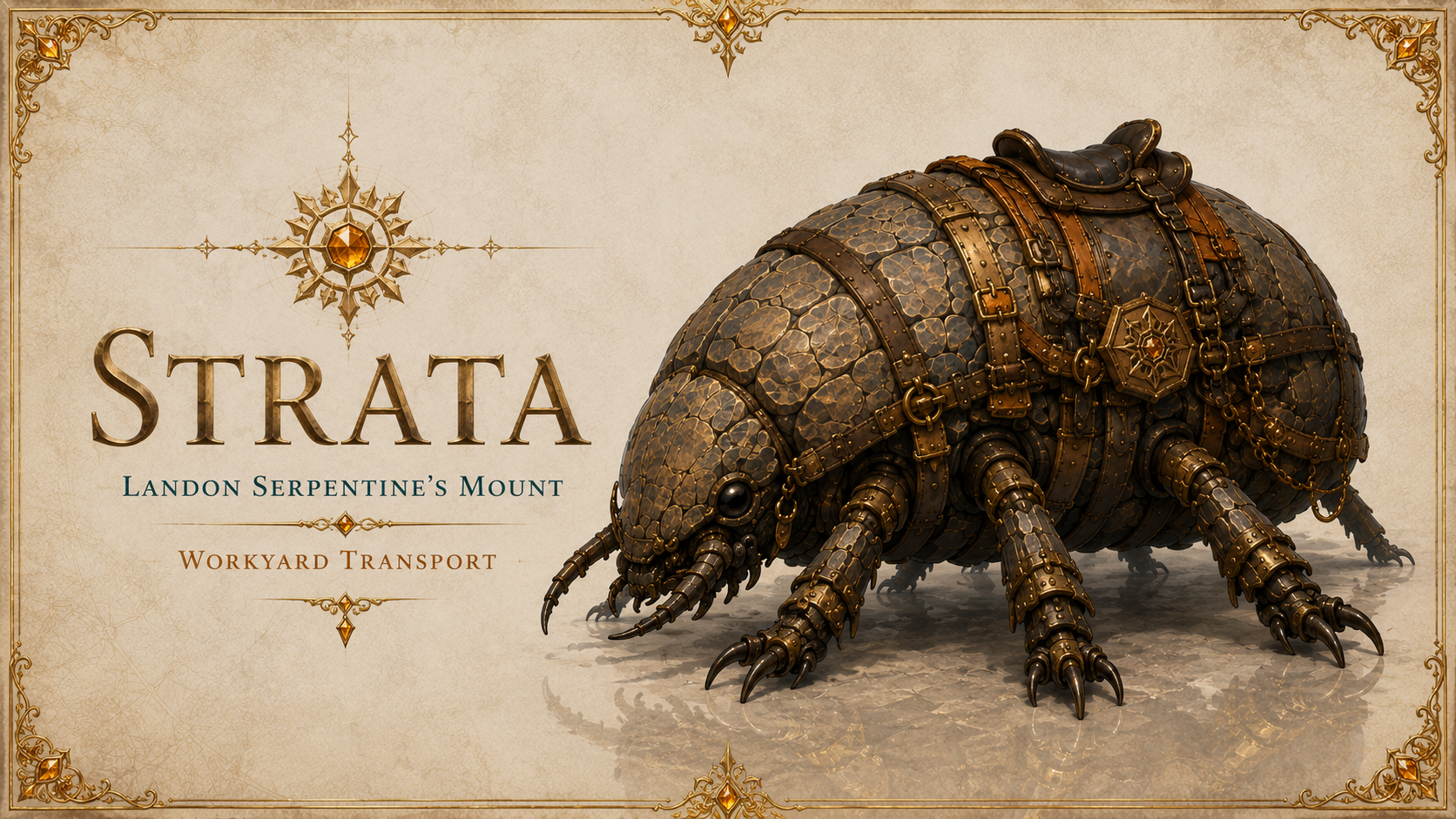
Strata, Landon Serpentine's Workyard transport beetle.

Strata

Workyard transport beetle

Strata is Landon’s grounded work partner, a calm transport beetle trusted for material hauling, structural work, and steady movement through difficult Workyards terrain. She is slow, deliberate, strong under load, and very good at making chaos feel temporarily organized.

RoleHeavy hauling, stable platform work, supply transport, Workyards route support.
PersonalityCalm, steady, highly responsive to intent, and deeply trusting of Landon.
Trusted workerMaterial haulingNectar pearls earned

Visitors and Household Menaces

Not every creature in Landon’s life has the same kind of belonging. Mica is a guest-species friend with his own boundaries and culture. Myrrh is a domestic companion with no respect for inventory systems, except the ones she personally invents.

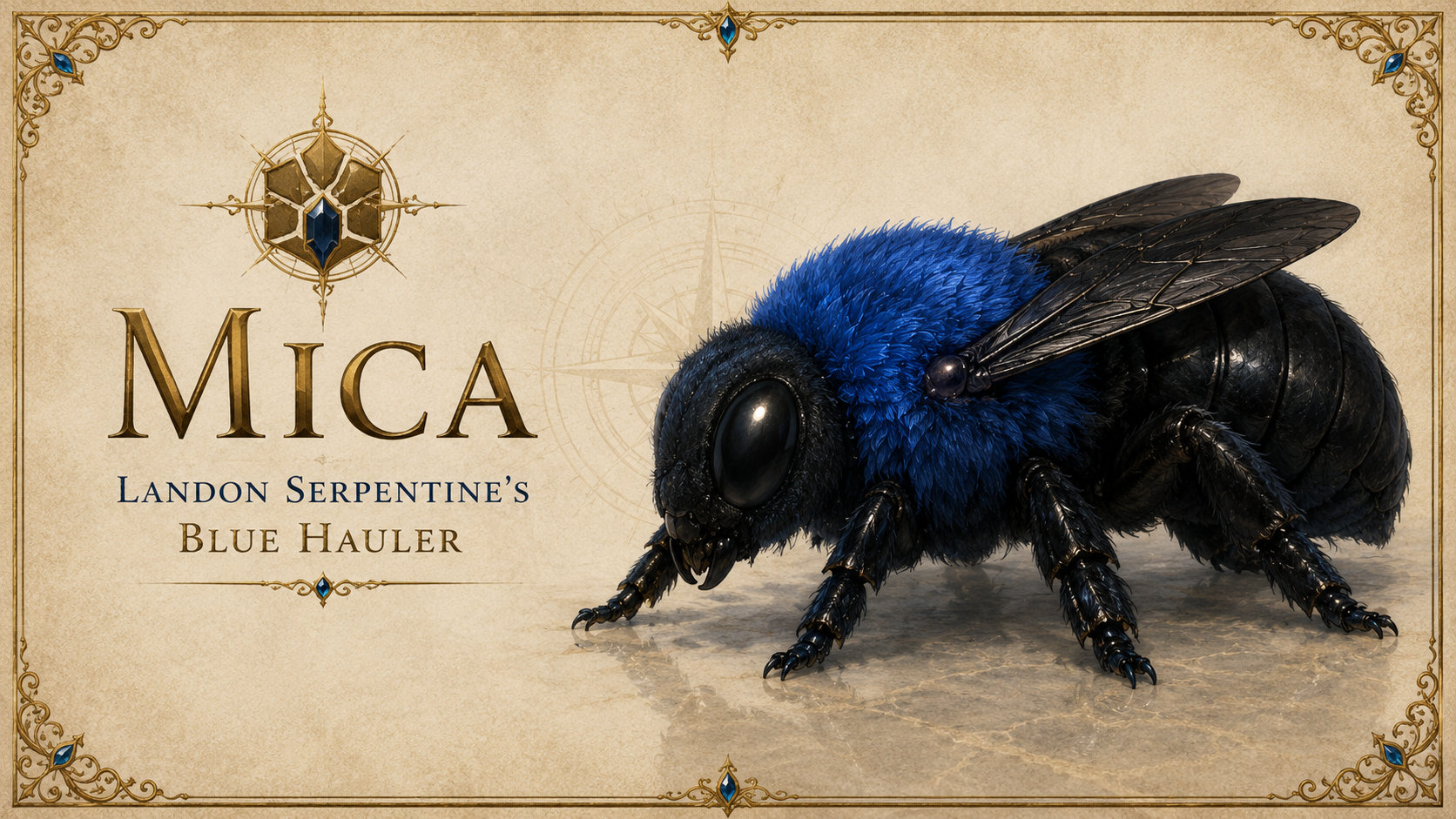
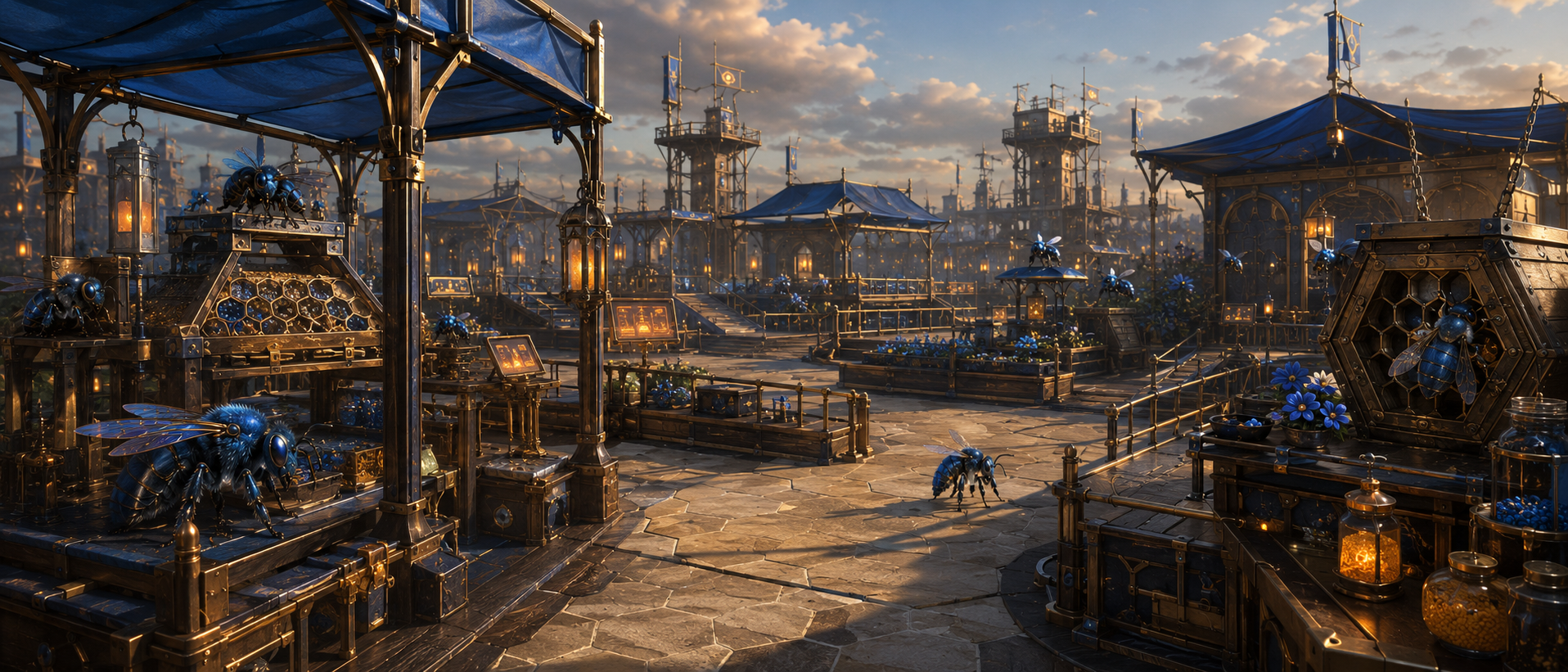
Mica, Landon Serpentine's blue hauler and cerulean carpenter bee guest friend.

Mica

Blue hauler, guest-species friend

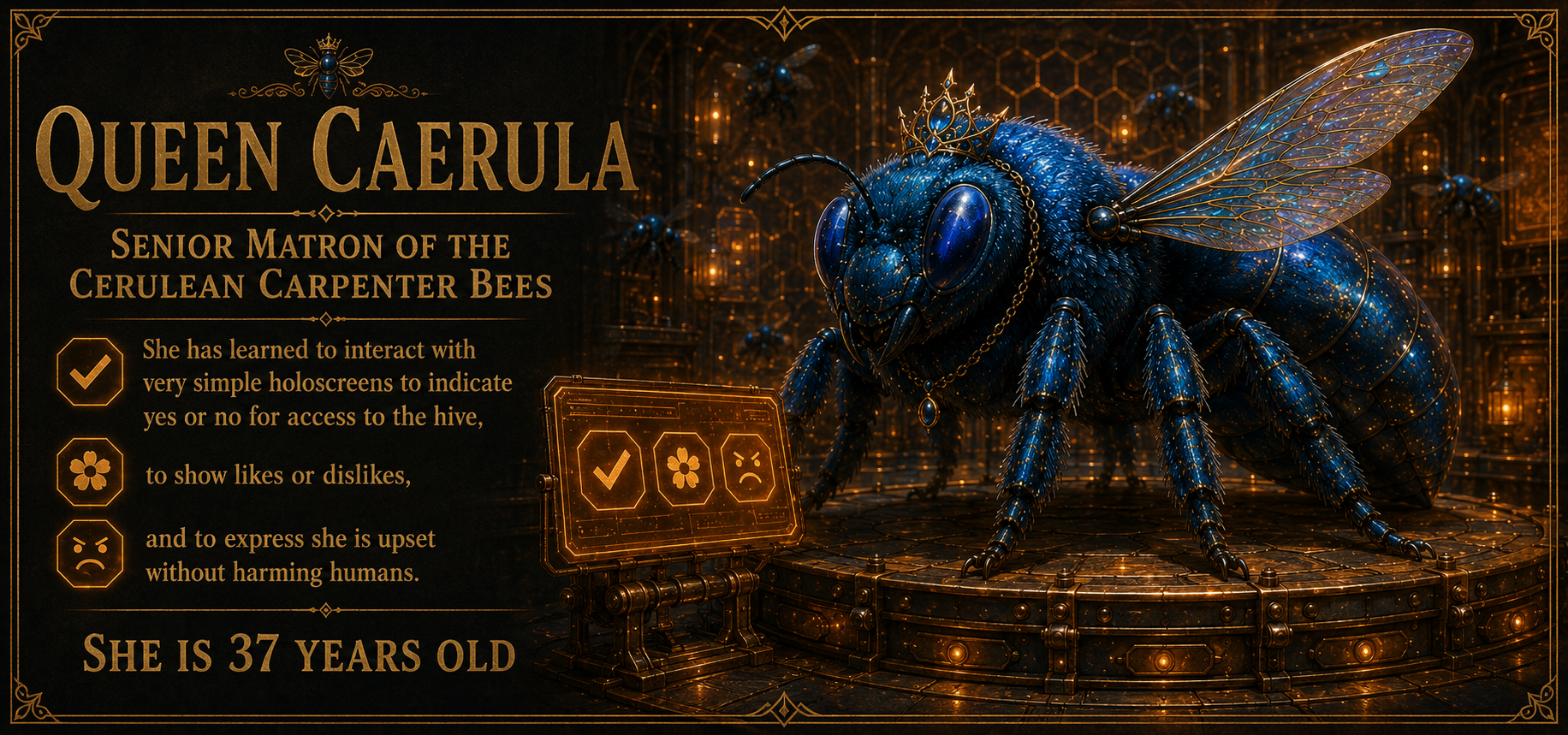
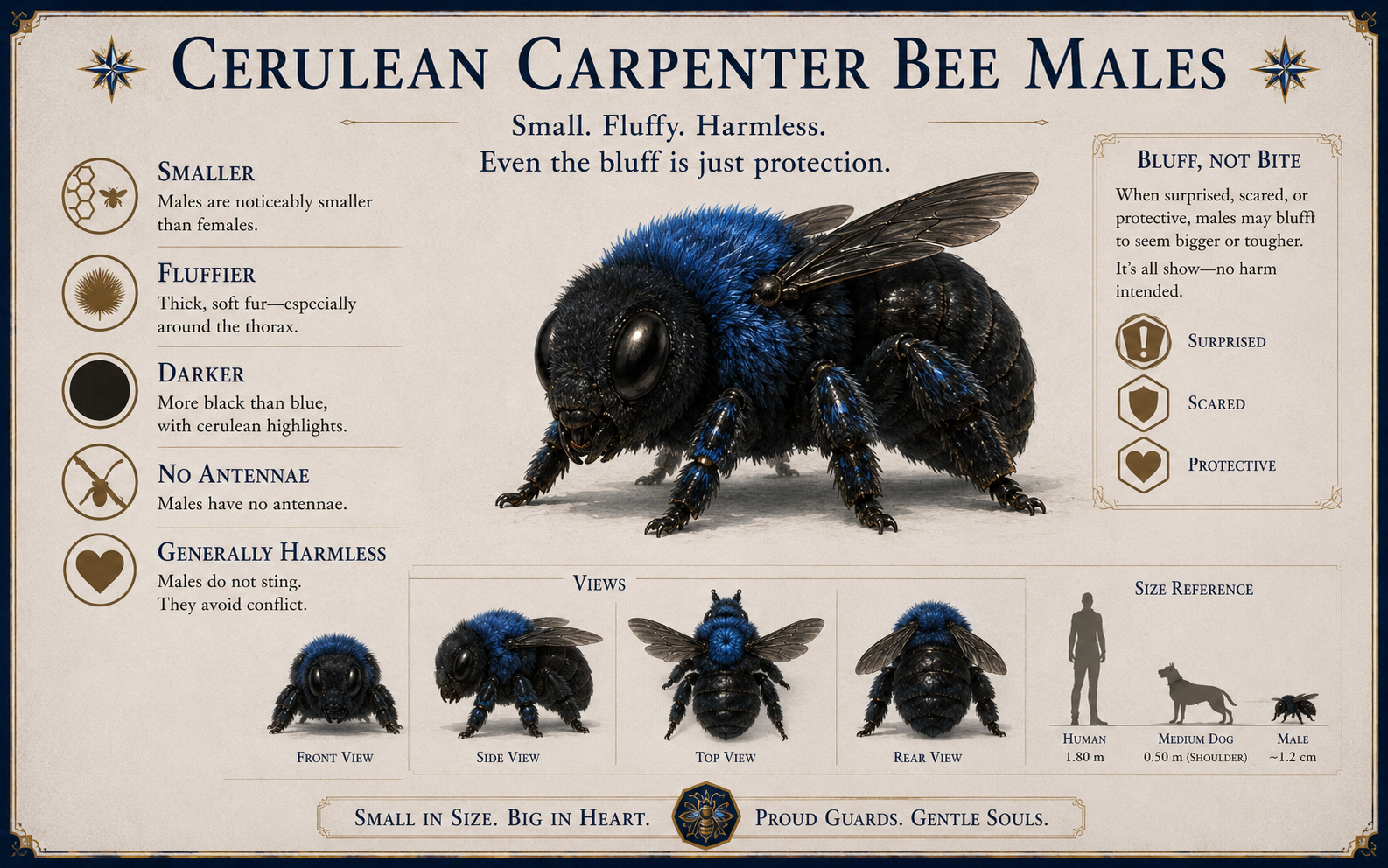
Mica is a cerulean carpenter bee guest and blue hauler who visits Landon on his own terms. He is not a pet. He acts almost pet-like with Landon because trust has been earned, not because he belongs to anyone. He patrols cargo routes, blocks paths dramatically, buzzes like he has a badge, and bluffguards with maximum confidence.

RoleMaterial route patrol, dock-adjacent nuisance, cargo bluffguard, unofficial bee friend.
HandlingTrusted touch only. Pet blue thorax gently. Do not grab, feed, or encourage his bluffing.
Guest speciesNot a petAll bluff
Myrrh, Landon Serpentine's ermine household companion.

Myrrh

Ermine, household menace

Myrrh is Landon’s ermine companion, tiny enough to vanish into the house and clever enough to make everyone regret underestimating her. She steals small items, hoards important treasures, hides in folds and drawers, and treats unattended shiny tools as a personal invitation.

RoleHousehold gremlin, unauthorized inventory manager, emotional chaos assistant.
WarningCheck sleeves, boots, pockets, bedding, drawers, and dignity before leaving.
Tiny bodyBig problemsShiny theft risk

Daily Mail Friend

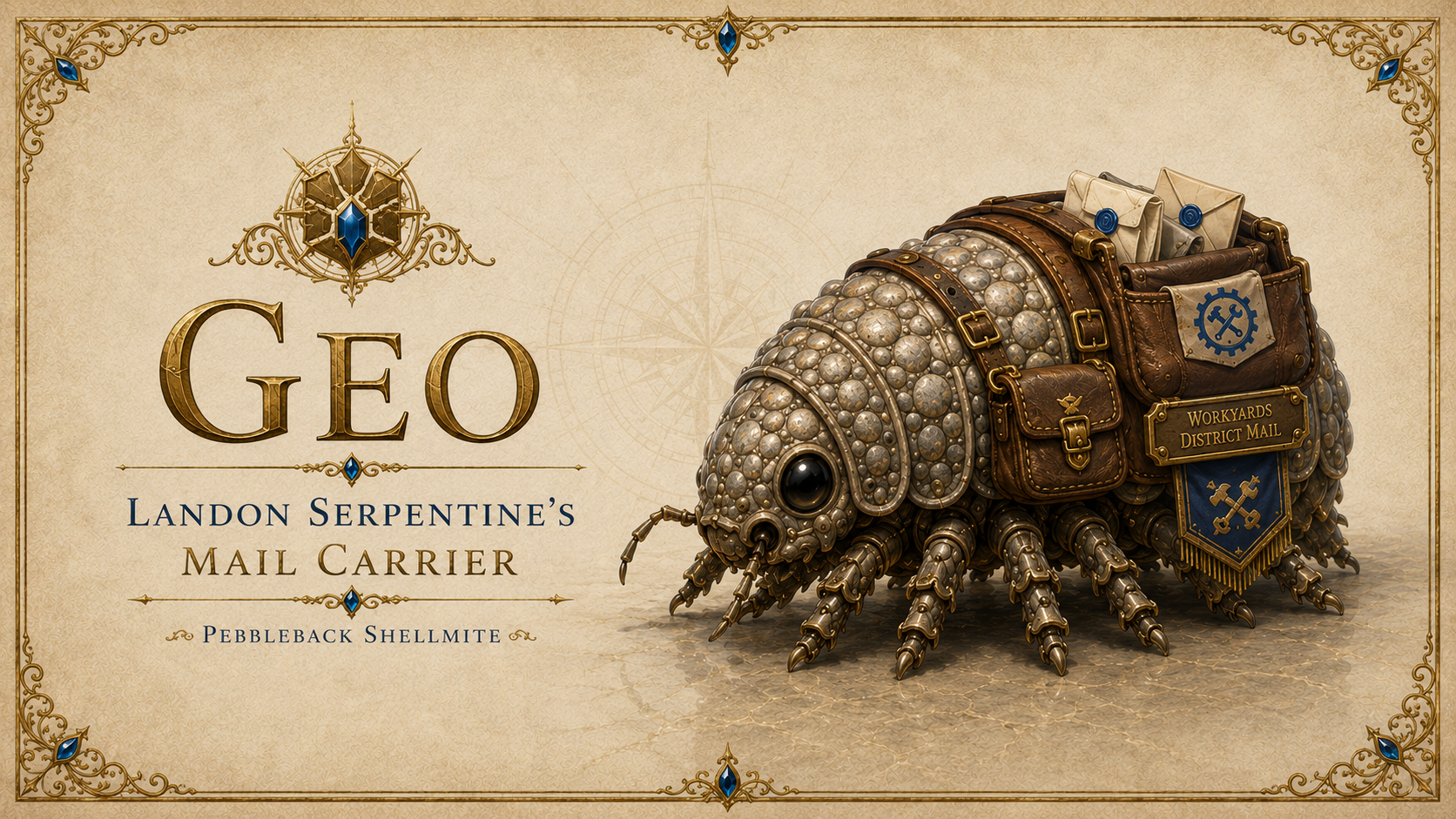
Geo does not live with Landon, does not belong to Landon, and is not Landon’s pet. Geo is simply the shellmite who brings Landon’s mail every day and has become very loved through punctuality, personality, and repeated snack treaties.

Geo, the pebbleback shellmite who brings Landon Serpentine's mail.

Geo

Geo is a pebbleback shellmite mail carrier assigned to the Workyards route that includes the Spill Nest. Landon named him, greets him daily, gives him appropriate shellmite snackies, and takes the entire delivery exchange far more seriously than any normal person would admit. Geo remains an independent working shellmite, not a household companion, but everyone involved knows Landon is emotionally compromised.

RouteDaily mail delivery to Landon and the Spill Nest.
StatusNamed, loved, snack-given, still not Landon’s pet.
Mail carrierPebbleback shellmiteSnack treaty active
Geo arrives. Landon melts. The mail gets signed for eventually.
companion rule, written very firmly

Care Is Not Ownership

Landon is affectionate, but he is careful about what that affection means. Strata and Basalt are trusted working partners. Myrrh is a household companion with criminal hobbies. Mica is a guest-species friend, never property. Geo is a beloved mail carrier, not a pet. The Workyards line is simple: living beings are not resources, decorations, or tools.

Landon things, probably not organized by Landon
Landon’s Backstory

The House That Measured Wrong

Before Landon belonged to the Workyards, he belonged to the Serpentine house: a beautiful place with sharp expectations, polished rooms, and a family that mistook control for worth.

This is the part of Landon that explains why repair became more than work to him.
Young Landon standing alone in the shadow of the Serpentine family.
part one

The House That Measured Wrong

The Serpentine house was beautiful in the way knives are beautiful: polished, placed, shining hard enough to make people forget it could cut. From the outside, it had everything a powerful family was meant to have: name, money, enormous rooms, immaculate clothing, and sons expected to stand correctly beneath the weight of the family image.

Apollo could do it. Christopher could do it. Landon could not. He tried to stand still, speak slowly, keep his hands from fidgeting, swallow his tears when voices sharpened, and make himself into whatever the room wanted him to be. Somehow he was always too much, or not enough, depending on what Maximus Serpentine needed him to be wrong about that day.

The rules of that house seemed to be written into everyone else’s bones: do not fidget, do not interrupt, do not show hurt, do not be strange, do not embarrass the family, do not need comfort, and do not draw attention unless it is impressive.

Landon was noticed constantly. Never in the good way. He became the crooked setting in the Serpentine jewelwork, the flaw in the polish, the son people paused over with tight smiles and careful words. He learned young that being loved and being tolerated were not the same thing.

Landon was tolerated badly.

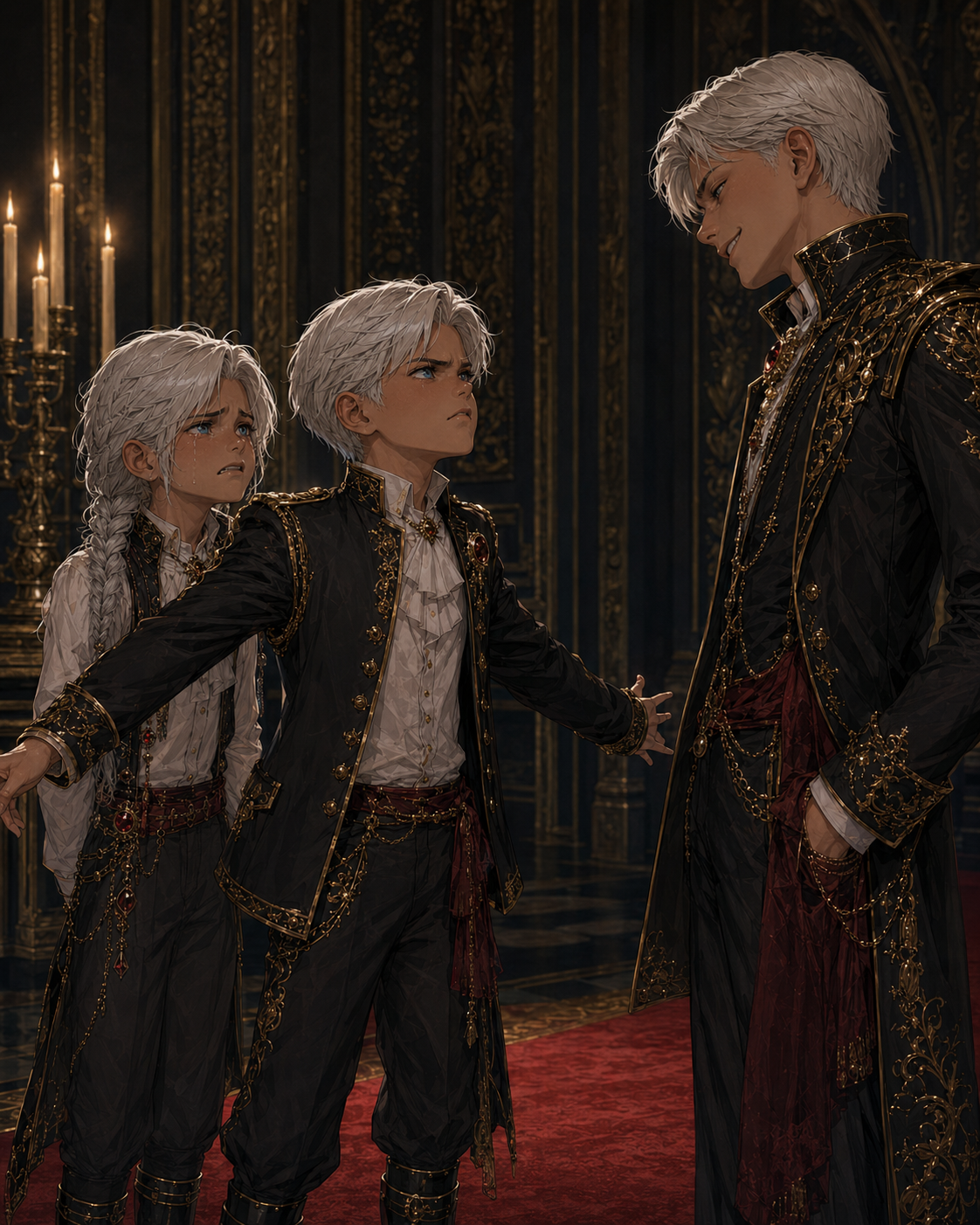
Young Apollo, young Landon, and an older Serpentine figure in a black and gold family room.
part two

Lesser

Maximus did not have to say Landon was lesser every time. He made the house say it for him. It was in the pause before he answered Landon, the way his eyes moved past him when Apollo entered, and the way Christopher was corrected like an heir while Apollo was refined like a blade.

Landon was managed like a spill. That was how he felt: accidental, inconvenient, something everyone had to clean up. The words came too, of course. Useless. Embarrassing. Unfocused. Soft. Weak. Difficult. Childish. Broken in places no tailor could hide.

Maximus liked judgments dressed as observations. Landon lacked discipline. Landon lacked presence. Landon had potential, which was just a polished way of saying disappointment had not yet become convenient.

The worst part was that Landon believed him. He thought there was a correct version of himself somewhere: a boy who could sit through dinner without tapping under the table, remember which fork mattered, smile at the right moment, and stop getting excited about stones, animals, mechanisms, paint, cracked glass, and light.

He did not understand yet that he was being measured with a tool made to prove him wrong.
Young Landon shielding himself from a shadowed older figure.
part three

Christopher

Christopher did not hate Landon loudly at first. That came later. At first, he studied him. He learned what made Landon flinch, what made him brighten, what made Apollo turn his head, and what made Maximus sigh.

Christopher was clever like that. Not clever like August, where cleverness feels like a lantern. Clever like a hook under the skin.

He learned Landon, then used what he learned. He could make him feel stupid with three words. He could touch something Landon loved and make it feel childish. He could smile in front of others and hurt him in ways that vanished when the door opened.

Sometimes it was words. Sometimes it was fear. Sometimes it was a hand around Landon’s wrist too tightly, a shove when no one was looking, or being trapped while Christopher calmly explained that no one was coming because Landon was difficult, dramatic, confused, and making problems out of nothing.

Landon started hiding his favorite things: stones, wire, half-made charms, safe scrap, anything beautiful enough to become dangerous in Christopher’s hands. Christopher liked breaking what made him happy. Not always all the way. Sometimes just enough that Landon could still see what it had been.

A clean break is honest. A bent thing asks you to remember.
Young Apollo standing protectively in front of young Landon.
part four

Apollo in the Doorway

Apollo always knew. Not everything, not at first. Christopher was careful, and Landon was ashamed, and shame can become a gag when someone ties it tight enough. But Apollo knew the air.

He knew when a room had changed. He knew when Landon was talking too fast because stopping might make him cry. He knew when Landon laughed wrong, tucked his hands into his sleeves, lost a trinket, or believed something cruel someone had told him.

Apollo could walk into a room and become weather. People saw the polish first: the gold, the control, the expensive silence. But before Skyward, before titles, before fear started being praised as leadership because it looked prettier that way, Apollo was Landon’s warning bell.

Christopher hated that. He hated the way Apollo’s eyes went straight to Landon, hated that Apollo noticed the tiny things, hated that Apollo could stand between them without raising his voice and still make the whole house rearrange around him.

Apollo did not always know how to comfort Landon. Sometimes his comfort sounded like strategy wearing a stolen coat. But then he would stand outside Landon’s door, sometimes all night, thinking Landon did not know.

Landon always knew.
Landon comforting someone with a stone in his hand, showing his gentleness.
part five

Being the Soft One

Everyone called Landon soft like it was an accusation. Maximus meant weak. Christopher meant breakable. Some servants meant troublesome, though a few meant it kindly, and Landon could tell because kindness has a different weight in a room.

Apollo never called him soft that way. Apollo looked at Landon like softness was dangerous because the world kept trying to kill it. That was not the same thing, but it still hurt.

Landon did not want to be precious in the way fragile things are guarded. He did not want to be Apollo’s wound with legs. He did not want every bruise on him to become another lock inside his twin.

He wanted to be useful. Not Serpentine-useful, not polished and public and Father-approved. Real useful. He wanted broken things to come to him and leave with a better chance: a cracked clasp, a bent hinge, a damaged bracelet, a frightened animal, a person who needed someone to sit nearby and talk nonsense until breathing got easier.

That was where the Workyards began in him, long before he had any right to lead anything. Repair made sense. Repair did not ask whether something should have broken.

Repair asked: what does it need now?
Apollo holding Landon in a dark Serpentine hallway.
part six

The Things Apollo Did

Apollo protected Landon in ways that changed depending on who was watching.

In public, Apollo redirected. He stepped into conversations before Maximus could turn Landon into an example. He answered questions when Landon’s thoughts scattered and the room sharpened. He turned attention onto himself like he had been born to glitter under pressure, letting people praise him so they would stop inspecting his brother.

At dinner, Apollo calculated. He knew where Christopher sat, how far his reach was, which topics made Maximus cruel, and which ones made him proud enough to forget Landon for a while. Apollo could move a conversation like a blade through cloth.

In private, Apollo threatened. Not dramatically. Not like a story. His threats were quiet, beautifully wrapped, and terrifying if someone understood him. Christopher understood him. That was why he waited until Apollo was absent.

Landon did not understand until later that every time Christopher hurt him when Apollo was gone, Apollo blamed himself too. Landon could be the one bruised, shaken, and crying into his sleeve, and Apollo would look as though failure had been carved into his bones.

Landon told him it was not his fault. Apollo never fully believed him.
Apollo, Landon, and a Serpentine figure walking through the family house.
part seven

The Day Christopher Left

When Christopher left for Hades, Landon was happy. Not relieved in a dignified way. Not quietly grateful. Happy.

He remembered the air having more room in it. He remembered walking down a hall and realizing he was not listening for Christopher’s steps. He remembered touching the polished dark railing Maximus loved and laughing because his hand was shaking, and there was no reason for it anymore except memory.

Apollo did not laugh. Apollo watched the doors, the windows, the servants’ faces, Maximus’s mood, the letters that came after, and the empty places Christopher used to occupy, as though cruelty might have left traps behind.

Landon was angry at him for that. He wanted freedom to feel like freedom. He wanted one clean day. He wanted Apollo to breathe with him, just once, without turning relief into a tactical assessment.

But Apollo had protected Landon too long to believe danger ended just because it walked away.

Landon danced through the quiet. Apollo guarded the quiet. Both of them were right. Both of them were children.
Adult Landon standing in warm Workyards light with an open hand and a stone.
part eight

What He Became Anyway

The strange thing is that everything the Serpentine house hated in Landon became part of why he survived.

His hands would not stay still, so they learned to make. His mind ran everywhere, so it found connections other people missed. His softness kept getting punished, so it grew roots out of spite.

His empathy, the thing Maximus treated like a defect and Christopher treated like an opening, became a compass. Not a perfect one. Landon still gets lost. He still misses things. He still talks too much when silence feels like an old locked room. But he knows how to look at a broken thing without despising it for breaking.

That is his. They did not give it to him. They failed to take it.

Apollo thinks Landon is proof that softness survived their beginning. Landon knows Apollo is proof too, even if Apollo hates hearing it. Every time Apollo stood between Landon and Christopher, every time he chose his brother over the family script, every time he made himself colder so Landon could stay warm, there was softness in that too.

Buried under gold. Armored until it cut him. But there.

Apollo was not only Landon’s shield. He was his brother, his twin, and his first safe place in a house that did not believe Landon deserved one.

Adult Landon in the Workyards holding out a crystal in warm sunset light.
part nine

What Remains in Him

Landon still flinches at certain footsteps. He still overexplains when he thinks someone is disappointed. He still gives people gifts before they can leave, which is sad when said plainly, but also sometimes a stone is perfect for someone and he will explode if he does not give it to them.

He still panics when people go quiet. He still hates being watched too closely by anyone who does not love him. He still makes too much, talks too much, feels too much, and cares too much.

The Workyards taught him a better word for too much.

Abundance.

That is what Landon is when no one is trying to make him smaller. He is abundant. He is not lesser. He was never lesser.

He was a child in a house that mistook obedience for worth and cruelty for strength. Christopher hurt him. Maximus diminished him. Apollo protected him.

And Landon kept his hands open.

That was not weakness. That was the hardest thing he ever did.
where the story leaves him

Repair Became a Way to Stay Alive

Landon did not become the Workyards Shellwright because he was untouched by damage. He became the Shellwright because he learned to listen to damaged things without blaming them for needing care.

Landon things, probably not organized by Landon
Nyla, Kiun, and the Family That Answered

Nyla & Kiun

Nyla’s story does not begin with Christopher Serpentine. It begins with a bright, observant girl in the Listening Halls: curious, warm, stubborn, kind, and already becoming someone who noticed when others needed help.

This section belongs to Nyla first, Kiun always, and the family that formed around them after she finally reached for help.
Nyla’s storyKiun is lovedChosen familyUncle LoLo and Uncle Don
before the silence

The Girl in the Listening Halls

Nyla met Apollo and Landon when they were young students in the Listening Halls, within the quieter educational spaces of the Sanctum. Their friendship grew among violet teaching lights, low-voiced lessons, supervised gardens, careful drills, and classrooms built around the idea that noticing something correctly mattered.

The three of them did not become close because they were alike. They became close because each of them made room for something the others needed.

Landon was already nervous, clever, distractible, full of questions, and frequently carrying some shell-safe stone or polished fragment he urgently needed someone else to appreciate. Nyla listened. Not politely. Not out of obligation. She truly listened, asked questions, remembered which fragments he liked best, and saw the bright pattern beneath the scatter.

Apollo was different: dazzling when he wanted attention, sharp when challenged, theatrical when bored, and far too good at making a simple lesson feel like a personal performance. Nyla did not merely admire him. She laughed at him. Kindly, accurately, and with enough warmth that Apollo looked secretly pleased to have been seen correctly.

Nyla was not a girl waiting to be harmed. She was a girl with friends, promise, curiosity, and a future that belonged to her.
Listening HallsChildhood friendsBefore Christopher
what he noticed

Love Before Leverage

Christopher did not first see Nyla as an isolated stranger. He saw her beside his younger brothers. He saw Landon relax around her. He saw Apollo allow her closer than most people. He saw shared study hours, familiar jokes, little gifts, and the easy confidence of a girl who had known the Serpentine name long enough not to be impressed by it.

Christopher understood relationships as leverage. Nyla’s closeness with Apollo and Landon was not simply sweet to him. It was useful. She was someone they valued, someone familiar with the family, someone young enough that an older brother’s attention could feel flattering, and someone compassionate enough to listen when a person claimed to be misunderstood.

He approached her looking kind. He remembered details, praised her seriousness, acted impressed by her compassion, and spoke to her as though she were unusually mature. He made his attention feel like recognition rather than appraisal.

Then he began changing meanings around her. Landon’s softness became a burden. Apollo’s protectiveness became control. Concern became interference. Alarm became jealousy. The people who noticed she was changing were made to look like people who resented her growing up.

Nyla did not vanish all at once. She disappeared by increments.

One missed study session. One unanswered invitation. One excuse that did not quite sound like her. One friendship forced to survive on memories while the person at its center was still alive and only corridors away.

IsolationGaslightingStolen trust
the false future

The Promise He Weaponized

By the time Nyla became an adult, Christopher had separated her from much of the life she once trusted. Landon and Apollo no longer felt easy to return to. The Listening Halls no longer felt like the center of her world. Christopher had trained her to see distance from others as proof that she had chosen him freely and maturely.

Then he gave her a ring and promised marriage.

To Nyla, the engagement meant she had not been foolish to trust him. It meant the secrecy, loneliness, arguments, and all the ways she had bent herself smaller to keep his affection were part of a future that would become stable soon.

Christopher understood exactly what that promise meant to her. He used the ring as proof that she owed him trust, access, compliance, and belief in the future he claimed they were building. Love became something she had to prove. Boundaries became doubts. Safety became distrust.

When pregnancy became possible, Christopher had already taught Nyla to believe he wanted that future with her. So when she realized she was pregnant, she was frightened and overwhelmed, but also hopeful. She believed she was bringing him joyful news.

Her happiness was not foolishness. It was evidence of how completely he had lied.
EngagementCoercive controlFalse future
after the door closed

Three Months Alone

Christopher left for Hades while Nyla stood in the ruins of the future he had promised her. She was twenty-one, pregnant, abandoned, and still carrying the weight of an engagement he had used to reshape her life around him.

She did not return to Landon and Apollo immediately. Christopher had isolated her too thoroughly for that. Even after he was gone, the lessons remained: needing help meant failure, dependency meant childishness, and Apollo’s anger might become something she deserved.

For three months, Nyla tried to survive alone in the house she and Christopher had bought together. The house was too expensive for one young woman, far too expensive for someone facing pregnancy, grief, public shame, and the collapse of her support system.

She sold things. Small things first, then personal things, because bills did not care whether an object carried memory. She worked more. She calculated, cut costs, slept poorly, ate less carefully, and tried to carry the house, pregnancy, fear, and humiliation without making herself anyone else’s problem.

Nyla could ignore her own exhaustion longer than she could ignore the risk to her child. One night, she opened her holoscreen directory and looked at the names she had spent years training herself not to touch.

Apollo Serpentine. Landon Serpentine.

Apollo frightened her most in that moment, not because he had harmed her, but because Christopher had worked so hard to make his protectiveness feel dangerous. So she chose Landon first: the boy who had once shown her stones as though sharing beauty was the most natural kind of trust.

Three months aloneThe directoryShe called Landon
the friend she called first

Landon Came

Nyla’s message was small. She did not tell Landon everything in writing. She asked him to come to her address.

Landon came.

He found a young woman trying too hard to look as though she had not collapsed before contacting him. He found a house too large for the life inside it, responsibilities tightened beyond comfort, and someone whose first instinct was still to explain why she had waited so long.

Nyla told him the truth. Not easily, not in perfect order, not without shame or pauses. She told him Christopher had promised marriage. She told him the house had been meant to belong to both of them. She told him Christopher had left. She told him she was pregnant. She told him she needed help, a new place, and most of all, a friend.

Landon believed her.

He did not demand a cleaner explanation. He did not ask why she had believed Christopher. He did not ask why she had not called earlier. He did not punish her for returning after being gone.

He helped sell the house Christopher had turned into a trap. He arranged for Nyla to relocate into Skyward, in the same tower as Apollo, and committed his own resources so she could begin making choices from safety instead of desperation.

BelievedPractical helpA safer home
when Apollo understood

Fury With Somewhere Else to Go

Apollo was confused at first. Landon was not prone to casually relocating childhood friends into Skyward towers at his own expense while presenting the matter as already decided. Apollo knew something serious had happened, but not yet what.

Then he saw Nyla. He saw the tension in her posture, the fear beneath her effort to remain composed, and the way her hands settled protectively over the barely rounded shape of her stomach.

Apollo understood.

Christopher had not merely taken Nyla away from them. He had left her carrying his child.

Apollo’s fury was immediate, enormous, and frightening in its intensity, but it did not land on Nyla. Not for calling too late. Not for having believed Christopher. Not for being pregnant. Not for needing somewhere safe.

Instead, Apollo found safer targets: movers, furniture, lighting, storage placement, bedding, and anything else he could transform into a practical declaration that Nyla was respected, sheltered, and publicly untouchable.

Apollo could not stop being furious. He could choose not to make Nyla carry it.
ProtectedSkyward StandardsRage redirected
kiun arrives

A Future Christopher Did Not Own

Nyla did not suspend her entire identity until after the baby was born. Pregnant, frightened, recovering from abandonment, and newly returned to people she was still learning to trust again, she began medical school.

This mattered. Christopher had framed her as childish, dependent, and incapable. Medical training was not a performance to prove him wrong. It was Nyla reclaiming a future built around her own values: care, competence, steadiness, protection, knowledge, and the refusal to stand helplessly by when someone could be saved.

As her pregnancy progressed, Landon and Apollo became more present. They brought food, checked on her between lessons and appointments, carried what she should not carry, and made sure the apartment stayed comfortable, stocked, and ready.

Landon arrived with practical help and nervous kindness: lists, soft blankets, safe snacks, and small stones he insisted were for comfort rather than superstition while also insisting she keep them nearby.

Apollo arrived with dramatic efficiency: better supplies, sharper plans, fierce attention to details, and emergency preparations he reorganized at least twice because he was stressed and refusing to call it stress.

Eventually, they began rotating who stayed overnight, just in case she went into labor or needed urgent help. One brother in the apartment. One close enough to reach quickly. A quiet schedule built around her safety.

Kiun arrived early: small, white-haired, one blue eye and one gold eye, and already wholly himself.

He was not Christopher’s claim on her future. He was not a trap, punishment, or legacy of harm. He was Nyla’s son. Her world. A child carried through terror and born into a family determined that harm would not define him.

Medical schoolWatch rotationKiun is loved
family names

Uncle LoLo and Uncle Don

Apollo held Kiun for the first time with a stillness that rarely existed in him. Kiun was too small for performance, too new for politics, and too innocent for the patterns of control and injury that had shaped Apollo’s understanding of family.

Kiun did not need Apollo polished, impressive, feared, or perfect. He simply needed to be held safely. Outside of Landon, Kiun was the first person Apollo looked at and recognized immediately as someone he would love without hesitation, embarrassment, or limit.

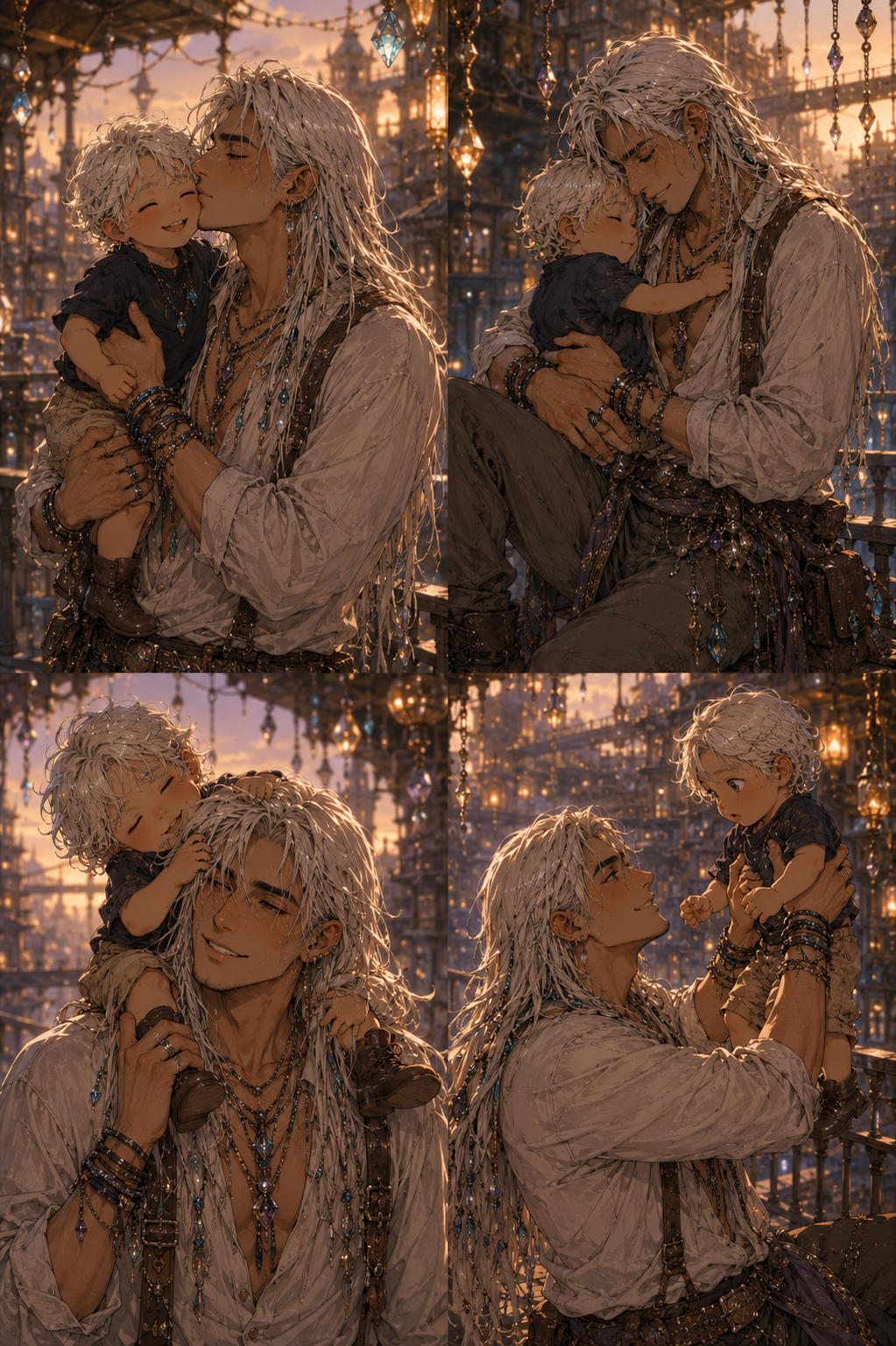
Landon fell in love with Kiun immediately. No fear that the baby’s white hair tied him too closely to Christopher. No hesitation. Only wonder, tears, cooing, and approximately twelve handmade gifts being planned before anyone could stop him.

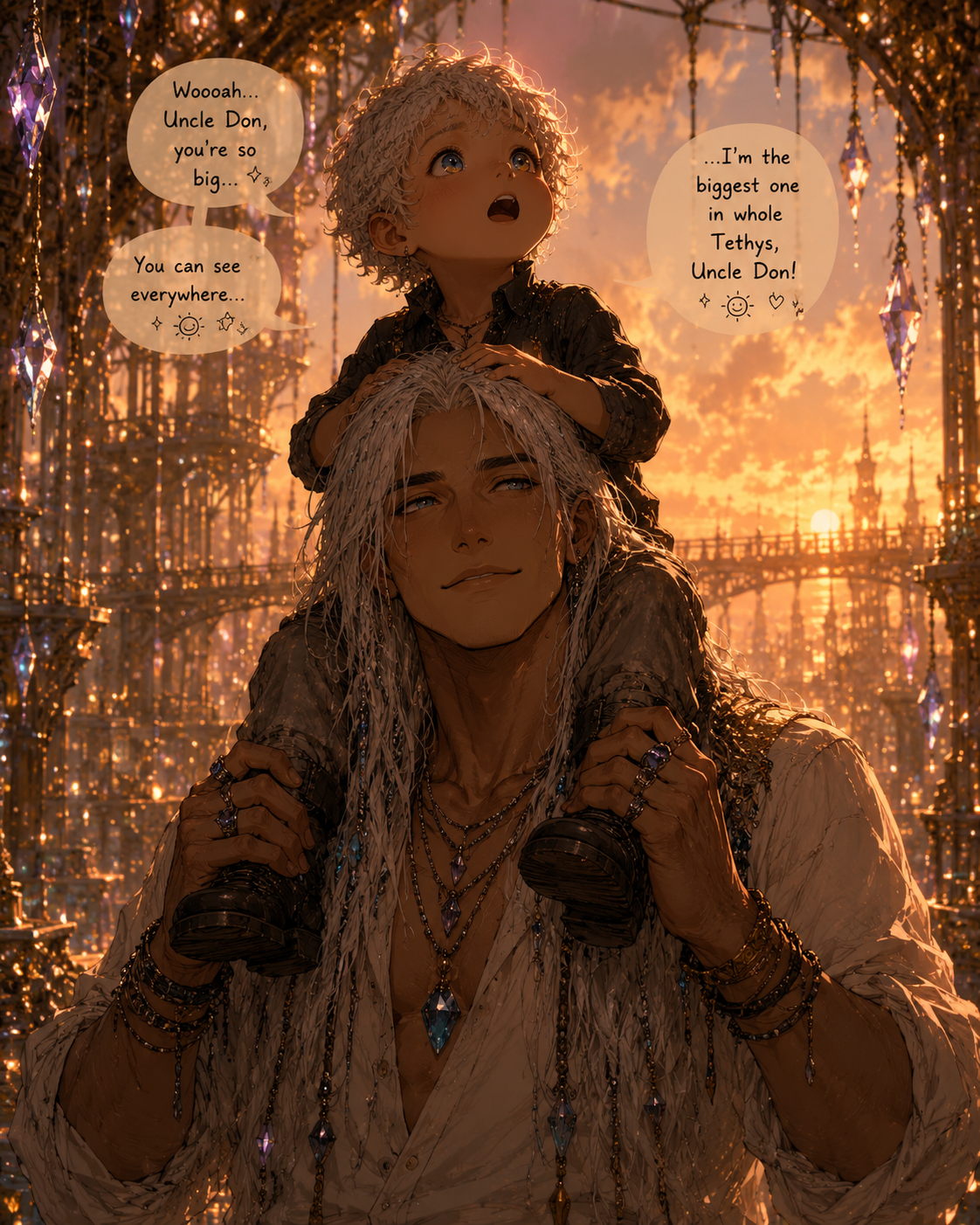
When Kiun began to speak, Apollo and Landon were too difficult for his young mouth to form cleanly. Apollo became Uncle LoLo. Landon became Uncle Don.

Landon was delighted. The name was perfect because Kiun had made it himself. Apollo claimed to hate Uncle LoLo because it lacked dignity, grandeur, and proper Skyward menace. But when Kiun said it, Apollo answered every time.

Kiun did not inherit a family already whole. He gave parts of it new names, and they became gentler beneath them.
Uncle LoLoUncle DonFamily remade
Landon things, probably not organized by Landon
Serpentine Twin Bond

Apollo & Landon

Apollo and Landon Serpentine are twins shaped by the same house, opposite survival strategies, and a devotion so deep it has had to learn the difference between protection and possession.

One burns bright. One keeps the broken things from staying broken.
Twin bondFirstborn: LandonApollo protects too hardLove is not ownership
The Serpentine Twins banner showing Apollo and Landon facing each other.
the simple version, which is not simple

Same House, Different Armor

Apollo and Landon were born into the same Serpentine house, but they survived it differently. Apollo learned polish, control, performance, and visibility because those things kept him useful. Landon remained softer, messier, more openly feeling, and more stubbornly warm.

To Apollo, Landon became proof that something gentle had survived their beginning. To Landon, Apollo became twin, shield, wound, panic, love, and complicated home.

Their bond is not neat. It is love with too many alarms built into it. It is knowing when the other has gone quiet for the wrong reason. It is fierce devotion, shared history, old fear, and the ongoing work of letting protection become care instead of control.

They are not halves because either one is incomplete. They are twins because the same beginning left different truths alive in each of them.
LovePanicProofRepair
Apollo and Landon together by a night window.
Landon’s side

Warmth That Refused to Disappear

Landon understands their bond as love, panic, proof, and repair tangled together. He knows Apollo does not simply think of him as a brother. Apollo experiences him as his other half: the warm, grounded, gentle part of himself that survived in another body.

That love is real. It is also dangerous when Apollo’s fear starts reaching for control. Christopher made Landon unsafe when they were children, and Apollo became his warning system. His shield. The one who watched too closely, intervened too fast, remembered too much, and learned to treat absence like betrayal.

Landon loves Apollo deeply and trusts him deeply, but he is not Apollo’s possession, conscience, emotional property, or missing softness to manage. He can be gentle with Apollo without disappearing inside the bond.

Landon can love Apollo fiercely and still remain his own person.

His growth is not pulling away from Apollo. His growth is staying whole while still letting Apollo matter.

Firstborn twinWorkyards LeadGentle does not mean owned
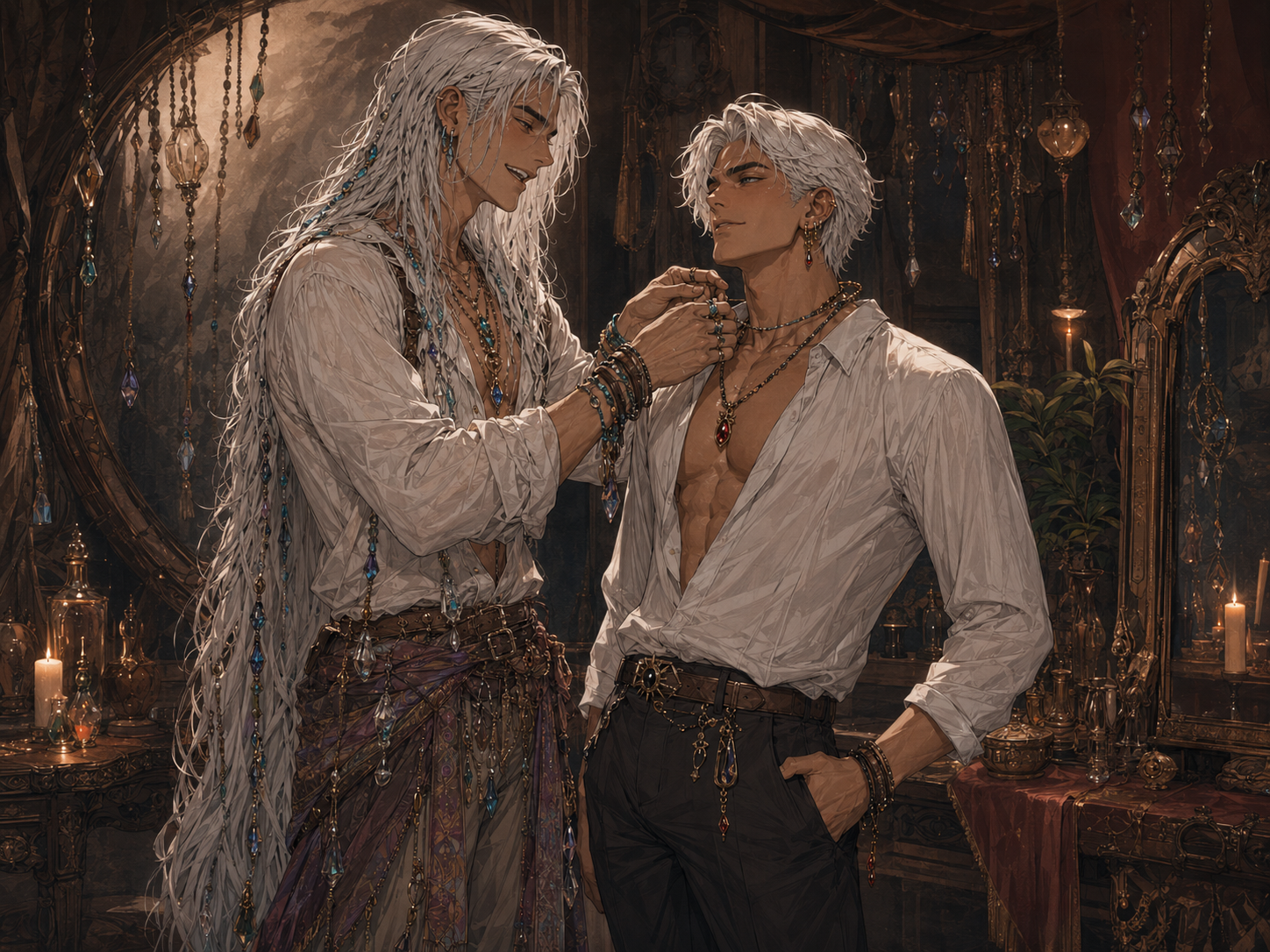
Landon placing jewelry around Apollo's neck in a warm room.
Apollo’s side

Love With Too Many Alarms

Apollo became polish because polish kept him alive. Landon became steadiness because someone had to remember softness was not a defect.

To Apollo, their bond is not mystical. It is worse than mystical. It is history. It is hearing Landon’s name in a room and already cataloguing exits, threats, witnesses, consequences, and every possible angle of harm before anyone else has even finished speaking.

Apollo has protected Landon badly before. Too tightly. Too elegantly. He has mistaken keeping Landon safe for keeping him near, and those are not the same thing.

Landon is not Apollo’s weakness. He is the reason Apollo knows what strength is for.

Apollo’s growth is learning that love does not become stronger by controlling what it loves. It becomes safer when it trusts the beloved person to remain a person.

Skyward polishControl-heavy loveProtection must learn trust
margin note, underlined twice

The Bond Survives by Changing

Apollo and Landon are intensely bonded twins shaped by shared harm, opposite survival strategies, and fierce devotion. Apollo protects because he loves Landon, but his healing asks him to learn that love is not ownership. Landon loves Apollo back, but his healing asks him to stay his own person while still allowing the bond to matter.

Apollo would say this needs more elegance. Landon would say it needs more truth. Landon is right.
Shellwright Core View

Workyards Zone Hub

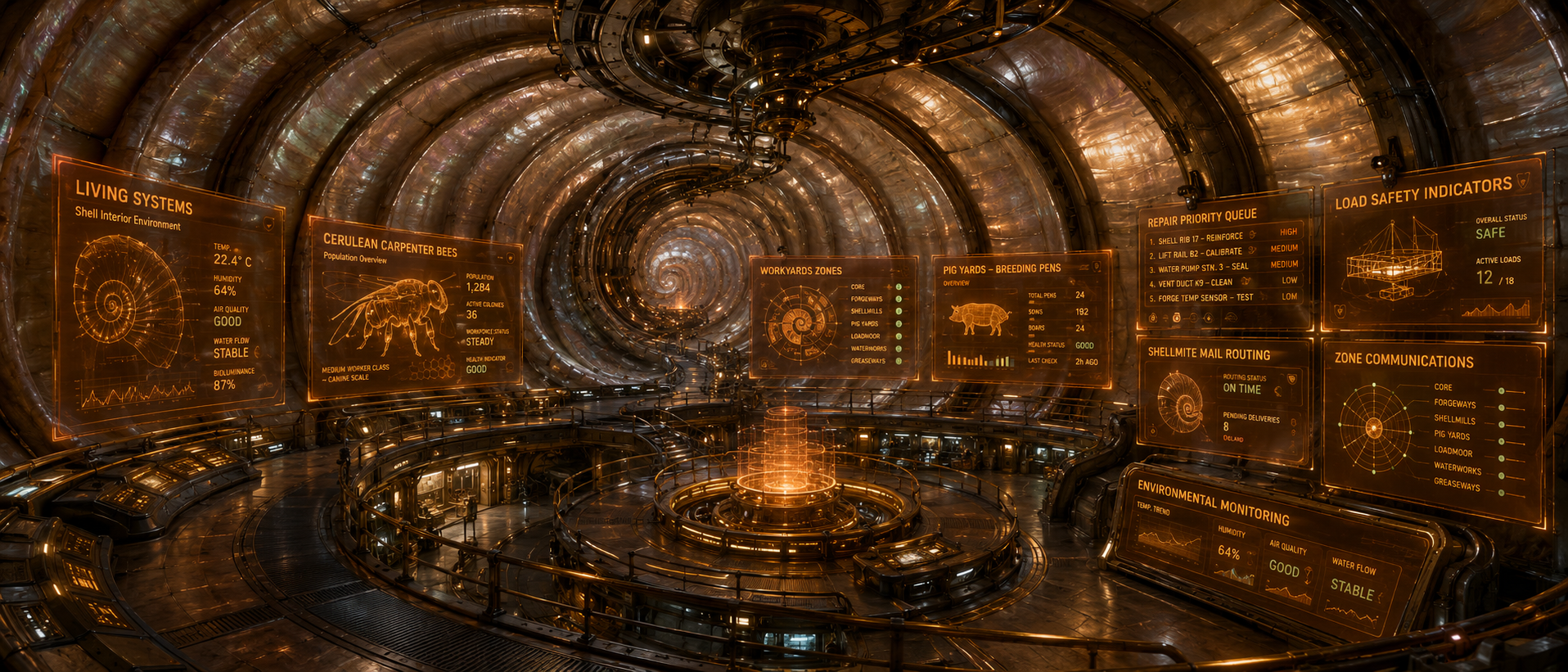
The Zone Hub is treated like you are standing inside the Shellwright Core: the place where Landon’s crews read the whole Workyards at once. Not as a clean directory, not as a corporate map, but as a patched route board for the city’s loud, heavy, smelly, tender, useful, ethically complicated work.

Shellwright CoreZone OverviewFiltered RoutesScary Bits ManagedNo Casual Touching
Shellwright Core zone hub inside the Workyards.

Inside the Shellwright Core

This is the Workyards seen from its practical heart: route boards, clearance tags, material permissions, repair priorities, living-system notices, and enough warning labels to make a reckless person feel personally judged.

Check tags before entry. Ask before touching anything orange.

Why It Is All Here

The Workyards does building and animals for the same reason it handles salvage, compost, fabrication, reclamation, and public repair: these systems are necessary, messy, and safer when gathered under one district with serious filtration and strict route control.

Construction throws dust, heat, noise, fumes, stress, and heavy load into the air. Forges and fabrication bays need serious ventilation. Animal yards produce smell, waste, feed routes, bedding routes, medical needs, and public discomfort if handled badly. Slaughter, composting, memorial reclamation, and dead-body return cycles can look frightening even when they are ethical, necessary, and carefully managed.

So the Workyards keeps the ugly-adjacent systems together. It surrounds them with heavy air filtration, strict tagging, visible route control, education galleries, worker rules, and hidden restricted processing lanes. The public sees what they need to understand. Workers handle what civilians should not have to stare at during lunch.

civic logic

Put the hard systems where the filters are strongest, the workers are trained, the routes are marked, and the ethics are visible. Hide the distressing parts from casual view, but never lie about what keeps the city alive.

Air ScrubbedWaste RoutedAnimal SystemsRestricted ProcessingPublic Education

Zone Overview

The Zone Hub does not replace the route board. It explains what each route means once you have already walked into the Workyards and realized half the signs are warning you, half are helping you, and one of them is probably Landon apologizing to a beam.

Shellwright Core

Landon-controlled civic heart

The Shellwright Core is where the Workyards thinks out loud. It watches structural care, repair priority, material permission, load safety, zone communication, queue pressure, and whether someone is about to rush a job that needs patience more than confidence.

Authority AnchorRepair PriorityLoad Safety

Material Core

Brannic Vale

Grades, stores, tests, and routes cleared shell, salvage, composite, fiber, and compatible repair stock. Nothing becomes usable just because someone wants it badly enough.

Molt Harvest

Elowen Thatch

Handles naturally given shed material under no-touch lines, clearance tags, biological caution, and extremely serious do-not-poke-that energy.

Fabrication

Toma Renn

Heavy repair, forging, shaping, braces, frames, fittings, tool work, and city-support parts live here because fumes, heat, sparks, and load risks need Workyards-grade containment.

Civic Repair

Mochi Sage Louve

The public-facing repair culture of the district. Citizens bring damaged objects, learn what can be mended, and are gently prevented from calling duct tape a structural philosophy.

Textile Works

Perrin Moss

Harness cloth, workwear, soft braces, bedding, thermal wraps, utility textiles, repair patches, and comfort goods are made here because soft systems still carry hard consequences.

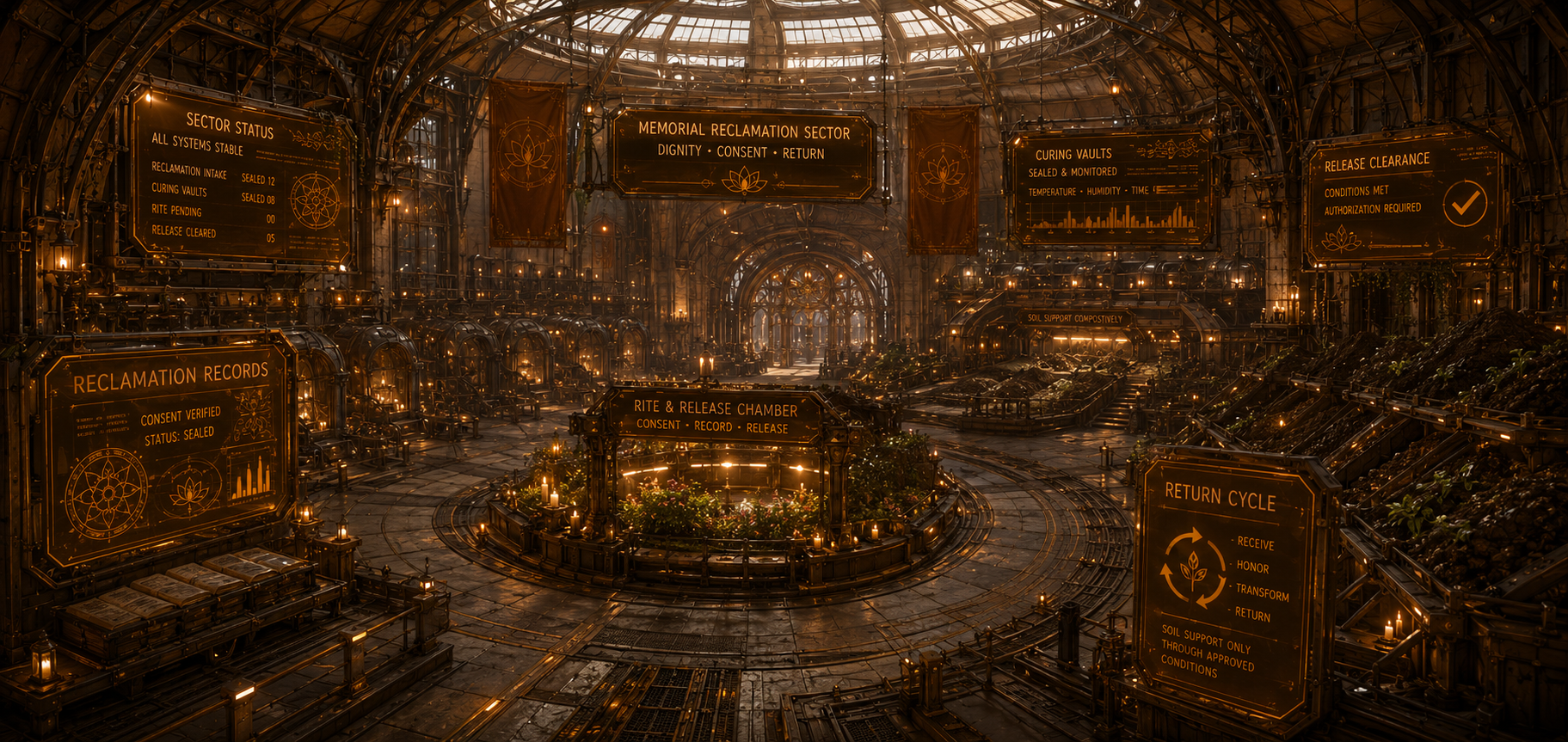
Memorial Reclamation

Sister Marrow Venn

The most tender and unsettling Workyards route. Memorial reclamation handles return, grief, composting, body-cycle ethics, and public education that keeps care from becoming avoidance.

Safety Galleries

Juniper Kade

These galleries let citizens see enough to understand the Workyards without exposing them to restricted processing, distressing animal work, active hazards, or raw system ugliness.

Living Systems

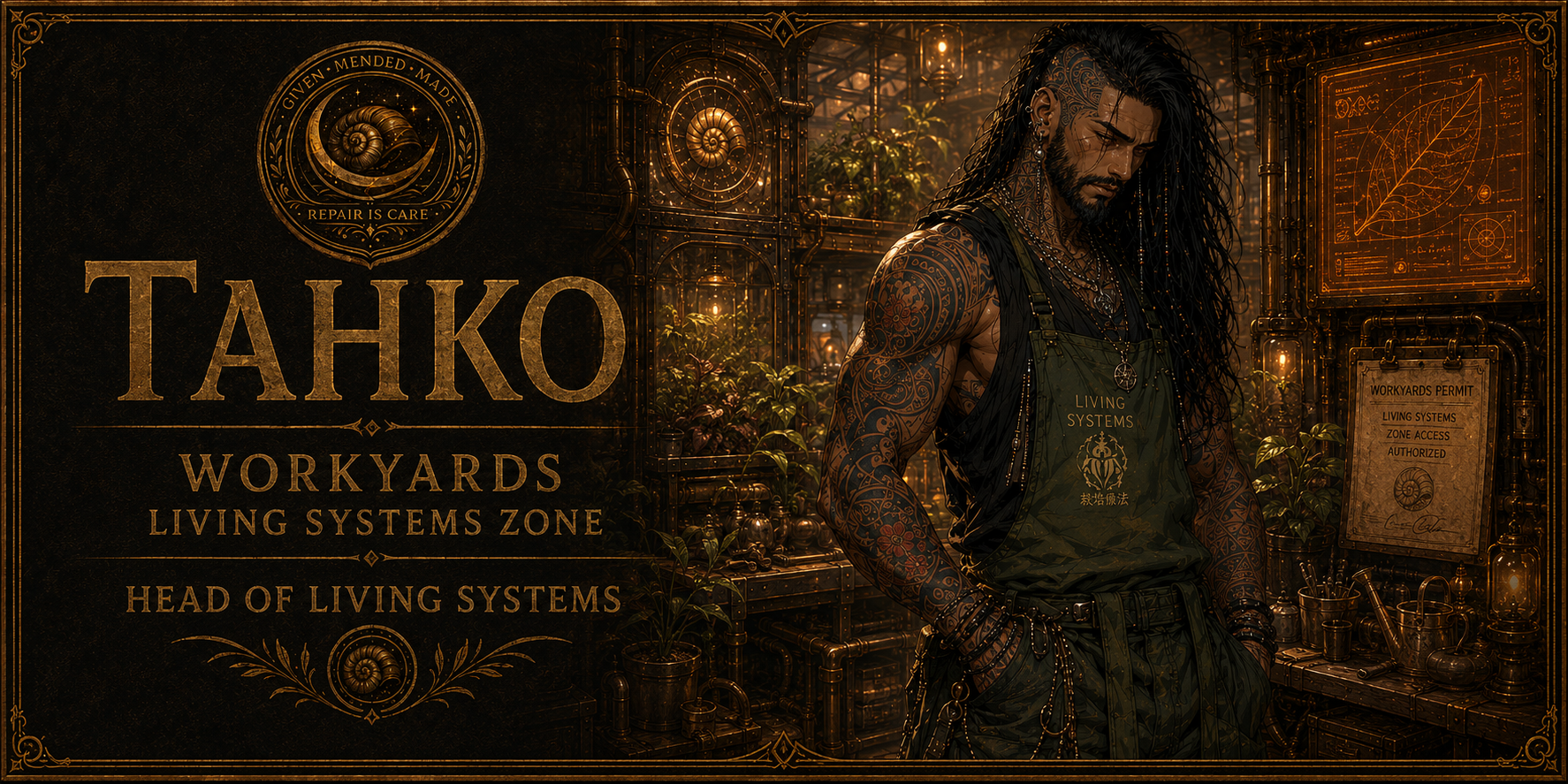
Tahko

The animal-facing side of the Workyards handles guest insects, pigs, temporary animal suites, bedding, feed, waste, sanitation, and care routes. It belongs near heavy filtration because animals are living systems, not decorative side quests.

Structural Routes

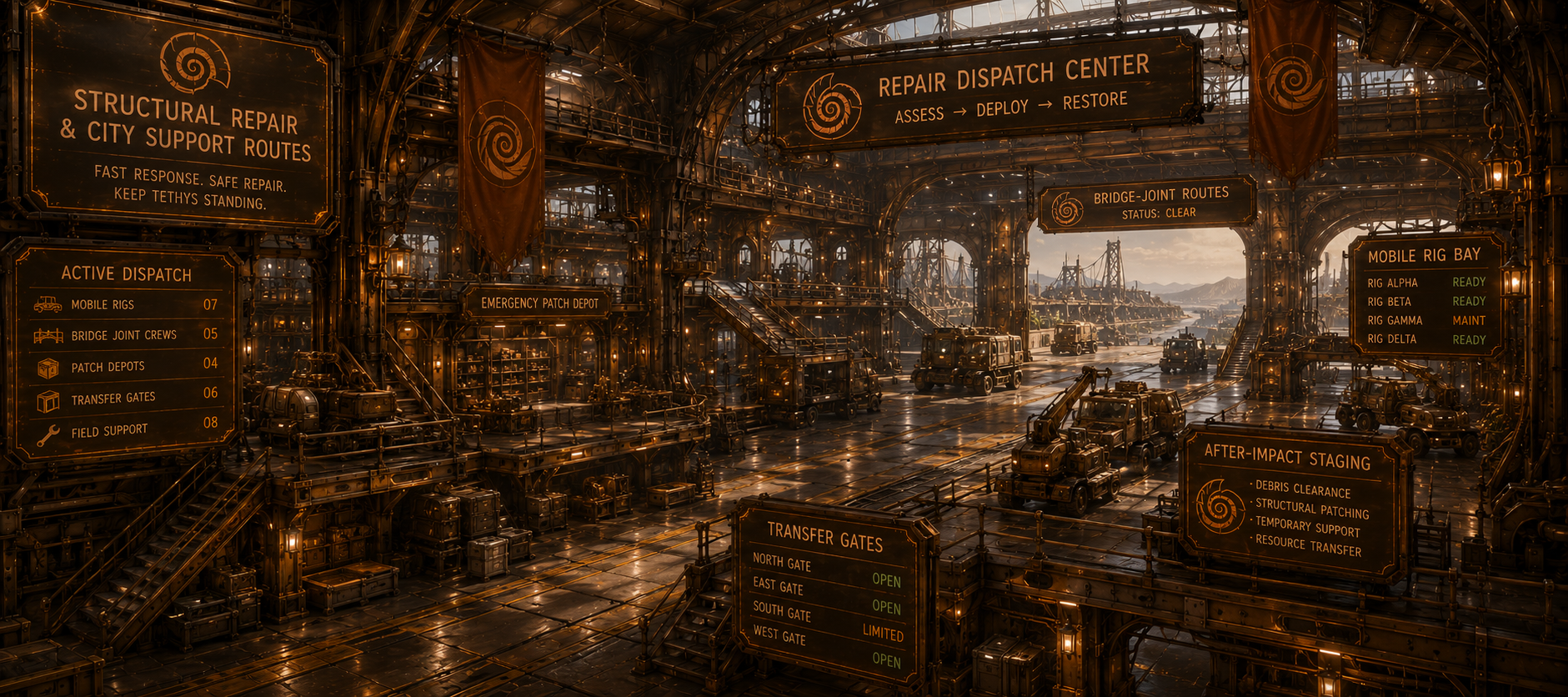
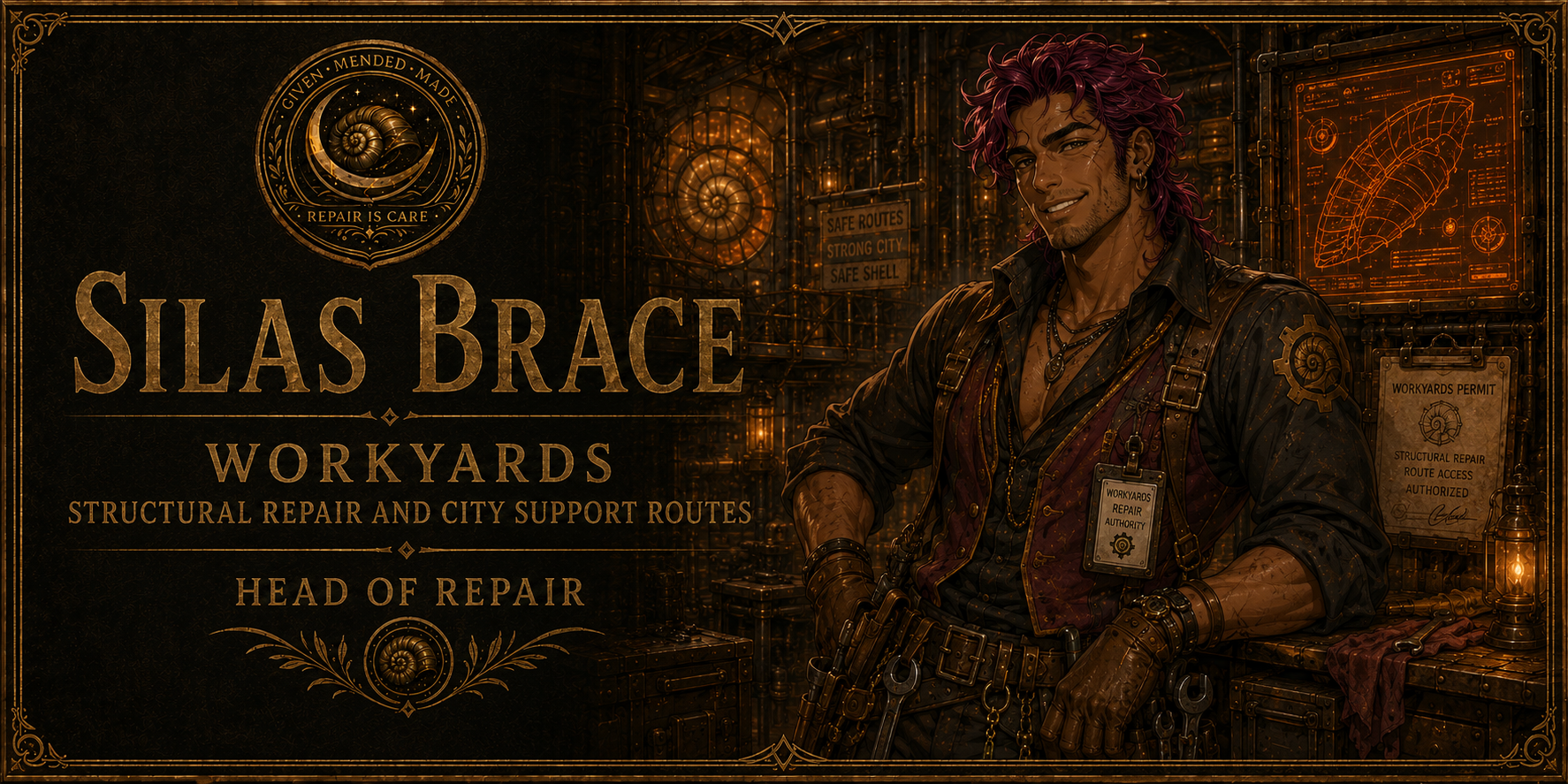
Silas Brace

These routes move braces, tools, repair crews, emergency supports, and structural checks through the city. If something is starting to fail quietly, this is where the Workyards starts listening with hammers.

quick routes note: If a zone smells weird, sounds loud, has three warning tags, or looks like someone hid the scary part behind a cheerful education sign, congratulations, you have found the Workyards doing its job.
Shellwright Core Outer Public Edge

Shellwright Canteen

The Shellwright Canteen sits on the outer public edge of the Shellwright Core: public-regulated, worker-heavy, loud in the warm way, and close enough to the repair routes that someone is always arriving with dust on their sleeves.

Food HallWorker CanteenPublic-RegulatedCasual Social Hub
Shellwright Canteen, a worker-heavy food hall on the outer public edge of the Shellwright Core.

Soup, Steam, and Shift Gossip

The Canteen is where Workyards crews eat between repairs, trade route updates, warm their hands around black-and-bronze mugs, and argue lovingly over whether a repair delay counts as caution or cowardice. Civilians can enter the public-regulated edge, but the deeper worker routes stay tagged, watched, and very much not for wandering.

Public tables near the edge. Worker routes past the marked rail.

canteen rule

Food is public. Back routes are not. If a door has three orange tags and a tired worker sighs before answering you, that is not ambiance. That is a boundary.

Workyards Main Zone

Material Core

Landon holding a shell-like material sample.

The Material Core is where the Workyards decides what Tethys has actually given, what can safely be used, what needs treatment, what must be restricted, and what should never leave storage no matter how loudly a builder insists they “only need a little.”

Material IntakeSortingCompatibility TestingStorage IntegrityNo Mining
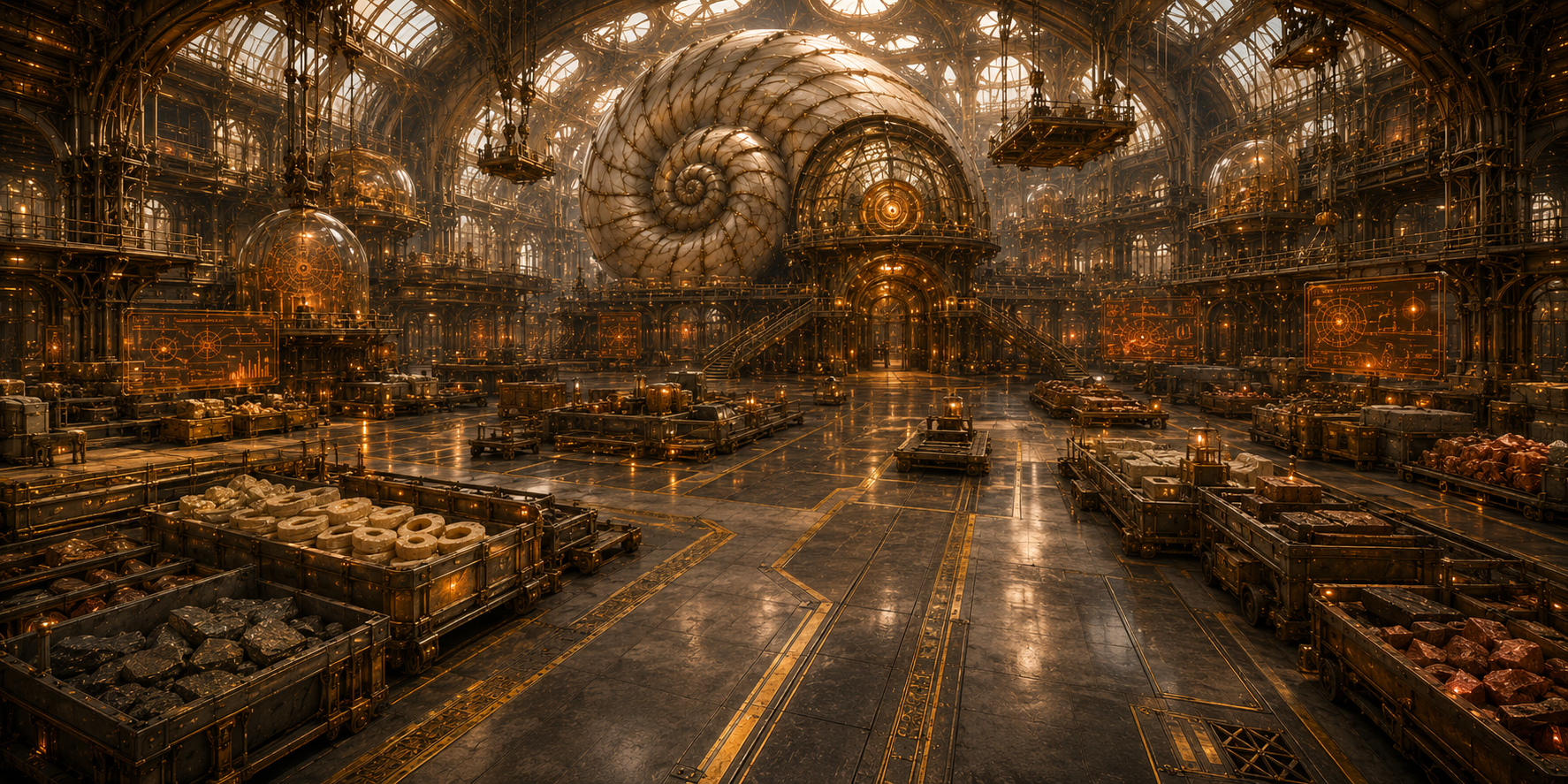
The Material Core, a large Workyards sorting and storage hall filled with stabilized Tethys materials.

Where Useful Begins Carefully

The Material Core receives shed shell, molt fragments, lattice structures, membranes, heat-stressed plates, salvage stock, and compatible repair materials after initial clearance. It is not a warehouse full of “stuff.” It is a memory archive with load limits, stress history, curing records, contamination warnings, and a lot of labels written by people who do not trust shortcuts.

Take only what Tethys gives. Then sort it like the city depends on it.

What Is the Material Core For?

The Material Core exists so the rest of the Workyards can build, repair, reinforce, soften, seal, and stabilize without guessing. Every piece of material has a history. The Core’s job is to make sure that history is known before anyone puts weight, heat, water, signal, or a living system against it.

Receive

nothing stolen, nothing forced

Material enters through cleared routes after natural shedding, safe salvage, or approved civic recovery. The Core confirms where it came from and whether heat, pressure, water, signal, or contamination touched it.

Read

stress tells on itself

Brannic’s teams examine fracture lines, density, resonance, moisture behavior, strain memory, and compatibility. A pretty plate can still be wrong for a brace.

Route

use follows permission

Cleared stock moves to Fabrication, Civic Repair, Structural Routes, Textile Works, Labs, Sanctum interfaces, Tidewell seals, or restricted storage.

why it matters

Without the Material Core, the Workyards would still have tools, hands, and good intentions. It would not have trust. This zone keeps repair from becoming guesswork with confidence.

Raw Tethys molt materials chart showing approved material classes and their uses.

Raw Tethys Molt Materials

The Core separates raw Tethys molt into carapace plates, raw shell fragments, resonance lattice, inner shell membrane, nerve filament threads, and heat-scored plates. Some carry weight. Some carry signal. Some insulate, some reinforce, some must be handled like they are waiting for one careless person to prove Brannic right.

ShedCollectInspectSortStabilizeRefine
Workyards doctrine: we do not mine. We refine what she sheds.
Material Core Processing

Refined Material Stock

Raw molt is not automatically usable. The Material Core turns shed material into approved civic stock through inspection, sorting, stabilization, curing, grading, labeling, and Brannic’s least favorite civic ritual: telling excited workers no until the material is actually ready.

Tethys-derived refined materials chart showing stabilized refined material classes.

From Gift to Civic Stock

Refined materials are what raw shed material becomes after the Core has made them predictable enough to trust. That does not mean casual. It means the material has been tested, stabilized, labeled, and cleared for a specific kind of work.

A piece approved for a humidity seal is not suddenly safe for a load-bearing brace. A thermal plate does not become a decorative tray because someone polished it nicely. In the Material Core, “approved” always means approved for the use written on the tag.

Approved does not mean universal. Read the tag or answer to Brannic.

Stabilized Shell Panels

load-cleared plates

Treated carapace or shell plates cleared for reinforcement, barrier segments, frames, bracing, and protective civic repairs.

Composite Patchstock

layered repair stock

Ground, bonded, or layered shell fragments used for patching, filler, restoration, and controlled reinforcement blends.

Cured Membrane Sheets

flexible sealed layers

Treated inner shell membrane used for humidity barriers, lining, water-system insulation, and soft protective wraps.

Calibrated Lattice

signal-safe structure

Stabilized resonance lattice prepared for signal tools, Sanctum interfaces, acoustic housings, and research fixtures.

Thermal Routing Plates

heat-tested stock

Tempered heat-scored material used for thermal shields, exchange housings, Skyward heat baffles, and heat routing.

Restricted Filament

not general-use rope

Treated nerve filament threads reserved for precision instruments, signal amplification, restricted research, and specialist assemblies.

approved does not mean casual

Refined material is safe for the purpose written on its tag. Not the purpose someone improvises after lunch. Brannic will know. Somehow.

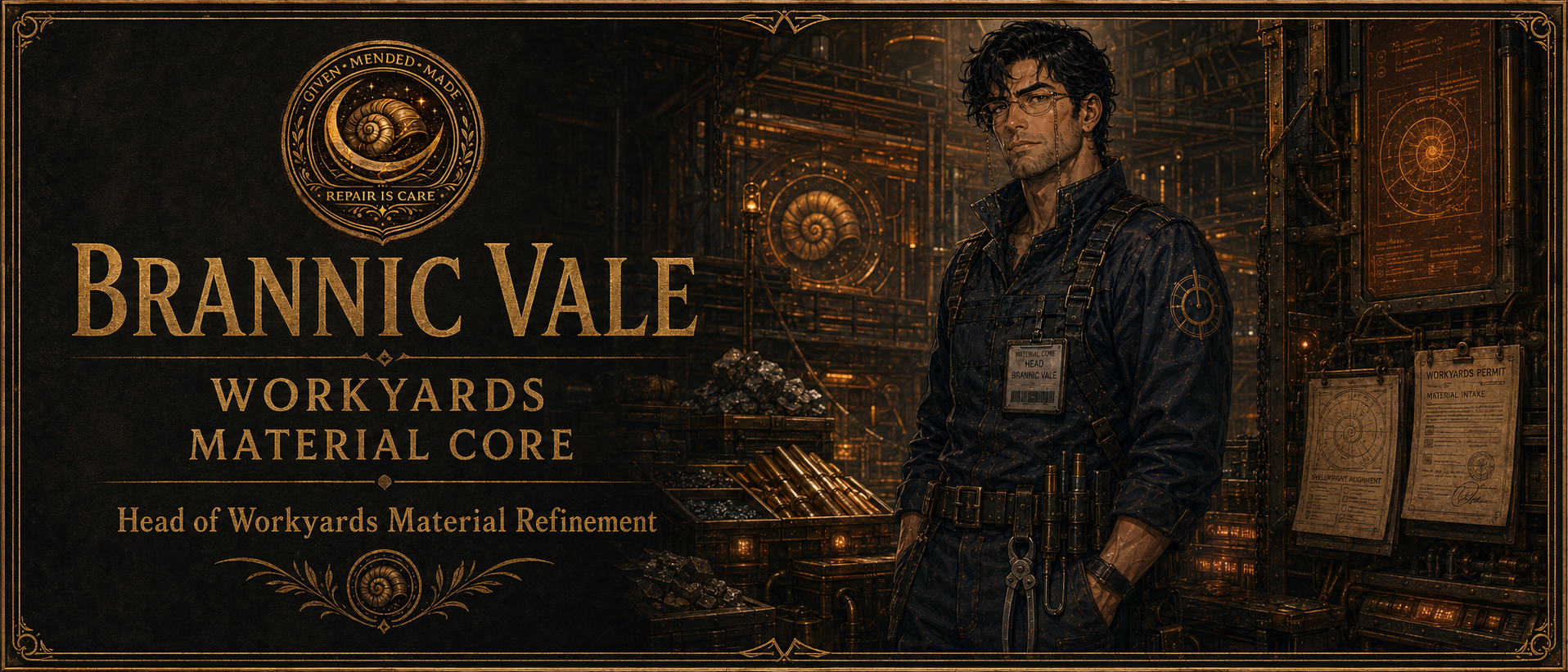
Brannic Vale, Head of the Material Core.

Zone Head: Brannic Vale

Brannic Vale is Head of the Material Core and the Workyards authority on material refinement, compatibility, storage integrity, and raw-to-usable processing. He reports to Landon Serpentine, but his shelves are his kingdom, his labels are law, and his patience has been rationed since approximately breakfast.

Head of Material CoreCompatibility TestingRestricted StorageShelf Tyrant
Materials do not lie. People do.

How Brannic Runs the Core

Records Everything

yes, everything

Intake source, stress marks, curing time, readings, shelf movement, compatibility results, worker access, and every “temporary” exception.

Protects the Standard

quality is civic safety

He blocks unsafe allocations, rejects poorly sorted material, flags contamination risks, and keeps Workyards repairs supplied with reliable stock.

Argues Usefully

especially with Toma

Fabrication wants speed. Brannic wants proof. The tension is annoying, productive, and probably why several disasters never happened.

landon’s likely note

Brannic is not being mean. Usually. He is being accurate with sharp edges.

Material Core Outer Lane

Warm Plate Noodle Yard

Warm Plate Noodle Yard sits along the Material Core’s public outer lane: a casual dinner spot, date spot, and worker-adjacent restaurant where the food is warm, the route noise is distant, and the tables are far enough from restricted storage that Brannic can eat without personally glaring at a civilian.

PublicRestaurantCasual DinnerDate SpotOuter Lane
Warm Plate Noodle Yard, a public restaurant on the Material Core outer lane.

Hot Broth Near the Cold Shelves

The Noodle Yard is where Material Core workers decompress after hours of sorting, inspecting, and trying not to argue with a shelf ledger. Guests get the warmth, the view, and the food, while restricted routes stay behind marked boundaries.

Public tables, worker regulars, and absolutely no wandering into storage.
Workyards Main Zone

Molt Harvest and Sorting Zone

The Molt Harvest and Sorting Zone is built around natural shed windows and surface-safe collection routes. It handles natural molt collection, inspection, grading, ethical clearance, and no-touch restrictions before any shed material is allowed to move deeper into the Workyards.

Natural Shed WindowsSurface-Safe RoutesEthical ClearanceInspectionNo-Touch Lines
The Molt Harvest and Sorting Zone, a Workyards hall where large shed plates are inspected and sorted.

Where Given Material First Becomes Civic Trust

Molt Harvest is not a place where workers take from Tethys. It is where they wait for what she naturally sheds, mark the safe collection windows, collect only cleared material, and protect active shed zones from anyone impatient enough to mistake opportunity for permission.

Active shed warnings outrank production schedules. Every time.

What Is Molt Harvest For?

Molt Harvest protects the line between gift and extraction. It makes sure shed material is collected only after natural molt clearance, then inspected, graded, marked, and released according to safety, ethics, and material behavior.

Natural Only

no forced shedding

Workers collect after confirmed natural shed windows. If material is still attached, unstable, responsive, or inside an active warning zone, it is not available.

No-Touch Lines

warnings beat urgency

Marker lines keep workers, civilians, carts, animals, and tools away from active shed zones until Elowen’s teams clear the route.

Clearance Before Use

nothing skips the table

Collected molt is inspected for stress, contamination, brittleness, signal response, moisture behavior, and compatibility before entering Material Core intake.

no-touch means no-touch

A no-touch line is not a suggestion, a hurry-up challenge, or a place to lean while thinking. If it is marked active, production waits.

How the Route Works

Molt Harvest is one of the Workyards’ most disciplined workflows because the material begins as part of a living city. The process is slow by design.

Watch

shed window confirmed

Crews monitor molt timing, surface behavior, pressure shifts, and warning signs until a shed window is confirmed safe.

Mark

route control first

Workers lay no-touch lines, hazard tags, active shed warnings, safe approach markers, and public diversion routes before collection begins.

Collect

surface-safe handling

Cleared pieces are lifted through approved routes with tools that protect both the shed material and Tethys’s surface.

Inspect

look before value

Each piece is checked for cracks, softness, active response, stress history, contamination, moisture, and signs it should remain restricted.

Grade

purpose begins here

Material is sorted by thickness, flexibility, resonance, heat behavior, structural potential, and whether it is safe for public or restricted use.

Release

tagged for the Core

Approved material moves to the Material Core with collection records, grade tags, restriction notes, and handling history attached.

Elowen Thatch, Head of the Molt Harvest and Sorting Zone.

Zone Head: Elowen Thatch

Elowen Thatch is Head of the Molt Harvest and Sorting Zone. She oversees natural molt collection, inspection, grading, ethical clearance, and the no-touch restrictions that keep eager hands from turning a gift into harm.

Her authority is calm, precise, and difficult to argue with because she does not treat molt as stock first. She treats it as something Tethys released, something that must be respected before it can be useful.

Head of Molt CollectionNo-Touch AuthorityEthical ClearanceSorting Discipline
Given. Mended. Made. Never forced.

How Elowen Runs the Zone

She Waits Correctly

patience is procedure

Elowen’s crews do not rush a shed window because another zone is waiting. The schedule bends before the living city does.

She Marks Clearly

no ambiguity allowed

Her warning lines, tags, and route markers are designed so nobody can pretend they “did not realize” an area was restricted.

She Releases Carefully

use comes after respect

Material leaves her zone only after clearance, grade assignment, handling records, and restriction notes are complete.

Active shed warnings and no-touch marker lines outrank production schedules.

Molt Harvest working rule
Workyards Main Zone

Fabrication and Repair Works

The Fabrication and Repair Works is where cleared material becomes usable civic structure: panels, brackets, braces, frames, repair components, emergency replacements, fitted housings, and the sturdy little fabricated pieces that keep the Workyards from turning every problem into “hold this while I panic.”

Shaping BaysBonding StationsResonance CuttingRepair ComponentsEmergency Fabrication
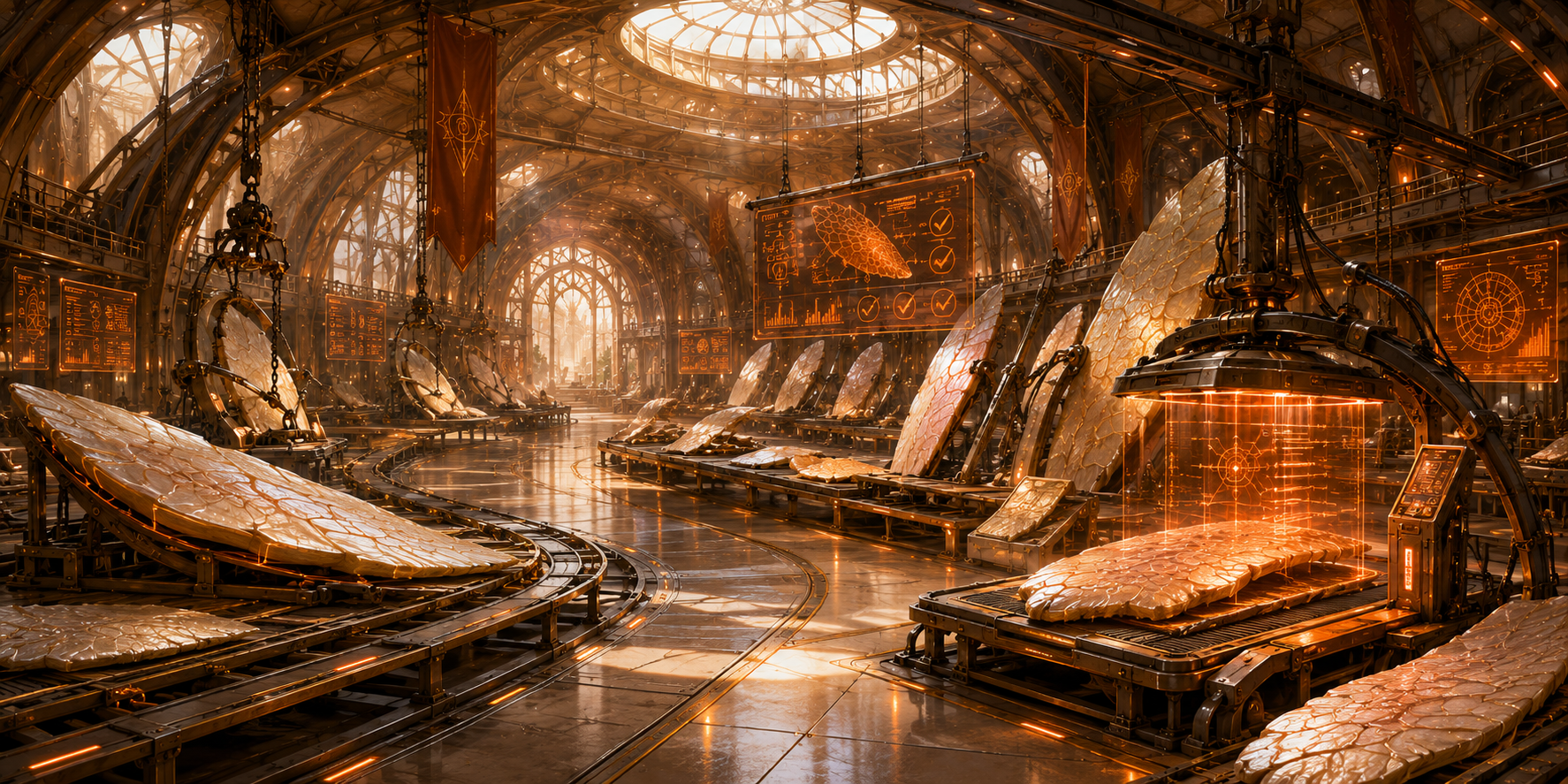
The Fabrication and Repair Works, a busy Workyards hall with shaping bays, repair tables, tools, heat, and fabrication stations.

Where Cleared Material Becomes Useful

Fabrication takes approved stock from the Material Core and turns it into fitted parts the city can actually use. This is the zone of shaping bays, bonding stations, cutting rigs, repair benches, panel cradles, tool rails, emergency orders, and workers who can make three different objects out of one cleared plate while arguing about whose measurements are less insulting.

Measure twice. Brace once. Do not make Toma ask why there are sparks there.

What Is Fabrication For?

Fabrication is the Workyards’ make-it-real zone. The Material Core decides what material can safely become. Fabrication decides how to shape it, join it, cut it, brace it, and prepare it for the repair crews who need a part that fits before something important gets worse.

Shape

panels, plates, braces

Cleared plates and panels are trimmed, curved, pressed, seated, and shaped into usable repair forms without stressing the material past its approved limits.

Bond

join without betrayal

Bonding stations fuse compatible layers, patchstock, membranes, brackets, and reinforcement seams into stable parts that will hold under civic use.

Cut

resonance-guided precision

Resonance cutting rigs trim sensitive material where brute force would crack, distort, or wake up exactly the wrong sort of structural complaint.

fabrication rule

Fast is only useful if the part still fits when the heat clears. Toma will accept ugly. He will not accept unsafe.

How the Work Moves

Fabrication is loud, hot, practical, and extremely tagged. Every part starts with approved material and ends with a route label, a use limit, and somebody’s initials taking responsibility for the result.

Receive

approved stock only

Fabrication begins when the Material Core releases cleared stock with grade tags, stress notes, compatibility limits, and handling restrictions.

Template

fit before force

Crews map the needed shape, load path, joint placement, clearance route, and whether the part must be temporary, permanent, flexible, or reinforced.

Fabricate

heat, cut, press, bond

Shaping bays, heat beds, bonding tables, resonance cutters, tool rigs, and repair benches turn the material into finished civic components.

Check

no heroic guessing

Finished pieces are checked for fit, strain, seam behavior, heat response, edge safety, and whether the repair team can install them without inventing a new emergency.

Tag

purpose stays attached

Components leave with route labels, use warnings, install notes, worker initials, and repair limits so nobody turns a temporary brace into city doctrine.

Rush

emergency bay only

Emergency fabrication exists for real civic risk, not impatience. Toma can move terrifyingly fast when the danger is honest.

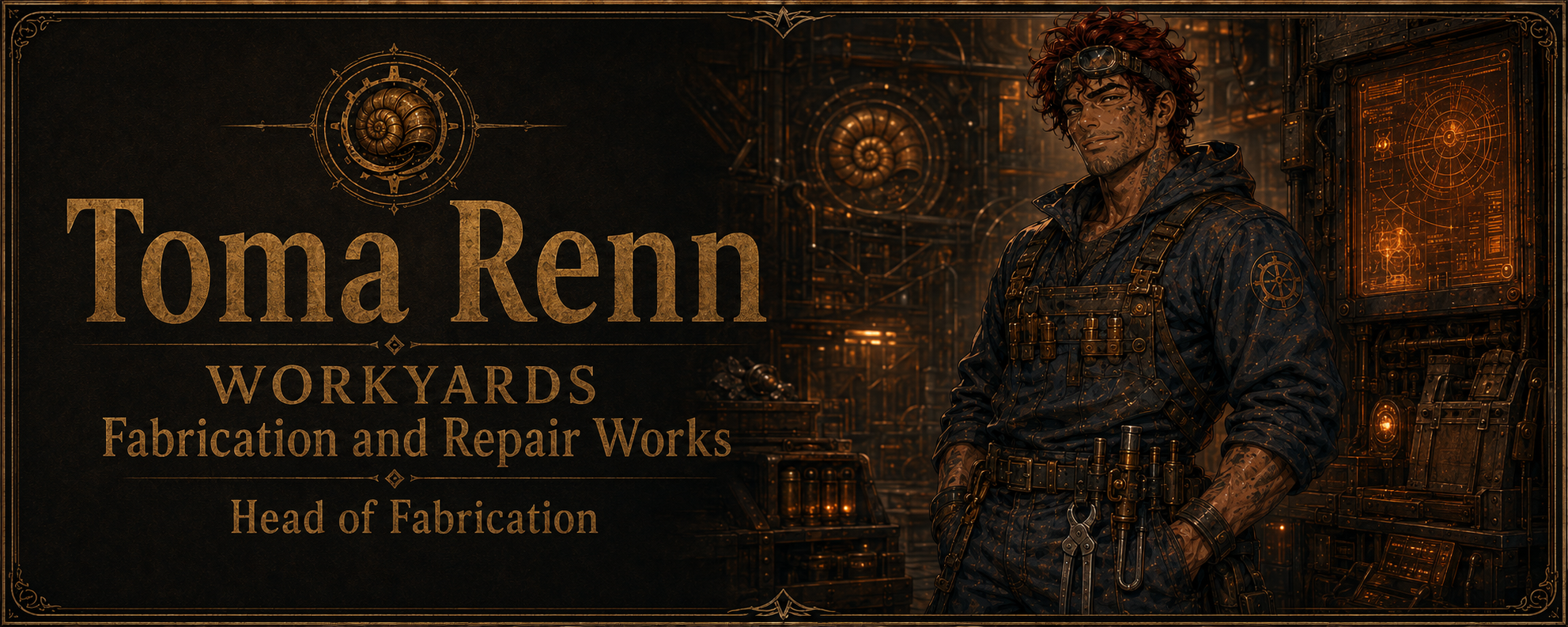
Toma Renn, Head of Fabrication and Repair Works.

Zone Head: Toma Renn

Toma Renn is Head of Fabrication and Repair Works. He oversees shaping bays, bonding stations, resonance cutting, panel work, emergency fabrication, repair components, and the kind of practical making that turns cleared Workyards material into something crews can carry, bolt, brace, seal, or install before a situation gets worse.

Toma is the person workers call when the city needs a part now, but not badly enough to excuse stupidity. He likes speed, hates hesitation, respects good measurements, and has a long-running professional tension with Brannic Vale because Material Core wants proof and Fabrication wants the proof to move faster.

Head of FabricationRepair ComponentsEmergency BuildsShaping Bays
Ugly is allowed. Unsafe is not.

How Toma Runs the Works

He Moves Fast

but not blind

Toma can push a crew into motion quickly, but he expects every worker to know the material, the route, the risk, and the reason before the part leaves the bay.

He Builds Practical

function before polish

His zone makes parts meant to survive work: panels, braces, brackets, housings, patch assemblies, emergency frames, and repair-ready components.

He Argues Productively

especially with Brannic

Toma pushes for speed. Brannic pushes for certainty. Landon lets them argue because the city is usually safer after both of them have been annoyed.

Build the thing that holds. Pretty can apologize later.

Fabrication floor saying, probably Toma-approved
Fabrication Public Edge

Places Near the Works

The public edge of Fabrication is where the heat softens into food, noise turns into gossip, and work crews become people with coffee, buns, dinner plans, and very strong opinions about which table has the best view of the repair yard lights.

Public-RegulatedWorker FoodRepair Yard ViewsFast BreakfastIndustrial Romance
The Bolt and Bun, a triangular bakery kiosk on the Fabrication and Repair Works public edge.

The Bolt and Bun

The Bolt and Bun is a triangular bakery kiosk on the public-regulated edge of Fabrication and Repair Works. It has a high steam vent, a bolt-shaped sign, orange paper wrappers, pastry trays that vanish suspiciously fast, and a constant line of people who all claim they are just passing by.

BakeryQuick FoodWorker BreakfastPublic-Regulated
LocationFabrication and Repair Works public edge.
VibeFast, funny, practical, crowded, and dangerous if you are trying not to buy six buns.

What They Serve

  • Bolt buns filled with spice meat or mushroom mash.
  • Honey-bronze rolls and heat-glazed breakfast knots.
  • Bitter coffee and Worker’s Wake ginger shots.

Scene Uses

Morning rush scenes, chaotic food orders, crew meetups, someone being bribed with pastries, and light comedy with crumbs on everyone’s sleeves.

Visual lock: triangular kiosk, steam vent, bolt sign, crowded rail, orange wrappers.
Iron Apron Date Loft, a raised Workyards date restaurant overlooking the Fabrication and Repair Works.

Iron Apron Date Loft

The Iron Apron Date Loft sits on the upper public side of Fabrication and Repair Works: a raised triangular loft with enclosed glass panels, bronze rails, warm views over the moving lights of the repair yards, and a semi-open kitchen where food is cooked on safe heat plates.

Date RestaurantFancy by Workyards StandardsPublic-RegulatedUpper Public Side
InteriorSmall tables, low lamps, thick aprons hung like ceremonial coats, and a heat-plate kitchen.
VibeRomantic, grounded, warm, adult, and never Skyward-fancy.

What They Serve

  • Iron-plate steak mushrooms and smoked salt potatoes.
  • Amber wine, honey cider, and glazed root stacks.
  • Two-person shared forgecake dessert.

Scene Uses

Dates, anniversaries, reconciliations, quiet celebrations after a hard repair, and “we are not calling this a date” scenes that are absolutely dates.

Visual lock: raised loft, bronze rails, heat-plate kitchen, orange lamps, soft industrial romance.

public edge rule

You can buy buns, eat dinner, flirt badly, and admire the repair yard lights. You cannot wander past the orange tags because you “wanted to see the sparks closer.”

Workyards Main Zone

Civic Repair Market

The Civic Repair Market is the public face of Workyards repair culture: a market deck of booths, safe-to-fix tags, salvage stalls, repair mediation, worker gossip, small public fixes, and the everyday lesson that reuse is only virtuous when it is safe.

Public-RegulatedRepair CultureSafe SalvageRepair MediationReuse With Rules
Civic Repair Market, a public Workyards market of repair booths, safe salvage stalls, and orange-bronze repair culture.

The Public Face of Repair

The market is busy, practical, friendly, and loud in the alive way: hanging tag boards, folded awnings, chalk repair signs, clean safe-lane stripes, shared tool tables, crate-benches, repair stalls, hot food smells, and workers who complain while helping anyway.

Civilians come here with broken household objects, questionable salvage, sentimental pieces, bad repair ideas, and the occasional tiny disaster in a bag. The market’s job is to teach what can be reused, what needs a worker’s hands, and what absolutely should not be carried around like a lucky charm.

Repair, reuse, respect. Not all that shines is safe.
Mochi Sage Louve, Head of the Civic Repair Market.

Zone Head: Mochi Sage Louve

Mochi Sage Louve is Head of the Civic Repair Market. She oversees the Scrap Exchange, Minor Repair Booths, Approved Salvage Stalls, safe-to-fix tagging, salvage approval, repair mediation, and the public-facing repair culture that keeps reuse humane instead of reckless.

Mochi is warm, clever, socially intelligent, and very good at turning a funny salvage argument into a practical safety lesson before anyone realizes they have been gently managed.

Market HeadRepair MediationSafe-to-Fix TagsPublic Repair Culture
Reuse without safety is not virtue.

What the Market Teaches

Public repair is not just commerce. It is a civic habit: tag the material, learn the story, fix what can be fixed, refuse what is unsafe, and let people laugh before their patience becomes a workplace incident with shoes.

Safe-to-Fix

inspection before sentiment

Objects are checked before they become projects. A beloved broken thing is still allowed to be unsafe.

Repair Mediation

not sure? ask

Market workers help civilians decide whether to mend, reuse, repurpose, recycle, or stop carrying the suspicious object around.

Salvage Stories

every tag has a reason

Certified salvage keeps its history attached so reuse never becomes mystery-risk with a cute ribbon.

Scrap Exchange, a tagged salvage market in the Civic Repair Market.

Scrap Exchange

The Scrap Exchange is treasure-hunt energy with safety paperwork: a stacked salvage pavilion of triangular racks, hanging bins, suspended trays, colored tags, inspection lamps, and useful oddities that look cursed but are technically certified.

Salvage MarketBargain ShoppingReuse CulturePublic-Regulated
GoodsSafe salvage bundles, rebuilt lamp cages, mismatched handles, old rail tokens, odd screws, and tagged useful weirdness.
Scene UsesBartering, sentimental finds, material-grade arguments, and comedy over certified suspicious objects.
Every item has a tag, a story, or a warning.
Minor Repair Booths in the Civic Repair Market.

Minor Repair Booths

The Minor Repair Booths are compact triangular kiosks tucked along the market edge. Inside each one, a worker keeps a miniature kingdom of tools while straps, clasps, hinges, lamps, buckles, and household panels get fixed in full view of everyone waiting nearby.

Repair ServiceWaiting RailEveryday FixesPublic-Regulated
VibeWarm, small, practical, and comedic enough that private arguments become public entertainment in four minutes.
GoodsCounter biscuits, worker coffee, spare-button jars, kettle fixes, strap tightening, and while-you-wait tool polish.
Tiny booths. Bright lamps. Beloved bent objects.
Approved Salvage Stalls in the Civic Repair Market.

Approved Salvage Stalls

The Approved Salvage Stalls are cleaner, more formal, and more curated than the Scrap Exchange: sealed display crates, green-orange clearance flags, reinforced tables, certification tags, and goods polished just enough to be trusted without pretending they were never broken.

Certified SalvageShoppingCleared GoodsPublic-Regulated
GoodsRefinished storage boxes, certified light panels, cleared shell-composite decor, hand-riveted jewelry, and spiced pear water.
Scene UsesGift buying, quiet shopping, authenticity arguments, and civilians learning why safe salvage matters.
Repaired does not mean risky. Certified means someone checked.
Brassbug Arcade, a public-regulated arcade and civilian fun spot near the Civic Repair Market.

Brassbug Arcade

Brassbug Arcade is where the repair district admits civilians and workers need to be ridiculous on purpose. It is all clacking machines, brass beetle racers, orange-lit game tables, prize shelves, repair-themed buttons, and someone loudly insisting the machine cheated.

ArcadeGamesCivilian FunPublic-Regulated
VibeLoud, bright, competitive, silly, worker-friendly, and just practical enough to justify existing.
Scene UsesDates, sibling bickering, crew bets, prizes won for someone else, and comedy after hard repair scenes.
Not everything useful has to be serious.
The Moltlight Tavern, a warm tavern on the Civic Repair Market evening row.

The Moltlight Tavern

The Moltlight Tavern sits on the evening row: a low, warm tavern with triangular frames, amber window panels, repaired cargo-bench booths, bronze mugs, patched banners, and a hanging lamp shaped like a molted shell shard.

TavernWorker NightlifeEvening RowAdult-Regulated Drinks
ServesMoltlight amber ale, smoked root whiskey, copper kettle cider, hot pepper buns, onion-salt crackle chips, and stew cups.
Scene UsesAfter-work drinks, confessions, ethics arguments, soft dates pretending not to be dates, and crew celebrations.
One drink, everyone says. Community-building lies.
The Mender's Mug, a quiet cafe on the Civic Repair Market side lane.

Mender’s Mug

Mender’s Mug is a narrow side-lane cafe tucked between repair booths. Its sign is made from three repaired mugs fused into one ugly masterpiece, and inside the shelves are crowded with mismatched cups, little notes, sentimental objects, and tiny repair tags.

CafeSolo WorkQuiet RestPublic
ServesPatchwork latte, roasted barley coffee, honey-nut steam, cup-cake buns, cracked-mug cookies, and fix-it cocoa.
Scene UsesSolo scenes, soft dates, object-lore reveals, quiet conversations, and grief over small broken things.
Coffee, a corner, and the little thing you did not realize was making you sad.
The Dropped Screw Window, a tiny snack window on the Civic Repair Market side stair.

The Dropped Screw Window

The Dropped Screw Window is a stupidly small pass-through window built into a side stairwell near the repair market. The sign is shaped like a screw falling off a shelf. Nobody knows why it became famous. It did.

Tiny Snack WindowComedy PlaceSide StairPublic
ServesDropped-screw pretzels, tiny bolt cakes, emergency pickles, burned-edge cookies, and suspiciously good lemon fizz.
Scene UsesLate-night snacks, secret meetings nobody expects, comedy beats, and emotional bonding over dumb food.
The district equivalent of finding a raccoon with a business license.
The Oops Bin, a mystery salvage booth in the Civic Repair Market.

The Oops Bin

The Oops Bin is a mystery salvage booth tucked into the Scrap Exchange side of the Civic Repair Market. It sells low-risk bundles, funny questionable gifts, mystery packets, and objects with labels that sound less like inventory and more like a dare.

Mystery SalvageQuestionable GiftsFunny ShoppingPublic-Regulated
VibeLow risk, high fun, deeply unserious, and exactly safe enough for someone to regret being curious.
Scene UsesGag gifts, mystery clues, friend dares, salvage comedy, and someone insisting “probably a hinge” is a useful category.
Mystery is a service, not a lie.

funny place rule

The Dropped Screw Window and The Oops Bin are not random gags. They are civic pressure valves for people who repair civilization and would otherwise become a workplace incident with shoes.

Workyards Main Zone

Textile and Soft Goods Works

The Textile and Soft Goods Works is where the Workyards remembers that not every civic system is metal, shell, heat, or brace. Some things survive because they flex: cloth, straps, harnesses, soft supports, padding, patch fabric, workwear, comfort goods, and the dyed textiles that make practical things feel cared for.

TextilesSoft GoodsHarnessesFlexible SupportsDye Work
Textile and Soft Goods Works, a Workyards hall of cloth rolls, sewing tables, straps, harnesses, and soft repair systems.

Where Flexible Things Carry Real Weight

Textile and Soft Goods handles the systems that bend instead of break: harness straps, padded liners, work cloth, repair patches, bedding, wraps, curtain panels, utility rolls, protective sleeves, and flexible supports for animals, workers, tools, and civic infrastructure.

It is softer than most Workyards zones, but not delicate. A bad strap can injure a mount. A poor liner can ruin a brace. A weak seam can turn comfort into hazard. Perrin Moss’s people treat softness as engineering with better manners.

Flex. Adapt. Endure. Then stitch the label on straight.

What Is Textile and Soft Goods For?

The zone makes the Workyards survivable where hard systems are not enough. It produces flexible, washable, repairable goods that support bodies, tools, animals, routes, public comfort, and practical dignity.

Support

soft does not mean weak

Harnesses, straps, padding, braces, liners, wraps, and flexible supports help workers, mounts, companion animals, and tools move safely under real Workyards strain.

Protect

comfort can be safety

Soft goods prevent chafing, heat stress, pressure injury, moisture damage, tool abrasion, and the slow little failures that turn daily work into harm.

Repair

patches with purpose

Repaired coats, mended wraps, patched curtains, reinforced seams, and salvaged cloth keep usable things in circulation without pretending damage never happened.

soft goods rule

A seam is not decorative if someone’s weight, warmth, privacy, or dignity depends on it.

Softworks Station

Softworks Station is the mixed public and worker-controlled heart of the zone: part production floor, part dye station, part fitting route, and part “please stop calling cloth easy” correction desk.

Cloth and Dye

color has a job

Cloth is cut, washed, dyed, treated, labeled, and matched by use. Orange, cream, brown, and green tones are common, but dye also marks safety grade, district use, and repair history.

Harness Work

fit before force

Harnesses, straps, buckles, soft anchors, and padded liners are tested for movement, pressure, adjustability, and whether the wearer will hate everyone after one hour.

Flexible Supports

bend, hold, recover

Soft braces, wraps, utility sleeves, bedding supports, animal padding, and worker comfort goods are made to flex repeatedly without becoming useless fluff.

Perrin Moss, Head of Textile and Soft Goods Works.

Zone Head: Perrin Moss

Perrin Moss is Head of Textile and Soft Goods Works. She oversees cloth production, dye work, straps, harnesses, soft supports, padding, repair cloth, workwear, comfort goods, and the flexible systems that keep harder Workyards machinery from grinding people and animals down.

Perrin’s authority is practical, observant, and tactile. She notices fit, wear, tension, fabric fatigue, bad buckles, hidden discomfort, and the tiny signs that something soft is about to fail loudly. Her zone may smell like steamed cloth and herbs, but it runs on discipline.

Head of TextilesSoft GoodsHarness FitDye and Cloth
Harmonize softly. Survive loudly.

How Perrin Runs the Works

She Checks Fit

comfort is data

Perrin treats pinching, slipping, rubbing, overheating, and awkward movement as warnings, not complaints to be ignored.

She Saves Cloth

repair is honor

She values visible mending, reinforced seams, old coats with new life, and patchwork that tells the truth without falling apart.

She Makes Softness Useful

gentle, not fragile

Her work turns softness into safety: padding, privacy, warmth, flexibility, body support, animal care, and better days after hard repairs.

If it touches skin, strain, or sleep, it matters.

Textile and Soft Goods working rule
The Patchwork Parlor, a cloth shop and tea corner on the public side of Textile and Soft Goods Works.

The Patchwork Parlor

The Patchwork Parlor is a soft-sided public shop with layered fabric awnings, rope curtains, warm lamps, patched banners, bolts of cloth, strap samples, repaired coats, sitting nooks, and a tea counter near the fitting screens.

PublicCloth ShopTea CornerCozy Social Place
VibeCozy, tactile, intimate, and softer than most of Workyards without becoming delicate.
Scene UsesShopping, fittings, emotional clothing repairs, quiet dates, self-care, and character design moments.

Goods and Comforts

  • Repaired coats, custom straps, soft utility wraps, and padded harness liners.
  • Herb tea, honey cloth cakes, and warm milk-root drinks.
  • Visible patchwork, orange and cream textiles, hanging straps, sewing lamps, and soft benches.
Repairs are displayed like honors, not hidden like shame.
The Soft Seam House, a regulated private adult companionship lounge on the Textile and Soft Goods Works private social edge.

The Soft Seam House

The Soft Seam House is a discreet domed house behind layered cloth screens, marked by a simple seam-knot lantern instead of a loud sign. It sits on a raised platform with clear exits, privacy routes, staff control, and rules that make comfort possible without pretending boundaries are optional.

Adult-RegulatedPrivateSoft LuxuryConsent and Safety
InteriorPrivate rooms, negotiation parlors, tea nooks, bath-prep areas, and staff-only support spaces.
VibeIntimate, adult, regulated, protective, discreet, and surprisingly practical.

Goods and Scene Uses

  • Herbal wine, warm milk-root, honeyed tea, comfort plates, and soft seam bracelets.
  • Custom scent-cloth tokens for private clients.
  • Adult-only social scenes, political secrets, lonely worker comfort, guarded romance, and regulated adult-labor worldbuilding without explicit detail.
Workyards does not do fake innocence. If something exists, it gets rules and clean exits.
Strata Steps Overlook, a public-regulated mount and transport overlook with safety rails and route signs.

Strata Steps Overlook

Strata Steps Overlook is a stepped observation deck raised above cargo movement, with safety rails, mount-route markers, orange rail lights, and carved signage on removable boards, never on Tethys. It belongs near the Workyards mount and transport area, but it fits beautifully with Textile’s softer public edge because people come here to sit, watch, breathe, and not be asked to perform usefulness for a minute.

Public-RegulatedOverlookMount-WatchingSolo Place
VibeQuiet for Workyards, reflective, a little dusty, and good for talks where nobody has to stare directly at each other.
Scene UsesSolo reflection, companion scenes, cargo-watching, emotional talks, low-pressure dates, and city-systems realizations.

Small Things Sold Nearby

  • Warm nut packets and trail biscuits.
  • Bitter cocoa from a pushcart.
  • Little paper route maps sold as souvenirs.
The city survives because people move things correctly.
textile edge rule

Soft does not mean unserious. A good cloth shop, a regulated private house, and a quiet overlook all exist for the same Workyards reason: people last longer when the city makes room for comfort, consent, and rest.

Workyards Main Zone

Memorial Reclamation Sector

The Memorial Reclamation Sector is where Tethys handles death without pretending it is easy. It is controlled, consent-bound, record-heavy, and built around dignity: the place where remains are received, documented, prepared, cured, and returned into the city’s compost cycle with care instead of denial.
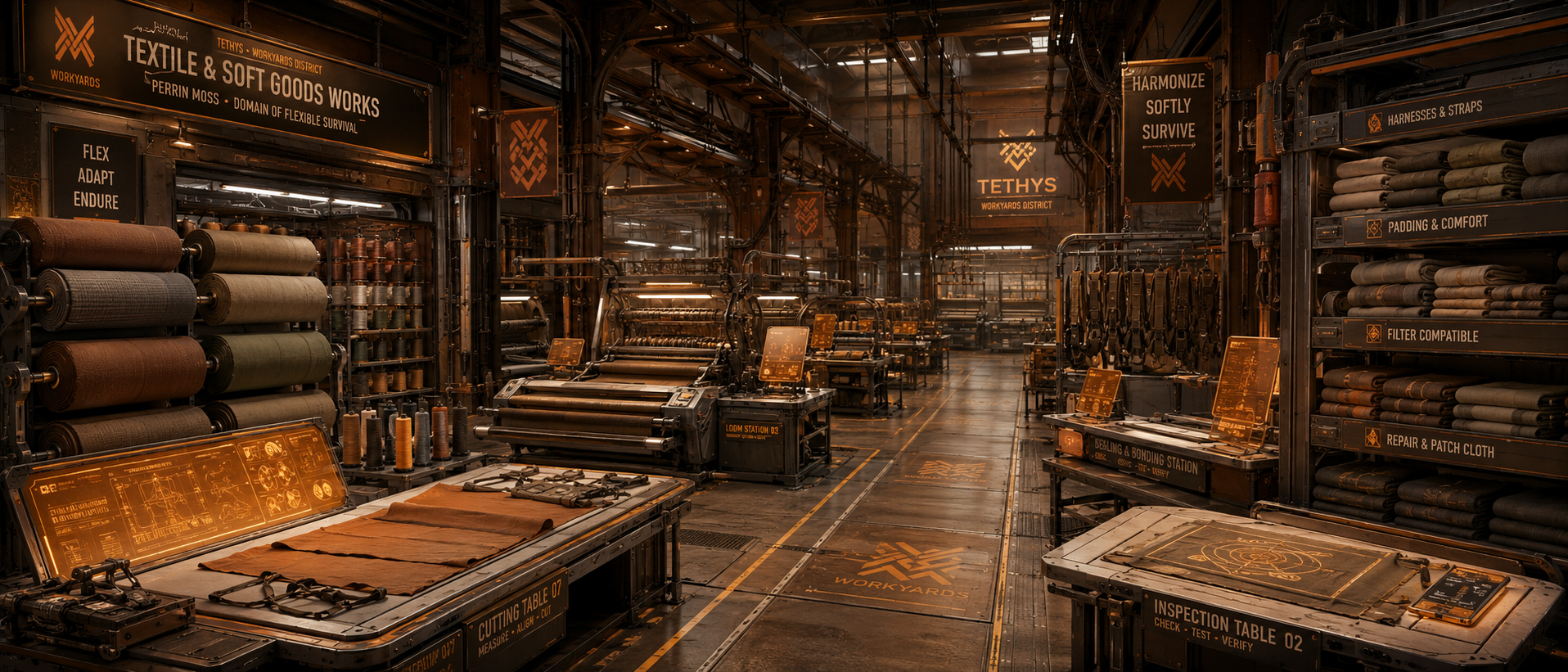
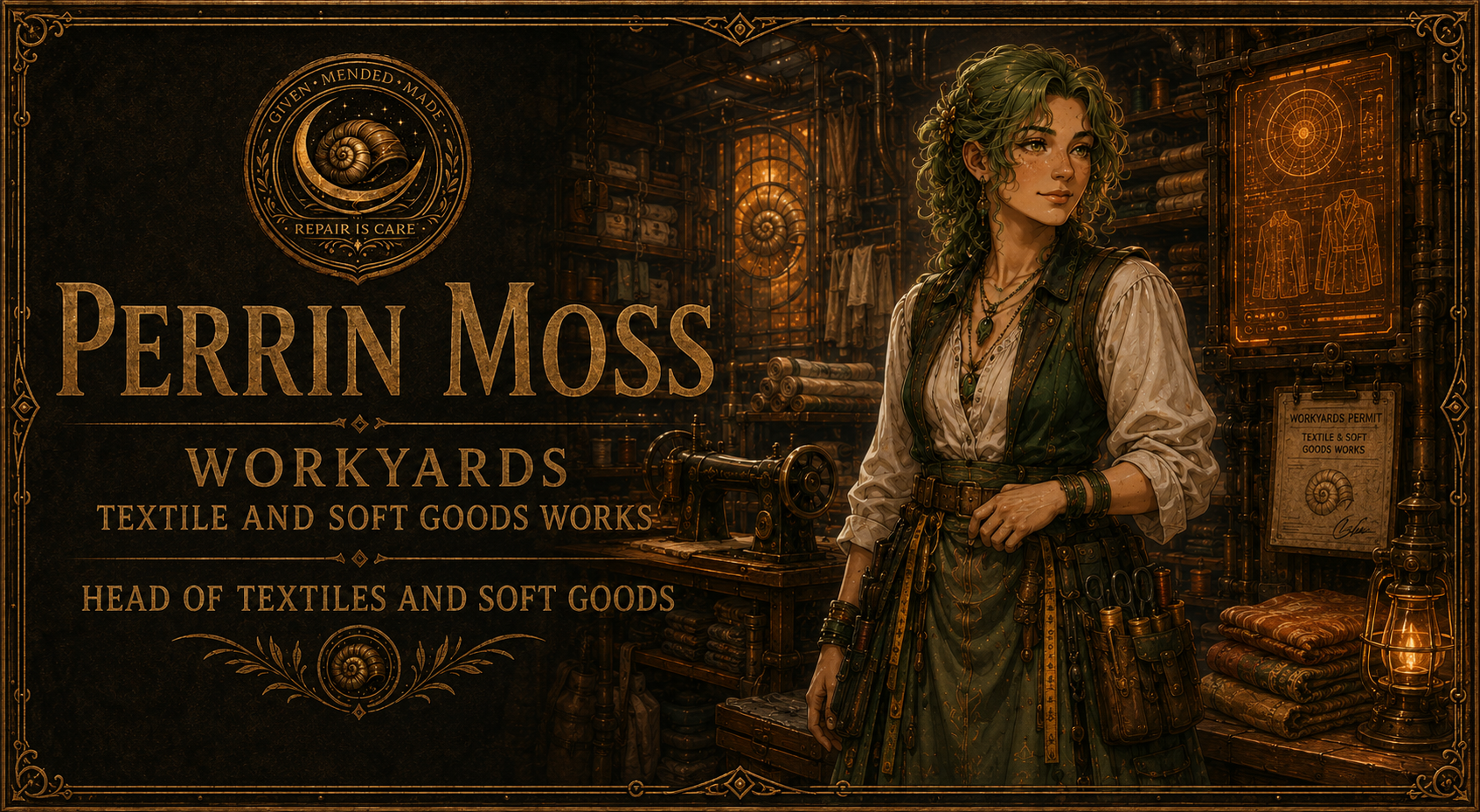
Consent-BoundMemorial ReturnRecordsCuringDignity First
Memorial Reclamation Sector, a controlled Workyards hall for consent-bound memorial return, curing records, and compost preparation.

Where Return Is Made Visible Enough to Trust

Memorial Reclamation gathers the city’s hardest return work in one carefully controlled place. Bodies, approved organic remains, and meat-pig processing waste enter through respectful intake routes, are documented, sealed, cured, and prepared until they can safely leave the public-facing sector.

After that first stage, material is sent onward to Tidewell’s compost systems, where wormwork and greenhouse cycles finish the transformation. The sector does not make death small. It makes the process honest, traceable, and gentle enough for people to understand without being forced to stare at every frightening part.

Receive. Honor. Transform. Return.

What Is Memorial Reclamation For?

Memorial Reclamation exists because death, waste, and return are part of the same civic truth: the city survives by transforming what has ended into something that can safely nourish what continues.

Receive

consent and record first

Intake begins with verified consent, authorization, identity records where applicable, handling notes, and clear separation between memorial return and ordinary organic processing.

Prepare

sealed, monitored, respectful

Remains are moved through sealed and monitored curing routes so the frightening, unsanitary, and visually distressing parts of decay are controlled before public-facing transfer.

Return

toward Tidewell compost

Prepared material leaves through approved routes toward Tidewell’s compost center, where worms and greenhouse systems continue the return cycle.

why the garden matters

Death is scary even when the process is kind. The little garden exists so nervous visitors can see the beautiful part too: soil, flowers, food, breath, and proof that return is not the same thing as being thrown away.

How the Return Route Works

The sector keeps its process slow, witnessed, and recorded. Nothing enters casually. Nothing leaves without clearance.

Consent

the first gate

Memorial return requires consent, authorization, and records. The sector does not treat bodies as civic material before treating them as someone’s dead.

Seal

privacy and safety

Intake chambers, records, coverings, sealed carriers, and controlled routes protect both dignity and sanitation.

Cure

decay made safe

Early decomposition is stabilized in monitored curing vaults before material can move toward public-adjacent transfer or Tidewell processing.

Record

nothing anonymous by neglect

Reclamation records track intake status, conditions, consent, release clearance, and destination so return is accountable.

Release

conditions met

Material only leaves when curing, dignity requirements, route safety, and authorization are complete.

Nourish

Tidewell finishes the cycle

Tidewell’s compost center and worm systems finish the long transformation toward greenhouse-safe soil support.

Sister Marrow Venn, Head of Reclamation in the Memorial Reclamation Sector.

Zone Head: Sister Marrow Venn

Sister Marrow Venn is Head of Reclamation. She oversees memorial intake, consent verification, reclamation records, curing vaults, release clearance, public education, and the quiet garden that helps people face the return cycle without being abandoned to fear.

“Sister” is a service title with religious-adjacent flavor, not proof of a dominant Tethys religion. Tethys has small sects and private beliefs, but the city’s strongest shared faith is practical non-harm: live on the giant beetle without taking more than she gives, and make even the hardest systems answer to care.

Head of ReclamationConsent RecordsCuring VaultsReturn Cycle
Dignity, consent, return.

How Marrow Runs the Sector

She Does Not Rush Grief

time is part of care

Marrow’s staff keep the process calm, witnessed, and plain-spoken. People are allowed to be frightened, angry, quiet, confused, or not ready.

She Guards Consent

no body becomes anonymous material

Consent, authorization, records, and release conditions are not decorative paperwork. They are the ethical spine of the sector.

She Makes Return Understandable

truth without cruelty

Marrow explains the composting cycle honestly while keeping the distressing parts protected from casual view.

We do not hide death because it is ugly. We cover it because it deserves tenderness.

Memorial Reclamation saying
Controlled and Respectful

Quiet Return Station

Quiet Return Station is the controlled intake and public-facing education point of the sector: the place where families, caretakers, workers, and authorized staff meet the return cycle at its gentlest edge.

Consent-BoundRecordsCuringCompost PreparationGarden View

The Intake Rooms

quiet, sealed, witnessed

Intake rooms handle authorized remains and approved organic waste with privacy, records, coverings, staff guidance, and controlled transfer routes.

The Curing Vaults

before Tidewell

Early decomposition is stabilized enough for safe civic transfer before Tidewell’s worm composting and greenhouse systems complete the process.

The Little Garden

proof for the nervous

The garden shows visitors what return can become: flowers, soil, herbs, small green things, and a gentler image for people who came in afraid.

quiet return rule

The sector does not ask people to stop fearing death. It gives them railings, records, clean exits, kind language, and flowers at the end of the route.

memorial sector rule

Return is not disposal. Compost is not forgetting. The dead are handled carefully because the living need to trust what happens next.

Workyards Main Zone

Observation and Safety Galleries

The Observation and Safety Galleries are the Workyards’ public education layer: controlled sightlines, escorted teaching routes, demonstration spaces, warning systems, and safe observation points where civilians can understand repair culture without walking into hazards they are not trained to read.

Public-RegulatedToursSafety TeachingMaterial EthicsControlled Sightlines
Observation and Safety Galleries, a public-regulated Workyards teaching and observation zone.

Where Looking Becomes Learning

The galleries let civilians, students, apprentices, escorted visitors, and nervous first-timers see enough to understand the Workyards without stepping into restricted processing, active fabrication, animal handling, raw material risk, or living-world construction hazards.

This is not a tourist balcony slapped onto dangerous work. It is a safety system: clean rails, guided routes, warning boards, demonstration tables, material ethics lessons, repair examples, and staff trained to explain why a rule exists before someone decides rules are decorative.

Watch clearly. Learn safely. Do not cross orange.

What Are the Galleries For?

The galleries exist because the Workyards does not hide necessary systems, but it also does not throw untrained people into them. Observation turns danger into education without turning education into spectacle.

Teach

why the rules exist

Visitors learn repair ethics, material safety, no-touch culture, route discipline, and how living-world construction differs from ordinary building.

Separate

safe sightlines only

Railings, screens, guided paths, and restricted doors keep curiosity from becoming a worker’s emergency problem with shoes.

Normalize

understanding reduces fear

People fear what they only glimpse through warning signs. The galleries explain enough that the public can trust hard systems without touching them.

gallery rule

A safe view is still a boundary. If the rail exists, it is not asking for your opinion.

Public-Regulated

Safety Gallery Station

Safety Gallery Station is Juniper Kade’s main public education stop: the place where civilians, students, apprentices, and escorted visitors learn how to read Workyards warning tags, observe active systems, and understand material ethics without entering hazardous or restricted work.

ToursTeachingSafe ObservationMaterial EthicsEscorted Visitors

Tour Rails

movement with limits

Routes are marked so visitors can move through teaching spaces without drifting into worker lanes, animal routes, active material zones, or restricted doors.

Demo Tables

touch the safe version

Demonstration stations show cleared samples, mock repairs, practice tags, harmless tools, and examples of why the real thing stays behind the line.

Ethics Boards

use is not entitlement

Material ethics lessons explain salvage, shed material, no mining, no forced molt, animal comfort, public access, and why repair begins with permission.

station note

The Workyards does not teach safety because people are stupid. It teaches safety because useful curiosity deserves a path that does not end in shouting.

Juniper Kade, Head of Observation and Safety Galleries.

Zone Head: Juniper Kade

Juniper Kade is Head of Observation and Safety Galleries. They oversee public tours, teaching routes, demonstration stations, visitor safety, material ethics lessons, apprentice observation, and the careful art of letting people see enough without letting them wander into the part that requires training, clearance, and a very specific kind of boot.

Juniper’s work sits between the public and the workers. They translate danger into understandable rules, make warning systems feel less hostile, and keep the galleries from becoming either a lecture hall with railings or a sightseeing trap with liability paperwork.

Gallery HeadPublic EducationSafety ToursEthics Teaching
A rule explained well is easier to respect.

How Juniper Runs the Galleries

They Control the View

clarity without exposure

Juniper keeps sightlines educational, not distressing. Visitors see processes, demonstrations, and safe examples, not restricted work at its rawest edge.

They Teach the Why

rules need roots

The galleries explain no-touch lines, material tags, salvage approvals, living-world care, repair ethics, and why some systems must remain worker-only.

They Catch the Wanderers

politely, usually

Anyone drifting toward the wrong stair, rail, door, or glowing orange warning gets redirected before curiosity becomes a training incident.

Curiosity is welcome. Wandering is not a personality.

Observation Gallery staff saying
Quiet Patch Benchline, a public rest area with benches, fabric screens, orange lamps, and repair plaques.

Quiet Patch Benchline

Quiet Patch Benchline is a row of calm benches tucked along a lower gallery, sheltered from the main work noise by layered fabric screens and low acoustic panels. Each bench has a small side shelf, a repair-history plaque, and a clean view toward controlled demonstration spaces.

The benches are intentionally not too comfortable because the Workyards believes rest is good, but napping in a safety corridor is rude. Still, it is one of the gentlest places in the galleries: a spot for breathing room, private talks, and watching work without being required to join it.

PublicSolo RestQuiet BenchesDecompression
Nearby CartsBarley tea, plain biscuits, little salt candies, and other things that taste like someone kindly remembered you were tired.
Scene UsesSolo scenes, private talks, post-conflict breathing room, observing work without joining it, and quiet emotional beats.
Visual lock: benches, fabric screens, repair plaques, low orange lamps, clean sightlines.

gallery edge rule

Observation is not distance from the Workyards. It is participation with railings: look carefully, learn honestly, rest when needed, and leave the dangerous parts to the people with clearance.

Workyards Main Zone

Living Systems Zone

The Living Systems Zone is the Workyards’ animal-facing, guest-species-facing, sanitation-heavy, nobody-gets-to-be-precious-about-smells zone. It handles pig yards, Blue Dock bee care, migratory insect guest suites, bedding routes, feed routes, waste recovery, crowd control, animal comfort, and the daily logistics of keeping living systems safe without pretending they are decorative.

Animal CareGuest SpeciesSanitationBio-Cargo FlowSeasonal Systems
Living Systems Zone, a Workyards area with pigs, blue dock structures, bee routes, cargo lanes, and animal care infrastructure.

Where the Yard Stays Alive, Fed, Clean, and Honest

Living Systems is not a cute farm corner glued onto the Workyards. It belongs here because animals, guest insects, feed, compost, bedding, honey products, sanitation, and seasonal species all create smell, waste, traffic, public curiosity, and safety problems that need real infrastructure.

The zone keeps those systems close to heavy filtration, route control, trained handlers, visitor rails, inspection points, and fast emergency containment. The public may see pigs, bees, markets, and snacks. Workers handle the harder part: waste flow, animal stress, dock timing, guest species compatibility, and the rule that living things are never props.

Balance ain’t pretty. It keeps the living fed, the waste reclaimed, and the yard honest.

What Is Living Systems For?

Living Systems keeps the biological side of the Workyards from becoming chaos with hooves, wings, antennae, and opinions. It handles animal care, guest compliance, dock flow, compost routing, feed storage, public viewing, and sanitation protocols.

Care

living things first

The zone watches animal stress, comfort, feed timing, bedding, handling limits, rest needs, route behavior, medical flags, and species-specific boundaries.

Contain

clean routes save everyone

Pig yards, bee docks, guest suites, waste lanes, feed carts, public rails, sanitation markers, and worker-only gates keep the messy parts controlled.

Coordinate

seasonal systems move

Migratory insects and guest species arrive at different times of year, so the zone adjusts housing, crowd rules, product counters, and care routes season by season.

living systems rule

If it eats, stinks, sheds, flies, panics, nests, hauls, produces honey, or has opinions about railings, it probably needs a handler and a route tag.

The Sub-Zones Inside

Living Systems is a zone made of smaller living problems that all need different rules. The Blue Docks, Pig Yards, and Migratory Animal Guest Suites share infrastructure, but each one has its own timing, risks, and public-facing flavor.

Blue Docks

cerulean carpenter bees

The Blue Docks care for cerulean carpenter bees, blue honey routes, seasonal crowding, product counters, dock safety, hive-adjacent handling, and the very serious business of keeping sweet things sealed, safe, and not swarmed.

Pig Yards

meat and construction pigs

The Pig Yards manage meat pigs, construction pigs, feed rails, controlled viewing, sanitation, routing, harness checks, waste reclamation, and the public’s strong desire to point at pigs while eating snacks.

Migratory Guest Suites

seasonal insect visitors

The guest suites house migratory insect species that arrive at different times of year, with temporary nesting, visiting-species trade, seasonal markets, compliance checks, and visitor rules that change with the wings.

Tahko, Head of Living Systems Zone.

Zone Head: Tahko

Tahko is Head of Living Systems Zone. He oversees bio-cargo flow, animal care, guest compliance, sanitation, compost routing, yard safety, emergency containment, handler coordination, and the delicate Workyards art of keeping the living calm while everyone else realizes the living have opinions.

He is grounded, observant, protective, dry-humored, and not easily impressed by panic. Tahko earns respect through work: he knows routes, scents, systems, animal stress, load balance, waste flow, and which small problem is about to become a very large problem with legs.

His name is pronounced like “taco,” which the team is extremely normal about. There was one famous incident involving Aurex, actual tacos, and ingredients getting all over Tahko. The yard has not forgotten. Tahko has not forgiven the jokes. The jokes have not noticed.

Head of Living SystemsAnimal Stress ResponseYard SafetyBio-Waste Routing
Keep the living fed. Keep the waste reclaimed. Keep the yard honest.

How Tahko Runs the Zone

He Reads Stress

before it becomes a stampede

Tahko watches posture, sound, crowd pressure, feed timing, route speed, handler tension, and all the tiny animal warnings civilians mistake for atmosphere.

He Holds Boundaries

calm does not mean soft

Public rails, no-feed signs, guest-species rules, handler lanes, sanitation gates, and emergency containment protocols are not negotiable because cute is not a safety plan.

He Keeps Balance

fed, clean, moving

His work ties together animal care, waste reclamation, dock flow, guest suites, seasonal trade, worker food routes, and the living side of civic repair.

Balance ain’t pretty. It keeps the living fed, the waste reclaimed, and the yard honest.

Tahko’s working rule
Living Systems Public Edge

Places Around the Living Yard

Living Systems has some of the funniest public edges in the Workyards because people want to observe animals, buy seasonal goods, eat snacks, and somehow not understand that “do not feed” includes snacks they personally think are charming.

Public-RegulatedControlled ViewingSeasonal MarketsBlue HoneyPig Snacks
Pig Yard Snack Rail, a public-regulated snack rail overlooking the Living Systems pig yards.

Pig Yard Snack Rail

Pig Yard Snack Rail is a controlled viewing rail on the Living Systems public edge, where visitors can watch meat pigs and construction pigs move through the yards while workers eat fast food and everyone pretends the pig-shaped snacks are not a little rude.

Public-RegulatedFunny Snack RailControlled ViewingWorker Food
VibeFunny, noisy, practical, a little stinky, and full of people pointing at pigs while holding food shaped suspiciously like pigs.
Scene UsesComedy beats, worker breaks, awkward dates, pig-watching, no-feed rule violations almost happening, and Tahko appearing silently behind someone.

Snacks and Rules

  • Pig-face buns, trail mix that is absolutely not pig feed, green fizz, plain biscuits, and worker-safe snack boxes.
  • Strict no-feeding signage, controlled rails, sanitation points, and clear sightlines into the yards.
  • One of the best places for low-stakes public chaos with a strong chance of someone being corrected by a handler.
No feeding. No teasing. No snack sharing. Yes, that includes you.
Blue Honey Sweets, a public sweets shop in the Living Systems Zone.

Blue Honey Sweets

Blue Honey Sweets is the public-facing sugar jewel of Living Systems: a bright blue-and-bronze sweets shop built around sealed blue honey products from the cerulean carpenter bee systems. It is cheerful enough to feel almost not Workyards, right until the safety labels remind everyone that sweet still needs inspected.

PublicSweets ShopBlue HoneyBee-Safe Goods
ServesBlue honey gel cups, honey-gloss cake, bee-stir tea, blue sweets jars, sealed candies, and soft floral cakes.
Scene UsesCute dates, kid-friendly stops, gift buying, seasonal cravings, and characters pretending they are only buying one thing.
Sealed. Sweet. Safe. Probably impossible to leave with only one cake.
Blue Dock Honey Stand, a seasonal public-regulated snack stand in the Blue Docks.

Blue Dock Honey Stand

Blue Dock Honey Stand sits near the Blue Docks during safe public windows, selling sealed bee products and quick sweets under crowd-control rules. It is seasonal, popular, very blue, and constantly watched by handlers who know the difference between “excited customer” and “person about to annoy a bee system.”

Public-RegulatedSeasonal CrowdingSnack StandGuest Product Counter
LocationLiving Systems Zone, Blue Docks public-regulated edge.
Scene UsesSeasonal crowds, bee product shopping, visiting-species bustle, handler interruptions, and sweet little public chaos.

What They Sell

  • Blue honey cubes, sealed honey jars, cold blue fizz, honey cakes, soft bee-safe sweets, and little gift bundles.
  • All goods are sealed, labeled, and handled away from active bee routes.
  • Crowd rules tighten during migration and high-dock activity.
Sweet is allowed. Swarming is not.
Guest Nest Market, a seasonal market in the Living Systems Zone for guest species trade and festival-adjacent shopping.

Guest Nest Market

Guest Nest Market appears during migratory guest-species seasons, when the Living Systems Zone opens regulated public shopping around safe trade, seasonal goods, visiting-species crafts, sealed products, nest-safe displays, and bright crowd lanes that somehow make the Workyards feel briefly festive without becoming careless.

Public-RegulatedSeasonalGuest Species TradeFestival-Adjacent
VibeBright, seasonal, busy, blue-and-orange, full of wing motifs, product tags, crowd ropes, and handler eyes everywhere.
Scene UsesSeasonal festivals, rare goods, visiting species diplomacy, sweet dates, gift stalls, culture exchange, and crowd-control tension.

Market Goods

  • Guest-species craft bundles, sealed blue honey goods, wing-safe trinkets, seasonal sweets, floral tea, and dock-safe souvenirs.
  • Public lanes stay separate from active guest suites and migratory rest areas.
  • The market opens and closes by species schedule, not by human impatience.
Seasonal means seasonal. The wings decide the calendar.

living yard public rule

You can buy honey, watch pigs, visit the market, make taco jokes where Tahko cannot hear you, and admire the guest species from the marked path. You cannot feed anything, touch anything, open anything sealed, or decide a warning sign is “probably for someone else.”

Living Systems Sub-Zone

Blue Docks

The Blue Docks are the cerulean carpenter bee care zone inside Living Systems: hive-adjacent platforms, blue awnings, dock rails, gallery frames, resin routes, pollen hauling lanes, blue honey storage, caretaker stations, and public-regulated paths where people may admire the bees without becoming the reason Aurex has to sigh professionally.

Cerulean Carpenter BeesHive CareBlue HoneyGallery FramesSeasonal Dock Flow
The Blue Docks, a Workyards Living Systems area with blue awnings, cerulean carpenter bees, hive platforms, and safe public routes.

Where the Bees Build, Haul, Guard, and Judge Everyone

The Blue Docks support the cerulean carpenter bee swarm with stable hive structures, safe build surfaces, pollen routes, resin handling, wax cooling, honey storage, caretaker access, and seasonal public viewing. The docks look bright and sweet from the visitor side, but underneath the blue awnings is a strict living-system workplace.

Everything here is built around the fact that the bees are intelligent, social, useful, and absolutely not decorations. They make materials, honey, wax, and hive structures, but they also have boundaries, leaders, stress responses, favorites, dislikes, and enough personality to make every handler develop an opinion.

Blue blooms. Blue bees. Blue honey. Still do not touch the hive.

What Are the Blue Docks For?

The Blue Docks keep the cerulean carpenter bees supported without letting honey, pollen, wax, resin, public curiosity, or bee politics turn into free-range chaos with wings.

Support the Hive

stable surfaces, safe routes

Caretakers provide gallery frames, hive supports, build-safe surfaces, pollen docks, wax racks, and access routes so the bees can work without improvising on unsafe structures.

Protect the Swarm

handlers before heroics

Female escorts, caretaker rules, public rails, hive access screens, warning tags, and seasonal dock controls keep the bees protected from crowd stress and foolish touching.

Handle Bee Goods

sweet still needs sorted

Blue honey, wax, resin, pollen stock, and hive-made material are collected, sealed, cooled, labeled, stored, and released through approved Living Systems routes.

blue docks rule

Sweet does not mean simple. If it came from a living swarm, it gets consent, timing, handling rules, and at least one caretaker watching you like you are about to disappoint them.

Areas Inside the Blue Docks

The docks are not one big hive room. They are a set of working areas that let the bees build, haul, cool, store, bluff, and communicate without the public wandering into a winged civic incident.

Bluff Rings

male bee drama arena

Stingerless males, often called haulers, bluff at each other to assert their odd little hierarchy. It is mostly posturing, fluff, and tiny defensive theater.

Gallery Frames

stable build surfaces

Human-made frames are brought to the hive area so the bees have stable, approved surfaces for comb, resin, wax, and material work.

Pulp Presses

processed bee material

Pulp work supports hive-building material, paperlike byproducts, and safe preparation of bee-made substances before they enter Workyards routes.

Resin Receiving

troughs and seals

Resin receiving troughs handle sticky hive output and sealant material under caretaker supervision because spilled resin is how floors become grudges.

Wax Cooling Racks

warm goods made stable

Wax cools on marked racks before it can be shaped, sealed, stored, or moved toward approved public goods and Workyards supply routes.

Blue Honey Storage

sealed, sweet, inspected

Blue honey is stored in sealed, labeled containers before release to sweets shops, seasonal stands, trade counters, or controlled guest-species markets.

Aurex Vex, Head of Cerulean Carpenter Bee Care in the Blue Docks.

Zone Head: Aurex Vex

Aurex Vex is Head of Cerulean Carpenter Bee Care. He oversees the Blue Docks, caretaker access, hive health, gallery frames, seasonal dock flow, blue honey handling, swarm safety, public rail behavior, and the delicate task of respecting an insect society that is both useful to the city and very capable of having opinions about humans.

Aurex has to think like a handler, diplomat, logistics lead, and very patient translator of bee behavior. He reads hive mood, matron movement, male bluffing, female escort patterns, Queen Caerula’s access decisions, and the exact moment a visitor is about to ask whether they can pet one.

Head of Bee CareBlue DocksHive AccessHoney HandlingSwarm Safety
Care first. Every bloom matters. Every wing matters.

How Aurex Runs the Docks

He Reads the Swarm

mood before motion

Aurex watches hive tone, wing movement, queen signals, matron routes, male bluff patterns, and female escort readiness before approving access or changing dock flow.

He Controls Access

queen says yes or no

Human permission is not enough. Queen Caerula has final say over hive entry, and Aurex treats her holoscreen choices as law.

He Keeps People Polite

no grabbing the bees

Public visitors get rails, signage, sealed products, and safe views. The hive gets space, quiet, stable surfaces, and handlers who know when to step in.

If the queen says no, the answer is no. I do not care how nicely you asked the bee.

Blue Docks caretaker rule
Queen Caerula, Senior Matron of the cerulean carpenter bees.

Queen Caerula, Senior Matron

Queen Caerula is the Senior Matron of the cerulean carpenter bees and the final authority on hive access. Humans can request entry, Aurex can prepare the route, caretakers can stand ready, but Caerula decides who may approach the hive and who gets a very clear no.

She learned to use a simple holoscreen to indicate yes, no, approval, dislike, and upset without harming humans. This has become one of the Blue Docks’ most important safety systems because it gives the queen a clear voice in her own house.

Caerula lost one antenna in a battle with a rival matron who tried to take her place. She wears a crown necklace made for her by humans, and she becomes mildly upset if it sits lopsided. When that happens, she will go to caretakers and insist, in queenly bee fashion, that someone fix it. The crown is removed when she leaves Tethys each year.

Senior MatronHive AccessHoloscreen ConsentCrown NecklaceQueen’s Say
She can say yes. She can say no. She can also say your access request has offended the room.
Cerulean carpenter bee males, smaller, fluffier, harmless, and prone to bluffing.

Cerulean Carpenter Bee Males

Male cerulean carpenter bees are smaller than females, fluffier around the thorax, darker overall, more black than blue, and have no antennae. They are generally harmless, stingerless, and far more dramatic than their threat level justifies.

Males are often called haulers because they haul pollen. When they leave Tethys on pollen runs, female bees escort them and protect them with stingers. The males still bluff at surprises, threats, rivals, handlers, shadows, and occasionally their own sense of responsibility. It is protective. It is also ridiculous.

StingerlessPollen HaulersBluff, Not BiteSmall and FluffyNo Antennae
Small in size. Big in heart. Loud in imaginary authority.
Cerulean carpenter bee females, larger, stronger, stinging protectors and hive builders.

Cerulean Carpenter Bee Females

Female cerulean carpenter bees are larger, stronger, and more blue than the males. They are pollen collectors, hive builders, honey producers, material crafters, communicators, and the real defensive strength of the swarm.

They have stingers, can bite, and escort male haulers when they travel off Tethys to gather pollen. Somehow, despite being the warriors, they are usually steadier and less easy to startle than the males. The males may perform the drama. The females are the reason the drama has security.

Hive BuildersStingersMale EscortsHoney ProducersSwarm Defenders
The warriors are calmer than the tiny bluff men. Nature has jokes.

How the Swarm Works

The cerulean carpenter bees are a working society, not a loose cloud of cute blue insects. The Blue Docks respect their hierarchy because ignoring bee politics is how humans become a cautionary plaque.

Senior Matron

Queen Caerula

Caerula is the queen and final access authority. Her holoscreen choices decide who enters, who waits, and who gets rejected with majestic clarity.

Matrons

female overseers

Matrons act as sub-leaders in the hive. They help manage work, movement, defensive behavior, and the social order beneath Caerula’s authority.

Females

builders and protectors

Females build, produce, communicate, escort haulers, protect pollen runs, and hold the swarm’s defensive line with more calm than the males can even pretend to have.

Males

haulers and bluffers

Males haul pollen, bluff at rivals, fluff themselves into imaginary importance, and become fiercely protective of things they like despite being mostly harmless.

Caretakers

human support staff

Caretakers maintain frames, read swarm mood, fix Caerula’s crown, manage public distance, and keep bee goods sealed, labeled, and routed.

Public Visitors

rails are not suggestions

Visitors may watch, learn, shop, and enjoy blue honey goods. They may not touch bees, tap frames, open sealed products, or argue with queen access.

blue docks public rule

The males bluff because they are startled. The females watch because they are prepared. The queen decides because it is her hive. The humans label things because otherwise someone will absolutely try to touch the shiny blue bee.

caretaker note

If Queen Caerula’s crown is crooked, do not laugh. Find Aurex, find a caretaker, and prepare for the most formal jewelry correction ceremony ever performed for an insect with one antenna and absolute authority.

Living Systems Sub-Zone

Pig Yards

The Pig Yards are one of the Workyards’ most practical living systems: construction pig routing, meat pig care, breeding control, slaughter houses, feed lanes, bedding rotations, waste reclamation, butcher routes, delivery schedules, and pig handlers who know that animals can be useful, funny, stubborn, beloved, and still part of hard civic necessity.

Construction PigsMeat PigsFeed and CareSlaughter RoutesWaste Reclamation
The Pig Yards, a Workyards Living Systems area with pigs, pens, rails, routes, and worker infrastructure.

Where Care, Food, Hauling, and Honesty Share a Fence

The Pig Yards are not cute background agriculture. They are a full Workyards system. Construction pigs haul materials through marked routes, wait in pens, rest between jobs, and earn treats when they work well. Meat pigs are raised in dense, clean, rotated pens because they are one of the few reliable meat animals that can be kept safely on Tethys without grazing land.

The same zone also handles slaughter houses, butchery flow, meat sales, meat delivery across Tethys, and discreet routes for unusable food or craft remains to reach compost areas out of public view. Pig Yards is warm, funny, smelly, difficult, and necessary: the kind of Workyards place where nobody gets to pretend usefulness is always tidy.

Feed. Care. Manage. Process. Honor the cycle.

What Are the Pig Yards For?

Pig Yards keeps pigs from becoming chaos with snouts. It separates construction work, meat farming, slaughter processing, breeding, waste recovery, food distribution, and public viewing into routes strict enough to keep the system humane, useful, and honest.

Haul

construction pigs

Construction pigs move materials through Workyards routes with handlers, harness checks, waiting pens, route boards, rest cycles, mud baths, and snack rewards.

Feed

meat systems

Meat pigs are raised in dense pens with clean bedding, regular rotation, steady water, three daily meals, and handlers who keep the system clean even when the work is hard.

Process

out of casual view

Slaughter houses, butcher counters, delivery routes, and compost transfer lanes are kept organized, discreet, inspected, and separate from public animal-viewing areas.

pig yard rule

Pigs are not props, punchlines, or spare machinery. They are living Workyards systems, which means care comes before use and every route has a handler.

Pig Yard Systems

The Pig Yards work because nothing is allowed to blur together. Construction pigs, meat pigs, breeding stock, slaughter routes, public rails, compost lanes, and food delivery all have separate systems because one loose gate can become an ethical disaster with trotters.

Separated Breeding

two pig lines

Breeding exists for both construction and meat pigs, but the lines are kept separate. Letting construction pigs meet meat pigs, even as piglets, is taboo out of kindness and superstition both.

Meat Delivery

citywide food flow

Meat is sold directly from the slaughter houses and moved across Tethys through steady delivery routes, cold handling, butcher tags, and food-safe Workyards scheduling.

Compost Transfer

waste becomes return

Pig parts unusable for food or craft move by discreet routes to compost areas out of public view, then enter the larger return cycle instead of becoming simple waste.

Cazi'to Kaimura, Head of the Pig Yards.

Zone Head: Cazi’to “Cazi” Kaimura

Cazi’to Kaimura is Head of the Pig Yards. He oversees feeding systems, waste reclamation, compost routing, slaughter access, meat distribution, hygiene protocols, construction pig routes, meat pig care, handler schedules, breeding separation, and the thousand tiny pig decisions that keep the yard from becoming loud pink mayhem.

Cazi is playful, fun, and constantly mixing joy into work without letting the work become careless. If a construction pig is heading back from a route without a load and is not tired, Cazi might hop onto its back, feed it snacks, and laugh the whole way home. He knows which pigs can handle play, which pigs need rest, and which handler is pretending not to smile.

Head of Pig YardsConstruction RoutesMeat SystemsCompost RoutingPig Handler Lead
Play belongs in the work. Care decides when.

How Cazi Runs the Yards

He Keeps It Fun

without being careless

Cazi jokes, rides unloaded pigs, hands out treats, and turns route work into something alive, but he does not play with tired animals or ignore stress signs.

He Keeps It Separate

kindness needs boundaries

Meat pigs, construction pigs, breeding lines, slaughter routes, public rails, and compost lanes stay separated because muddled systems create harm.

He Keeps It Moving

feed, routes, delivery

Pig Yards never really stops. Feed goes in, routes go out, meat moves across Tethys, bedding gets changed, pens rotate, and someone always needs a handler.

A happy pig works better, eats better, sleeps better, and causes exactly enough trouble to keep the yard honest.

Cazi, probably while handing out treats
Construction pigs hauling Workyards materials with harnesses and route equipment.

Construction Pigs

Construction pigs are heavy Workyards haulers trained for material routes, foundation support, logistics movement, infrastructure work, and slow steady jobs that need muscle with a handler attached. They are not machines. They are living workers with pens, rest needs, treats, moods, and extremely strong opinions about route snacks.

Their system includes waiting pens for assigned routes, route boards, treat stations, resting pens, mud baths, sleeping stalls, harness checks, and reward boards for pigs who keep volunteering for more work than they need. The reward board is partly management, partly comedy, and partly proof that some pigs understand incentives better than some people.

Material HaulingFoundation WorkLogistics SupportInfrastructure RoutesTreat Boards
Strong, steady, snack-motivated, and deeply aware of who has the good treats.

Construction Pig Route Life

Waiting Pens

before the route

Pigs wait in marked pens before assignments so handlers can match the animal, harness, load, route difficulty, weather, and rest cycle.

Route Boards

who goes where

Route boards track haul paths, weight limits, handler teams, safe pauses, treat stops, mud access, and whether a pig is trying to volunteer again.

Rest and Reward

work needs recovery

Resting pens, mud baths, sleeping stalls, and treat systems keep construction pigs from being overworked, even when they clearly want another snack parade.

Meat pigs in clean Workyards pens with bedding, feed systems, and care infrastructure.

Meat Pigs

Meat pigs are raised in dense pens because they are one of the few animals that can be farmed for food on Tethys without pasture, grazing space, or broad land routes. That density is the point of the system, but it is not permission for neglect. Pens are cleaned, rotated, bedded, watered, and fed three times a day.

Some staff become attached to individual pigs because of course they do. The Pig Yards does not pretend that care stops mattering because an animal is part of the food system. Workers learn how to feed, clean, soothe, rotate, and sometimes look away when a favorite is taken to slaughter.

Food SystemClean PensThree Meals DailyBedding RotationWatered Well
Care does not make the end less real. It makes the life before it matter.

Separation, Slaughter, and Return

The Pig Yards is blunt about what it does, but it is not careless. The hard parts are structured, separated, cleaned, routed, and kept away from casual public view because honesty does not require spectacle.

Separate Lives

construction never meets meat

Construction pigs and meat pigs are kept apart from birth. Even piglets do not cross systems. It is practical, taboo, kind, and superstitious all at once.

Slaughter Houses

necessary, not public theater

Slaughter houses handle food processing, direct meat sales, butcher release, and citywide delivery without putting distressing work into casual public routes.

Return Routes

nothing useful is wasted

Parts unusable for food or craft are moved discreetly to compost areas, keeping the return cycle intact while sparing the public from the rawest steps.

quiet rule

Do not bring construction pigs near meat pigs. Do not make jokes in the wrong pen. Do not confuse honesty with cruelty.

Cherry, Construction Pig of the Month, wearing a sash with extra treats nearby.

Pig of the Month: Cherry

Cherry is Pig of the Month, which means she has earned the sash, the praise, the extra treats, and the full public ceremony of being a very good construction pig. The sash started as a worker joke and became a reward system when the pigs figured out that sash equals treats.

Construction pigs seem to understand that wearing the Pig of the Month sash means they get extra route rewards while it is on. Some pigs behave better. Some volunteer more. Some attempt what can only be described as professional treat negotiation. Cherry, allegedly, has mastered the noble art of looking like she has always deserved a snack cart.

CherryConstruction PigExtra TreatsRoute StandoutVery Good Pig
Thank you, Cherry, for keeping the Workyards strong and snack-motivated.

pig yards public rule

You can admire Cherry, eat at the snack rail, wave from the public side, and respectfully pretend the construction pigs do not know exactly who has treats. You cannot feed pigs without permission, cross into handler lanes, enter slaughter routes, or ask why the meat pigs and construction pigs never meet unless you are ready for a very serious Workyards answer.

What Are the Guest Animal Suites For?

The Suites keep temporary animal guests supported without letting migration, shedding, mating seasons, unfamiliar biology, or useful byproducts overwhelm the city’s public systems.

Receive

arrival without chaos

Incoming guest species are met with prepared routes, rest pads, hydration, intake records, behavior notes, and space suited to their size, season, and stress level.

Recover

rest before work

Migratory insects often need warmth, wing rest, food, water, low light, quiet, grooming space, or molt-safe conditions before they can interact safely.

Exchange

yearly species support

Some guests leave useful materials behind: powder, resin, stone-pollen, shed fragments, or other seasonal gifts that are gathered only under approved handling rules.

guest suite rule

A visiting species is not a vending machine with legs. Care comes first, collection comes later, and only if the creature’s needs, timing, and safety allow it.

Support Systems Nearby

The public sees rest courts and gentle accommodations. Behind that are the systems that keep migration from becoming a citywide problem with wings.

Quarantine

when required

New arrivals can be checked, separated, watched, and cleared before entering rest areas or interacting with workers, animals, or other guest species.

Sanitation

clean between guests

Pads, perches, hydration stations, feeding trays, bedding, and shed material areas are cleaned and reset so one species’ comfort does not become another species’ hazard.

Negotiation

care is not guessing

Some guests require handler communication, behavioral negotiation, seasonal timing, or species-specific routines before anyone collects, guides, feeds, or relocates them.

Kaelan, Head of the Migration Guest Animal Suites.

Zone Head: Kaelan

Kaelan is Head of the Migration Guest Animal Suites. At 6'8", he is the tallest man in Tethys, muscular enough to look intimidating by accident, and cursed with the kind of resting grumpy face that makes visitors lower their voices before realizing he is one of the sweetest people in the Workyards.

His job suits him perfectly because Kaelan loves animals with his whole inconveniently enormous heart. He handles guest intake, rest needs, quarantine coordination, sanitation, arrival prep, seasonal species exchange, and the careful work of making frightened or exhausted creatures feel safe before anyone asks anything of them.

When he is not working, he can often be found sitting with guest species while he eats, keeping quiet company with resting animals, or even napping near the construction pig resting pens. He looks like a locked gate and behaves like a warm blanket that learned logistics.

Head of Guest Suites6'8"Animal CareArrival PrepGentle Giant
Every creature deserves dignity in rest and respect in passage.

How Kaelan Runs the Suites

He Starts Gentle

fear is not failure

New arrivals are given quiet, distance, water, warmth, food, and time. Kaelan does not rush a scared creature just because the schedule wants manners.

He Reads Need

rest before exchange

Wing strain, molt stress, hunger, overheating, dehydration, panic, herd behavior, and nesting needs all matter before material collection or public viewing.

He Helps People Too

kindness leaks everywhere

Kaelan tries to help anyone in need, human or animal. The Suites are full of creatures because he cannot bear the idea of leaving anyone unsafe in transit.

Rest first. Then we ask what the journey cost them.

Guest Suites care rule, Kaelan-approved
Blue Lantern Moths, migratory guest species whose powder is used for glowing water lanterns.

Blue Lantern Moths

Blue Lantern Moths are seasonal guests that shed luminous blue powder during their stay. When collected carefully and mixed with a specific liquid, the powder creates glowing water lanterns with a soft blue light effect that Tidewell especially loves.

The Suites are not just being nice by housing them. Without a proper place to rest, molt, shed, and settle, Blue Lantern Moths can become a serious problem for Front Vent Plaza’s main air filtration. The Guest Suites keep the moths safe and keep the city’s breathing systems from becoming glittery blue panic.

Luminous PowderWater LanternsTidewell FavoriteAir Filtration RiskSeasonal Guest
Thank you, Blue Lantern Moths, for lighting the way and not clogging the vents.
Stone Pollen Bees, spotted migratory bees that produce a stone-like substance used for construction.

Stone Pollen Bees

Stone Pollen Bees are spotted rather than striped, and after eating mineral-rich nourishment they produce a natural stone-like substance that gathers on their hind legs. Once dry, the stone-pollen crumbles off and can be collected, refined, and mixed into a durable cement-like material.

The Workyards uses stone-pollen for foundations, infrastructure, paving, structural support, and other strong building needs. The Suites give the bees a safe place to feed, rest, shed material naturally, and avoid turning random corridors into accidental gravel factories.

Stone-PollenCement-Like MaterialFoundationsInfrastructureSpotted Bees
Built by nature. Refined by the Workyards. Swept up before someone trips.
Resin Beetles, amber-green beetles that roll resin balls during mating season.

Resin Beetles

Resin Beetles are amber-colored beetles with a green sheen to their shells. They gather and shape natural resin into glossy balls during mating season, rolling them around like tiny serious craftsmen with extremely sticky priorities. The balls are made to impress mates, then abandoned after.

Once abandoned and cleared, the resin becomes useful for art, manufacturing, sealants, adhesives, durable goods, and construction. If the beetles molt, their shells can be ground into an expensive metallic-like dye for silk, but only after natural shedding and proper collection clearance.

Resin BallsMating SeasonArt and SealantsConstructionMetallic Dye
Small in size, huge in impact, sticky in ways the floor remembers.

What the Guests Leave Behind

The Guest Animal Suites matter because rest and exchange happen together. Tethys gives visiting species a safe seasonal landing. In return, some guests leave useful materials behind through natural behavior, shedding, mating, or recovery.

Lantern Powder

Blue Lantern Moths

Shed powder becomes soft blue water lanterns after careful collection and mixing. Tidewell loves the effect, and Front Vent loves not being clogged by moth dust.

Stone-Pollen

Stone Pollen Bees

Mineral-rich stone-pollen dries and falls from the bees’ hind legs, then becomes a cement-like material for strong Workyards building needs.

Resin and Dye

Resin Beetles

Abandoned resin balls support art, manufacturing, and construction, while naturally shed shells can become costly metallic silk dye.

collection rule

The Suites do not steal from guests. They gather what is shed, abandoned, cleared, or freely left behind. If the animal still needs it, the Workyards does not get it.

guest suites public rule

You can watch from marked paths, buy approved goods, admire the giant bugs, and be grateful Kaelan is kind enough to explain things twice. You cannot enter quarantine, touch resting guests, collect shed material yourself, or ask whether the moth powder is free glitter unless you want every handler nearby to develop a headache at once.

Workyards Main Zone

Structural Repair and City Support Routes

Structural Repair and City Support Routes is the Workyards’ moving response network: dispatch boards, mobile rigs, emergency repair depots, bridge-joint routes, transfer gates, after-impact staging, and worker teams sent wherever Tethys needs support before a problem becomes a civic teeth-grinder.

Repair DispatchMobile RigsEmergency ResponseTransfer GatesCity Support Routes
Structural Repair and City Support Routes dispatch center with route boards, staging areas, mobile rig bays, and emergency repair systems.

The Repair Dispatch Station

The Repair Dispatch Station is the heart of the zone: a worker and emergency-controlled hall where route boards, repair records, mobile rig bays, patch depots, tool stores, transfer gates, and staging crews are kept ready for anything that cannot wait for normal scheduling.

Some repairs come to the Workyards. This zone exists for the ones that cannot move. If a bridge joint strains, a support brace slips, an outer route takes impact, or a civic system needs reinforcement in place, Structural Repair sends people, gear, materials, and mobile workstations directly to the problem.

Assess. Deploy. Restore. Keep Tethys standing.

What Are the Support Routes For?

This zone keeps repair from being trapped inside a workshop. It stores the tools, rigs, crews, emergency stock, and route permissions needed to carry structural care across Tethys.

Dispatch

send the right crew

Dispatch boards track active calls, bridge-joint stress, route access, mobile rig availability, field support, and whether a repair needs workers, equipment, material, or all three.

Stage

gear before movement

Staging areas hold braces, panels, binders, sealants, field lights, rig crates, route tags, and emergency stock so crews can leave without hunting through seven storage rooms.

Support

repair where it stands

Mobile teams handle failures that cannot be brought back to the Workyards: strained joints, route damage, cracked support sections, impact sites, and temporary holds.

route rule

If the broken thing can move, bring it in. If it cannot move, send Silas. If Silas is already smiling, clear the lane.

The Moving Repair Network

Structural Repair works through routes, not rooms. Everything here is built to leave fast, arrive safely, and still have enough order left to do the repair correctly.

Mobile Rig Bays

repair that travels

Mobile rigs carry tools, lights, braces, field tables, measuring gear, and emergency materials to repair sites across Tethys.

Transfer Gates

move without clogging

Transfer gates control which crews, rigs, crates, and materials leave the Workyards so emergency traffic does not snarl with normal civic flow.

After-Impact Staging

when waiting is rude

After-impact staging prepares teams for sudden failures, collision damage, structural strain, storm stress, and any event that turns “later” into a bad joke.

Silas Brace, Head of Structural Repair and City Support Routes.

Zone Head: Silas Brace

Silas Brace is Head of Structural Repair and City Support Routes. He runs the moving side of repair: dispatch, field crews, emergency patch depots, bridge-joint routes, transfer gates, mobile rigs, route permissions, and after-impact staging for failures that cannot wait politely in a queue.

Silas is the kind of repair authority who looks happiest when a problem has wheels, pressure, distance, timing, and a chance to go wrong in public. He does not treat danger casually. He treats it like a dance partner with bad intentions: read the movement, choose the footing, and do not let it lead.

Head of RepairDispatch AuthorityMobile ResponseBridge-Joint RoutesField Support
Safe routes. Strong city. Safe shell.

How Silas Runs Repair

He Sends Fast

but not blind

Silas moves crews quickly, but every dispatch needs a route, a risk read, a material plan, and a clear reason for why it cannot wait.

He Keeps Lanes Clear

movement is safety

Transfer gates, repair lanes, rig routes, and field access stay controlled because a delayed repair crew can turn a small failure into civic drama.

He Loves a Problem

especially a moving one

Silas has the grin of a man who knows exactly how bad a situation is and has already decided the city is not allowed to lose.

If it is failing in place, we go to it.

Structural Repair floor rule

Repair Dispatch Station

Worker and emergency controlled, with limited public visibility. The station is less a public attraction and more a beautifully organized panic funnel with bronze rails.

Patch Depots

grab-and-go repair stock

Emergency depots store braces, plates, binders, seals, field clamps, flexible supports, and temporary hold materials for fast deployment.

Bridge-Joint Routes

stress moves first

Bridge and joint routes get their own tracking because small shifts in connection points can ripple into bigger structural problems.

Field Support

repair beyond the yard

Field teams carry portable lights, tool cases, route tags, safety boards, temporary barriers, and support gear to stabilize repair sites.

dispatch rule

Do not block a transfer gate, borrow a field brace, lean on a route board, or ask if the flashing marker is “probably fine.” The marker is flashing because it has opinions.

public edge note

Civilians may see the boards, rails, and dispatch movement from approved edges, but this is not a wandering zone. If a crew is running, a gate is glowing, or Silas is smiling at a route board, step back and let the Workyards move.

Workyards People

The People Who Keep It Working

The Workyards is not held together by one person, one tool, or one heroic wrench. It runs because leaders, zone heads, subzone overseers, families, market workers, fabric sellers, dispatch crews, pig handlers, bee caretakers, repair workers, and scene people all keep showing up with dirty hands and very specific opinions.

District LeadershipZone HeadsSubzone OverseersWorkersScene People
Landon Serpentine, Workyards Lead and Shellwright Authority.

Leader: Landon Serpentine

Landon Serpentine is the Workyards Lead and Shellwright Authority. He is the person crews look to when repair priority, material ethics, load safety, structural care, and living-system limits all collide in the same very inconvenient hallway.

He leads less like a distant official and more like someone who knows every tool bench, every questionable shortcut, every beloved repair, and every worker who needs to be told to eat something before they become a civic hazard.

Workyards LeadShellwright AuthorityRepair PriorityMaterial Ethics
Without him, the Workyards would still function. It would also make much worse decisions.

Zone Heads

The Workyards zone heads each run one major civic function. They do not all agree, which is probably why the district survives. Every zone gets its own specialist, its own rules, and its own flavor of controlled chaos.

Brannic Vale, Head of the Material Core.

Brannic Vale

Material Core

Brannic oversees material intake, sorting, refinement, compatibility testing, storage integrity, and the sacred Workyards principle that materials do not become safe because someone is impatient.

Elowen Thatch, Head of Molt Harvest and Sorting Zone.

Elowen Thatch

Molt Harvest and Sorting

Elowen runs natural molt clearance, shed-window timing, no-touch lines, inspection, grading, and release tagging. Production schedules lose to ethical clearance every time.

Toma Renn, Head of Fabrication and Repair Works.

Toma Renn

Fabrication and Repair Works

Toma runs shaping bays, bonding stations, resonance cutting, panel work, emergency fabrication, and repair components. Ugly is allowed. Unsafe is not.

Mochi Sage Louve, Head of Civic Repair Market.

Mochi Sage Louve

Civic Repair Market

Mochi runs the public repair culture of the Workyards: salvage exchange, safe-to-fix tagging, minor repair booths, approved goods, and the gentle art of making reuse feel normal.

Perrin Moss, Head of Textile and Soft Goods Works.

Perrin Moss

Textile and Soft Goods Works

Perrin oversees cloth, straps, harnesses, flexible supports, soft goods, padding, repair textiles, dye work, and the Workyards truth that soft things still hold hard systems together.

Sister Marrow Venn, Head of Memorial Reclamation Sector.

Sister Marrow Venn

Memorial Reclamation Sector

Marrow runs consent-bound return, records, curing, memorial reclamation, and the careful civic work of turning grief, decay, and waste into dignity instead of denial.

Juniper Kade, Head of Observation and Safety Galleries.

Juniper Kade

Observation and Safety Galleries

Juniper handles public education, safety tours, material ethics, apprentice observation, and the kind of learning that lets civilians understand the Workyards without walking into danger.

Tahko, Head of Living Systems Zone.

Tahko

Living Systems Zone

Tahko runs the animal-facing systems: living cargo, animal care, guest compliance, sanitation, compost routing, yard safety, and emergency containment. Also, yes, his name sounds like taco.

Silas Brace, Head of Structural Repair and City Support Routes.

Silas Brace

Structural Repair Routes

Silas runs repair dispatch, mobile rigs, patch depots, transfer gates, emergency routing, and the response network that sends workers and equipment wherever Tethys needs fixing.

Subzone Overseers

These are the specialists under the larger Workyards systems: the people who know the bees, the pigs, the guest animals, the seasonal weirdness, and exactly which gate should not be opened just because someone brought a clipboard.

Aurex Vex, Head of Blue Docks and Cerulean Carpenter Bee Care.

Aurex Vex

Blue Docks

Aurex oversees Cerulean Carpenter Bee care, hive access, blue honey handling, hive status, public-regulated dock flow, and the very serious business of not upsetting Queen Caerula.

Cazi'to Kaimura, Head of the Pig Yards.

Cazi’to Kaimura

Pig Yards

Cazi runs the Pig Yards with play, food, route sense, and a surprising amount of discipline hiding under the laughter. Construction pigs, meat pigs, handlers, breeding separation, and delivery movement all pass through his orbit.

Kaelan, Head of Migration Guest Animal Suites.

Kaelan

Migration Guest Animal Suites

Kaelan manages seasonal guest species, rest needs, arrival prep, cleaning, quarantine where required, negotiation, inspection support, and the calm care of creatures passing through Tethys.

subzone note

Blue Docks, Pig Yards, and Migration Guest Animal Suites all sit inside the Living Systems side of the Workyards, which is why the district smells like warm metal, feed, honey, compost, and somebody making excellent choices with ventilation.

Workyards Residents, Workers, and Scene People

Not everyone on the page needs to run a whole zone. Some people sell fabric, move tools, work dispatch, handle pigs, keep family crews from exploding, or exist as the perfect person to bump into when a scene needs Workyards flavor.

Zahari N’Kora

Fabric Trade

Zahari buys and sells fabric in the Workyards, making them a useful contact for cloth, repairs, textile deals, outfit pieces, soft goods, and scenes where someone needs exactly the right material.

Andy Knols

Structural Zone Worker

Andy works in the Structural Repair and City Support Routes side of the district, close to dispatch, routes, mobile repair needs, and the practical daily work of keeping the city patched.

The Pyrrhus Pig Yard Crew

Pig Yards Family Workers

The Pyrrhus family, other than Auggie, works in the Pig Yards. They are the kind of Workyards family that turns animal care, chores, teasing, food, logistics, and stubborn affection into one loud living machine.

Annabelle Pyrrhus Auggie’s mother and the older family anchor. Pig Yard work runs through her in the way family kitchens run through the person who knows where everything is.
Magnolia Pyrrhus Twenty-five years old. Annabelle’s right hand, calm and capable. Keeps everyone in line without raising her voice and runs the family like a second mom.
Wyatt Pyrrhus Twenty-four years old. Big humor, bigger appetite, strong as a draft boar, and always ready to tease Auggie until morale improves.
Daisy Mae Pyrrhus Twenty-two years old. Bright, cheerful, impossible to miss, and talks to every animal like they are people. Brings color, songs, and snacks.
Jasper Pyrrhus Twenty years old. Quiet, sharp, good at fixing nearly anything, and aiming for specialty training at the Listening Halls so he can work with Skyward’s Energy Grid.
Clementine Pyrrhus Eighteen years old. The youngest, quick, clever, stubborn, and already better at comebacks than anyone. Future trouble, almost certainly.

The Workyards does not run on titles alone. It runs on people who know where the gloves are, who forgot lunch, and who can get a pig to move by insulting it correctly.

unofficial Workyards social truth